Archive for the ‘General’ Category

Collaged Bookmarks by Catherine: Green Collection

Tuesday, April 26th, 2011

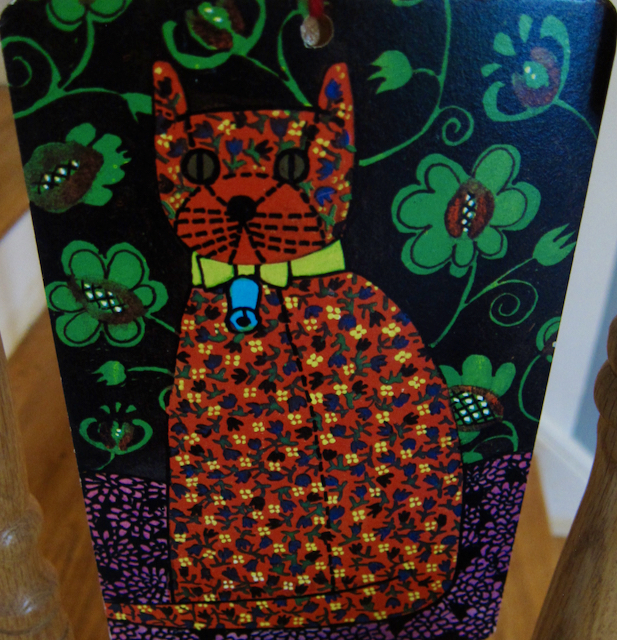
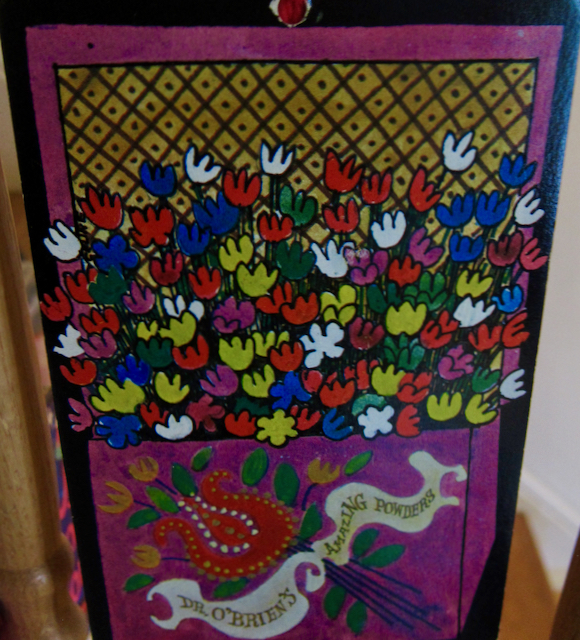
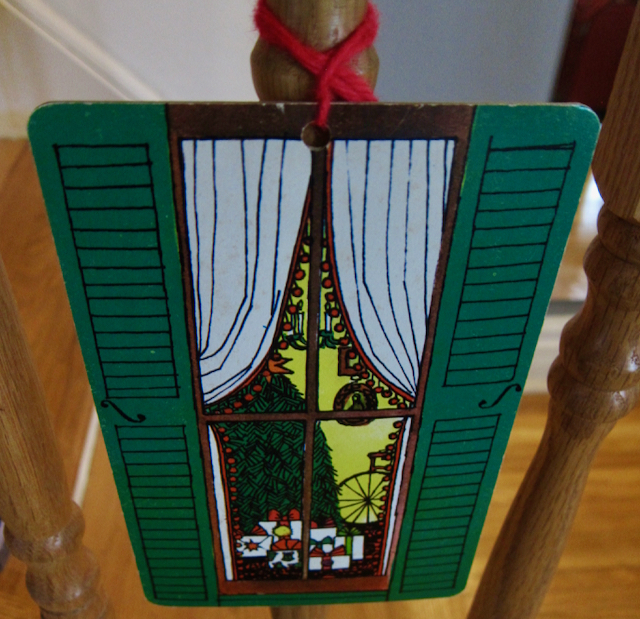
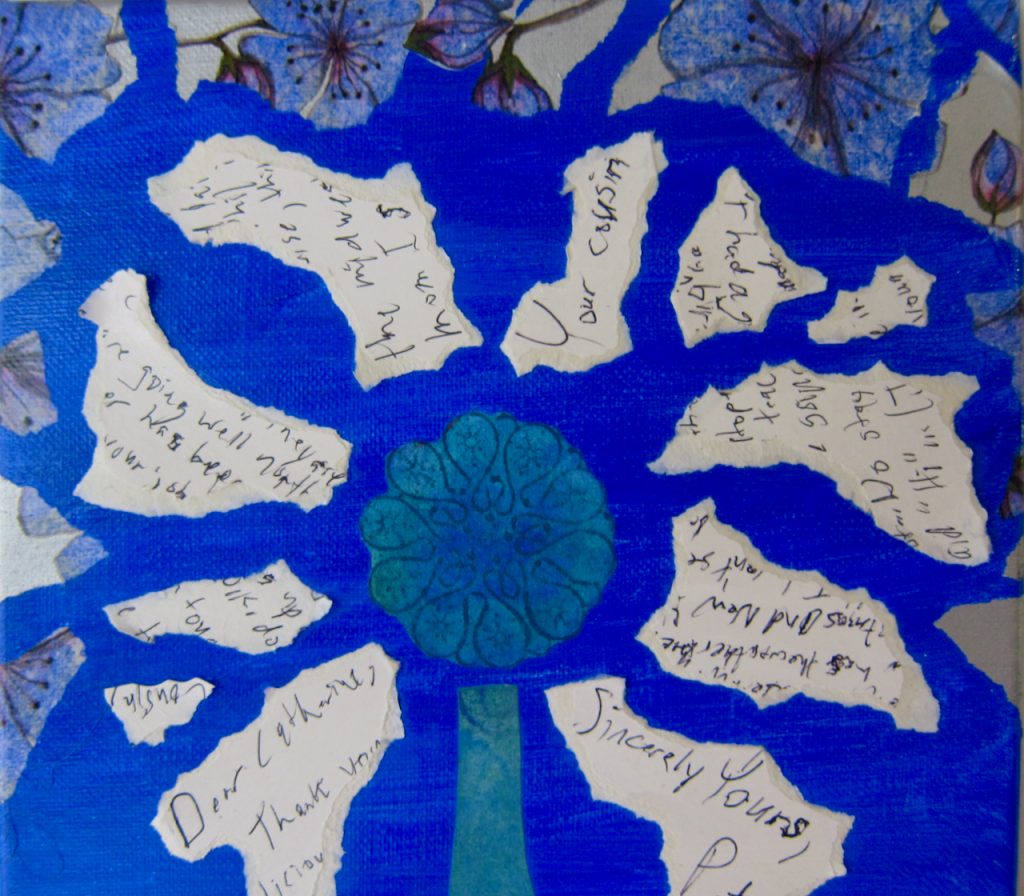
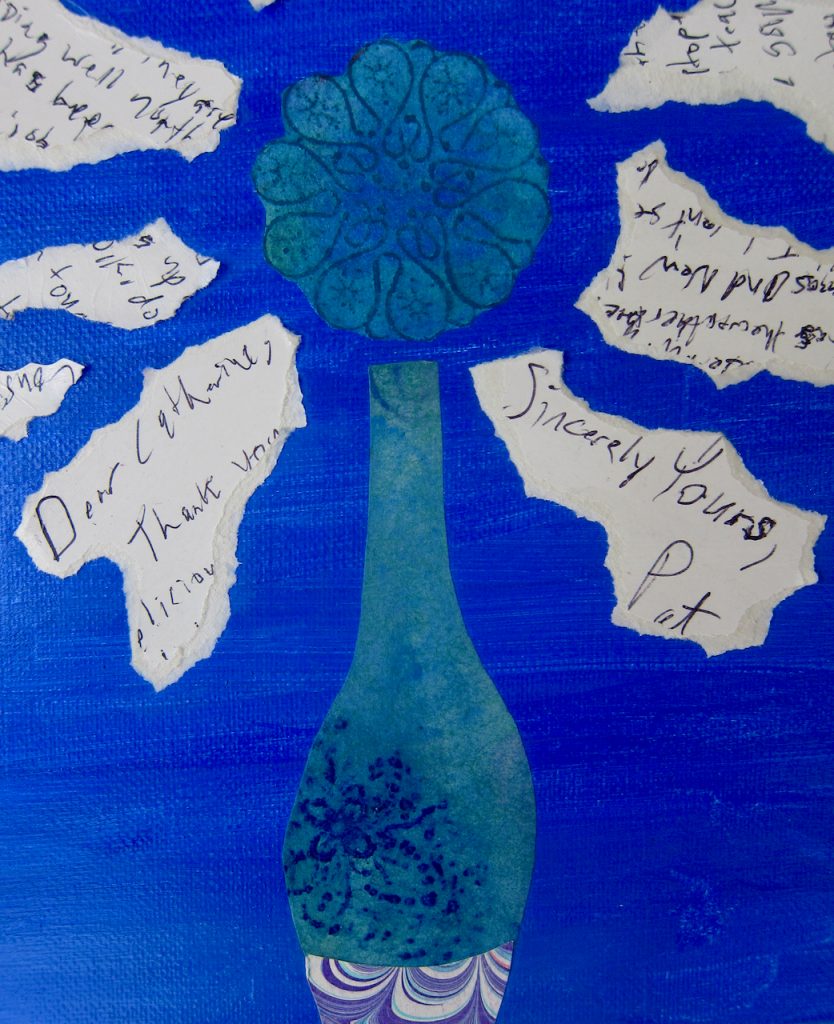
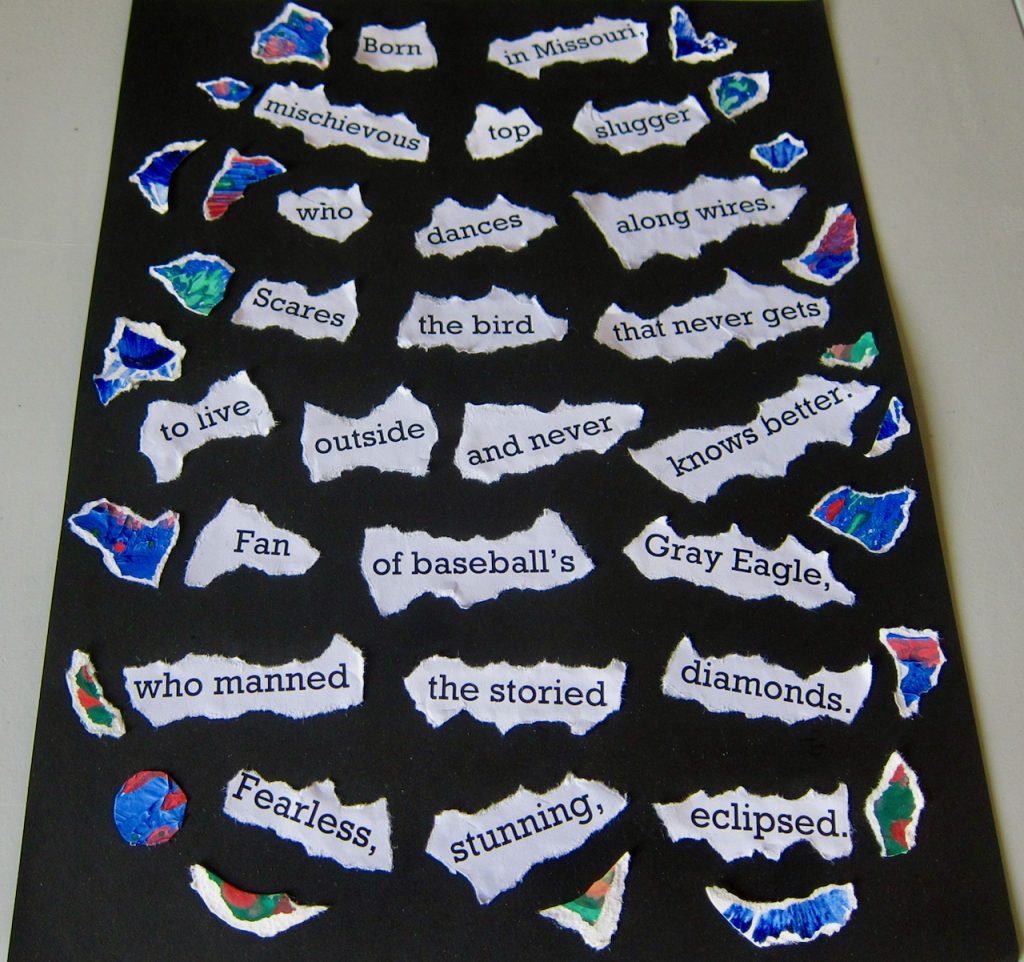
Lately I’ve been enjoying a relaxation technique called Make a Lot of Bookmarks and Give Them Away! I hope you enjoy the green bookmark collection, which includes two totem poles.

More bookmark images will follow this post in yellow, orange, red, pink, purple, and blue!

Six Collaged Bookmarks by Catherine

Saturday, April 16th, 2011

For the past few days I’ve been in the mood to make bookmarks. I’m planning to give them as gifts, so I thought I might record their presence here before they go on their way.

What books will they eventually inhabit, I wonder?

Bayview Library (2003): A Restful Pool of Books in Bayview Village Mall

Sunday, April 10th, 2011

This bookmark celebrates the branch head of Bayview Library, Jerry Lomoro, who spoke with me on the phone before my visit to his branch. The bookmark’s muse kindly took me under his wing when I arrived on site Wednesday afternoon; he offered me tea, gave me a visitor’s badge, and told me about Bayview’s impressive circulation numbers (372,036 in 2010).

While he chatted with me, Jerry tidied up the remains of the Tea and Books event, which had just finished. It was actually the debut of the group’s meeting, and the turnout was very encouraging. More than a dozen patrons, mostly seniors, had gathered in front of the library’s only windows to discuss Writing in the Age of Silence.

The Tea and Books participants, mostly elderly, represented an earlier demographic in the library’s history. Jerry explained that nearby condominium construction in recent years had created more diversity: “It used to be pretty homogeneous, mainly seniors, Jewish or WASPy, but now we have more immigrant families. Last summer we had 80 kids in our reading program.”

The theme of last summer’s reading program was Destination Jungle, so I imagine one of those 80 children illustrated this fun jungle scene: an alligator gliding down a waterfall. Almost a year later, intrepid yet patient giraffes were still awaiting their turn to go down the falls.

I also enjoyed the bookmark contest display, which yielded the portrait of Jerry above. One child was more inspired by jungle animals than branch head librarians and drew this cheerful (yet non-sliding) giraffe on a bookmark.

Bayview’s Children’s Section promoted playfulness and creativity, especially with its tinted translucent circles that demarcated the north side of the area. Jerry told me that kids often peer at each other through the circles and play games with them. Library decor as entertainment is a fantastic concept!
The picture above doesn’t completely do justice to the wonderful depth of field present in Bayview’s award-winning design. Maybe this (slightly edited) description from my first visit to Bayview will do a better job:  “there’s a deepening of the space as you walk through the branch, carpeted steps bring you lower, as if the place where you first walk in the door is the deck of a large pool and the steps take you into the actual pool.”

There’s even a handrail to help you transition into the “pool” of children’s books at the centre of the branch. And the multi-coloured steps turn the ordinary act of descending stairs into something much more imaginative.

Around the corner from the kid’s area was a very pleasing nook. It was the kind of place that makes you want to do some homework, any homework.

Alas, I didn’t have any homework, so I had to make do with taking pictures of books. Even though Bayview is small, it has respectable Chinese, Korean, and French collections, so I had plenty of material to choose from.

Let me close this post with a big thank you to Jerry and the other library staff (especially Norm) for making me feel so welcome at their bustling yet restful branch. All of you deserve to have a bookmark in your honour!

 

“Theater of the Bosom” Textile Piece by Catherine

Thursday, April 7th, 2011
“Theater of the Bosom” by Catherine Raine, 2011

I started “Theater of the Bosom” on the train from Montreal to Quebec City about a month ago. While I was lounging in my seat, I stitched the fingers of a fuzzy glove between the buttons of the apricot shirt. I also sewed together a couple of swatches of floral and camouflage fabric.

“Theater of the Bosom” by Catherine Raine, 2011

When I returned home to Toronto, I covered a small canvas with the fabric patchwork (plus glove-n-shirt) and added more fabric. Then I took an old sports bra and dressed the canvas with it.

“Theater of the Bosom” by Catherine Raine, 2011

I thought the bra-stuffing turned out pretty well. I may as well tell you the secret to a perfect fabric silhouette: shoulder pads, pantyhose, and bits of a shirt.

“Theater of the Bosom” by Catherine Raine, 2001

For theatrical embellishments, I draped a scrap of the camouflage material (originally a bandana that my friend Noreia bought at the dollar store) and added another glove, a ribbon, more fabric scraps, and some felt.

“Theater of the Bosom” by Catherine Raine, 2011

I used stencils and fabric paint to write on the bra. Later, I dabbed small blobs of purple encaustic wax over the dried paint.

“Theater of the Bosom” by Catherine Raine, 2011

I hope that “Theater of the Bosom” will serve as a playful reminder to respect the beauty of the female form, no matter what shape, age, or dramatic dimension!

Burrows Hall (1998): Confucius, Stone Lions, and a Dragon Mural

Sunday, April 3rd, 2011

More than three years have passed since I last visited Burrows Hall, but Confucius and the Stone Lions have held steady in my absence. Impervious to the seasons, they serve the courtyard that fronts the Chinese Cultural Centre of Toronto with distinction.

The entrance to the library and Burrows Hall Community Centre is on the west side of the courtyard. When I walked into the one-room branch, I was pleased to see the dragon mural which I remembered from 2007. Presiding over the multilingual collection on the south wall, the sheer size and fierce nature of the creature impressed me.

One look at the dragon’s face told me he was not a lightweight cuddly entity. With bold eyebrows, a serpentine goatee, and four serious fangs, he did not resemble Pete’s Dragon (which once graced my lunchbox in the late 1970′s). No one, especially not me, would dare address him as Puff.

The ceiling in the dragon’s section of the library was much higher than the other half of the room. High windows facing north revealed a blue Scarborough sky. With architectural beauty like this, no wonder Burrows Hall won an Ontario Library Association Building Award in 1999!

Turning my focus from the ceiling to the floor, I admired the carpet with its abstract cinnamon rolls in a sea of lentils. (Or could they be bulls-eye targets embedded in lite-brite?)

On the other side of the branch, two besotted mandrills sat on a shelf in the Children’s Section. With eyes only for each other, they were oblivious to the Saturday afternoon crowd.

Burrows Hall was hopping busy. I orbited the room a couple of times before I was able to find space at a table. Then I settled down to take pictures of books from the multilingual collection, which included Chinese, Hindi, French, Tamil, and Urdu.

Despite the difficulty in finding a seat, it was a pleasure to spend a couple of hours at Burrows Hall. I think Confucius would be proud of the families selecting books for their children and the patrons who were not frittering away their Saturday in front of the TV.

2011′s One Book Community Read: Midnight at the Dragon Café

Thursday, March 31st, 2011

The literary and operatic launch event for Judy Fong BatesMidnight at the Dragon Café is tomorrow evening, so it seems timely to offer a reader response to this year’s One Book selection .

I finished Bate’s novel in four days and felt a little lost when there was nothing more to read about the struggles of an immigrant family in a small 1960′s Ontario town. The narrator is a child, Su-Jen Annie Chou, whose parents and half-brother toil long hours in the Dragon Café by day and then climb stairs clogged with restaurant supplies to sleep in the living quarters by night. As the story unfolds, Su-Jen becomes an anguished witness to the unspeakable secrets and resentments that lock her mother, father, and adult brother in conflict.

Interested readers will want to check out the book for themselves, so I won’t clog this post with too many details. I’d just like to highlight one of the truths that Midnight at the Dragon Café seared into my heart: the emotional price of immigration.

Although I haven’t experienced the bitter hardship Su-Jen’s family endured, reading their story triggered a painful memory of September 11, 2001 and the isolation it made me feel. I had been an American immigrant in Scotland for almost three years when the planes crashed into my psyche. And when the towers fell, the borders closed, and the phone lines jammed, I was suddenly aware of how profoundly stranded I was.

Su-Jen’s mother seemed to have felt something similar every single day in Canada, not just on one terrible day: “For my mother . . . home would always be China. In Irvine she lived among strangers, unable to speak their language . . . . There was so little left from her old life . . . . But she described (it) with such clarity and vividness that I knew all those memories lived on inside her” (48-49).

I have a very personal wish for Torontonians, immigrants and non-immigrants alike. I wish for the ability to enjoy our lives in the present. I wish for inclusion, belonging, and community. That’s why I enthusiastically recommend the experience of reading Midnight at the Dragon Café together.


How the Flower-Hatted Otters Collage Came to Be

Sunday, March 27th, 2011

Yesterday my friend Ellen Jaffe and I facilitated an art workshop called “Collage Your Animal Spirit Guide” at Fermata‘s Music Therapy Centre in Hamilton. Using the animal oracle deck pictured above, each of the participants selected a card without looking at the illustrated side. Then we took turns reading the teachings of the animals whose cards we’d chosen.

Illustration by Bill Worthington

My animal guide for the day was the otter. According to Carr-Gomm’s explanatory booklet, otter “invites us to play, to ‘go with the flow’ of life and experience — to become a child again” (32).

Flower-Hatted Otters by Catherine Raine, 2011

Trying to capture the idea of flow and movement, I found some swirling fish and active grasses. For playfulness, I gave the otters and their fish friend some red flower hats.

Flower-Hatted Otters by Catherine Raine, 2011

And that’s the story of how the Flower-Hatted Otters came to be!


Flourishing Knitting Circle at Kennedy/Eglinton

Tuesday, March 22nd, 2011

I dropped into my home branch, Kennedy/Eglinton, this evening to pick up a book on hold (Barney’s Version by Mordecai Richler). As I passed the open door of the program room, a jolly sight met my eyes. Members of the Tuesday evening knitting circle were closely gathered around several tables. Deeply engaged in conversation and textile production, this multigenerational and multicultural group of knitters numbered about twelve.

The sign outside the door listed the meeting time as 6-8 pm and informed participants that they needed to bring their own yarn and needles. Refreshments would be provided on the house.

Thank you for making my evening, Kennedy/Eglinton knitters! Your presence infused the whole branch with community spirit!


Skylit Highland Creek (1994): Home of the Glamorous She-Dragon

Sunday, March 20th, 2011

It has been more than three years since my last visit to Highland Creek, so it was almost like walking into a new branch when I dropped in yesterday. However, I hadn’t forgotten the awesome skylight that reminded me of an overhead sauna. Thanks to the skylight and the generous number of windows, Highland Creek was radiant with natural light. As a modest residential branch full of sunlight, it resembled Elmbrook Park, Leaside, Morningside, and Victoria Village Libraries.

Not far from the skylight, four lucky readers had settled in the same number of armchairs in front of the hearth. A very kind librarian turned on the fire to give my photograph more atmosphere. Two coffee tables were piled high with the remains of enjoyable fireside browsing: magazines, craft books, and a photo digest of Prince William and Kate Middleton. Later, I added to the stack after I photographed two books from Highland Creek’s small multilingual collection.

Closer to the entrance, a glamorous dragon batted her lashes at incoming library patrons. I liked the sparkly green scarf and the way it complemented the tone of the she-dragon’s green hide. Moreover, her purple talons matched the shade of her ears, wings and back-plates, making this lady one of the best-accessorized dragons I’ve ever seen.

From a high shelf in the Children’s Section, the dragon’s tail received the solar benefit of the south-facing windows. As a reptile in a cold climate, I’m sure she appreciated the warmth.

In addition to some welcoming reading steppes, the entire south wall was studded with plush window seatlets.

I was disappointed to see an empty candy wrapper on one of the windowsills behind a window seat. Ironically, it was right next to a stack of brochures about how to “keep our libraries clean and beautiful.” Come on, trifling m&m’s consumer! Expend a few calories to throw away your litter!

I was less irked by a few piles of popcorn on the meeting room floor in the aftermath of the Saturday movie, Scooby Doo. Diving into a bag of popcorn is an important part of any matinée experience, and I don’t really consider it intentional littering. Besides, the main focus of interest in the multipurpose room was the Destination Jungle wall art.

The jungle theme dates from last summer’s reading program, but I’m very glad nobody tore down the art when summer ended. I would have missed the opportunity to see the denim-clad monkey, fluffy cuttlefish, and the melancholy frog.

Thank you, Highland Creek, for the opportunity to spend an afternoon in the presence of your skylight, hearth, dragon, and colourful mural!

Breakfast in Scarborough visits New York City!

Wednesday, March 16th, 2011

I feel very fortunate indeed that one of my posts has been re-published on The World Policy Institute‘s blog. Interested readers can find the post here. My essay discusses what I learned from six years of teaching survivors of torture in Toronto. A longer version of the post remains here at home on Breakfast in Scarborough.

It’s my hope that the reflective piece will raise awareness of the terrible emotional devastation that torture causes, often long after the trauma occurred. I wish to thank each one of my former students for reminding me that our collective humanity depends on treating each other with kindness and dignity.

Henrietta the Via Rail Clump

Tuesday, March 8th, 2011

Henrietta joined us on the train. She’s made of a sock, part of a tie, a headband and a frayed shoelace. She enjoys rail travel.

CCVT Clients: Saintly Victims or Complex Individuals?

Sunday, March 6th, 2011

The following essay was published in the Winter 2007 edition of First Light, a journal published by The Canadian Centre for Victims of Torture. I have edited and re-published it here because I wanted to share my experience of working at CCVT from September 2004 to December 2010 more widely.

New update! There’s been one more re-publication. A condensed version of this essay can also be found here on the World Policy Institute’s blog.


CCVT Clients: Saintly Victims or Complex Individuals?

by Catherine Raine

Watch a person’s face when you tell them you teach English at the Canadian Centre for Victims of Torture. Eyebrows rise with surprise and the eyes crinkle in concern. Often the head moves forward, as if  CCVT is a magnet that draws them closer to me, so close that I can sense their curiosity, embarrassment, pity, and fear. With the exception of one person who laughed when I said the word “torture,” most people become very quiet, perhaps burdened by questions they’d like to ask, their imaginations aroused by the taboo images of “torture” and “victim”.

I don’t want to judge my auditors too harshly for their reaction to an ordinary inquiry about my job. Before I started teaching at CCVT in the fall of 2004, I tried to imagine the particularities of suffering just barely conveyed by the phrase “victims of torture.” I may never be able to understand the depth and scope of the pain my students have experienced, but I’d like to reflect on what I’ve learned about their coping methods.

Whether they have responded with emotional numbness or extreme sensitivity to others’ suffering, I believe they both inhabit and transcend the limiting label of victims. Two-dimensional saints they are not, but the courage of CCVT clients shines in their willingness to start again in Canada and find a new voice in a new language.

One misconception that I’ve overcome is the expectation that survivors of torture will always say nice things. Previously, I believed that intense suffering had somehow made them more than human, magically transforming them into pious models of compassion and political correctness. That’s why I was shocked when a student once joked about Christopher Reeve’s paralysis: “Superman used to fly but now he’s stuck in a wheelchair.” A few of the learners laughed at the unfeeling comment, but the rest of us just gaped in horror.

The same student who lacked empathy for Reeve also got irritated with me during a class discussion of Princess Diana’s biography. When I said it was sad that she died so young, the student replied matter-of-factly: “That’s life, teacher. Children die all the time and who is feeling sad for them?” Maybe the learner didn’t like precious sympathy being wasted on rich women who romped on yachts with playboys. More disturbingly, another client started laughing when she told a story about two men in her building beating each other up in a lover’s quarrel. A classmate said, “Teacher, she’s laughing about somebody getting hurt?” I agreed that it wasn’t at all funny, just as it wasn’t funny when a different student expressed anger at Inuit seal-hunts with the words “Let them eat snow! Why can’t they find a job in the city like everybody else?”

Was torture responsible for these lapses in compassion? If so, I think the most tragic effect of brutalization is a lost capacity to feel for other victims, especially when they seem different in regard to disability, wealth, sexual orientation, or culture.

If trauma has cost some students their willingness to acknowledge others’ tragedies and hurts, then that’s the biggest loss of all; here, the inhumanity of torture has damaged some victims’ own humanity to such a degree that they no longer know what is funny and what is sad. From this perspective, I can see how empathy could become a luxury and hurtful laughter a way to mask overwhelming sadness and fear.

It’s emotionally costly to invest in the suffering that’s available for our consumption in the media. Insensitivity, distance, and emotional numbness are safer than facing the pain lurking in the body’s memory, locked into every thought. I can understand why it might be difficult for some of my students to “waste” emotion on Christopher Reeve, Princess Diana, a gay neighbour, or the Inuit. However, a large part of the rehabilitative work that happens at CCVT involves encouraging the clients to see that they’re not beyond the circle of human compassion, even if it must have felt that way when no Superman rescued them at their darkest hour, no Princess came to hold their hand and tell them everything would be OK.

At the opposite extreme of emotional withdrawal from pain is over-identification with accounts of suffering. One morning in class, I read aloud a few paragraphs about Terry Fox’s Marathon of Hope as part of a grammar exercise. To my surprise, one of the students started sobbing loudly when I reached the end of the passage. The rest of the class looked extremely uncomfortable, and I felt terrible, for I had hoped Fox’s story would be inspirational. On the contrary, it was just too unbearably sad for the crying student to read of a spirited young man who lost a leg and then his life to cancer. I wasn’t sure what to do, but I stopped reading, patted the upset learner on the shoulder, and gave the class their journals. I had planned to show a TV movie about Terry Fox after the break, but I changed my mind because I was worried about the effect it might have on the student who cried. We watched You’ve Got Mail instead.

On another occasion, I asked a student what her favourite colour was. I thought it was a neutral conversational topic, but her answer was heart-rending. She said, “I used to really love red. It was my favourite until the day I saw a wounded cow in my village. Something had cut its thigh and there was so much blood. The smell of it made me sick. But what I couldn’t stand was that the cow was crying because it was in so much pain. I think a farmer had done this cruel thing because the cow had wandered into his garden and was eating his vegetables. But I felt so awful about the poor cow, and even now I can’t stand to wear red-coloured clothes because they remind me of the blood from the cow’s thigh.”

Hearing about the wounded cow made me want to cry, too, for I could picture its agony from the vividness of her description. At risk of reading too much into the story, I think the cow’s suffering spoke to the depths of the storyteller’s own innocence and outrageous pain.

This same student cried when we read a Metro news article about an American woman whose son died in Iraq and who protested for peace in Washington on Mother’s Day. I have learned to limit our newspaper readings because the articles most clients choose to discuss are about topics such as the trial of Cecilia Zhang’s killer, a boy who murdered his brother, and the kidnapping and murder of three Canadian brothers in Venezuela.

Between the extremes of avoidance and overexposure to the morbid lies the more ordinary subjects we cover, for our class is about much more than coping with tragic stories. We also speculate on the love life of Prince Charles and Camilla, discuss the different ways to ask if it’s break-time, share cake at birthday celebrations, read short plays, perform jazz chants like “Mama Knows Best,” and tease each other about owning imaginary helicopters and limousines.

Outside the classroom, we explore Toronto together, outings which comprise some of my best memories of CCVT. For example, on a trip to the Toronto Reference Library, I loved the way the students immediately plunked themselves down at the wooden tables and started to read books in Swahili, Tamil, Tigrinya, Somali, English, Amharic, Spanish, Arabic, and Albanian. I sat down with my ESL books and joined the scholarly communion; it felt peaceful and happy to be reading silently together in the middle of our noisy city.

On less scholarly outings, we have swung on beach-side swings and enjoyed picnics at the Toronto Islands. And other times we went on day trips to the CN Tower, St. Lawrence Market, Allan Gardens, the Beaches, Parliament Street Library, Kensington Market, the Art Gallery of Ontario, and the National Film Board.

It is the very ordinariness of these activities — finding the right subway platform, examining a painting together, sharing coffee and a box of Timbits at Tim Horton’s — that seems to ease the burden of extraordinary suffering our students stagger under. After all, a day-tripper is more than a Victim of Torture; he or she is a student, a tourist, a classmate, a friend, a provider of bread and sweets, a host who insists on buying the teacher’s coffee.

When I read Camilla Gibb’s novel Sweetness in the Belly, her description of refugees reminded me of my students’ kindness and generosity: “For all the brutality that is inflicted upon us, we still possess the desire to be polite to strangers . .  . . We may have had our toes shot off by a nine-year old, but we still believe in the innocence of children. . . . We may have lost everything, but we still insist on being generous and sharing the little that remains. We still have dreams” (407).

At CCVT, I believe it is my job to be a gentle witness to both the dreams and the tragic experiences of our clients. If the pain is never far from the surface, neither is the beauty. For instance, beauty was definitely present at the Family Day party last May when we danced on the backyard patio. As the sun warmed the tops of our heads, the group of dancers grew larger and the joy became more contagious.

Looking at the smiling women playfully shaking their shoulders, it was hard to understand why anybody would have ever wanted to hurt them instead of celebrate them. Their joyous dance was fierce evidence that whoever tortured them did not win, did not extinguish their spirit. Moments like the patio-dance make me appreciate with greater clarity the rehabilitation CCVT encourages. We are mutual witnesses of movement towards the sunlight, towards togetherness and benediction. As I threw my head back to accept more sun on my face, I wished I could show the world these victims who aren’t afraid to dance, saints who flirt, and students who teach me to cherish my freedom.

Blanket Dam Collage and Bookmark by Catherine

Sunday, March 6th, 2011

Hopefully the blankets at the base of the collage won’t become soggy holding up the lake. The mouse seemed to belong in the lower left corner.

“Blanket Dam” by Catherine Raine, 2011

By nature, collage leaves a lot of paper scraps. I was looking at the scraps and a long section of cardboard that I’d cut from “Blanket Dam” and thought, “Why not make a bookmark?”

“Abstract Bookmark 1″ by Catherine Raine, 2011

Supremely Popular Agincourt Library (1991)

Tuesday, March 1st, 2011

When I pulled into the lot at ten o’clock yesterday morning, almost all of Agincourt Library‘s 85 parking spaces were taken. In my travels throughout this well-loved branch, I came across only two free tables. And I even observed a 30-second transfer between the vacating of a study carrel and the next occupant rushing in to claim the space.

Although it has been many years since my last visit to this branch in north Scarborough, I remember that it used to looked tired and beleaguered from the pressure of so much constant use. It reminded me of Fairview Library in that respect. However, a much-needed renovation really gave Agincourt an energy lift in 2009.

When I complimented the Branch Head on the changes, she said the branch looked more open now. I thought the word “open” was an apt one to describe the circular atrium that offers a view of the second floor and the inside of a pyramid at the very top of the building.

Another circular structure enhanced the Children’s area. Filling the interior of a short turret (exterior pictured above), it boasted two tiers of cushioned seating in a horseshoe shape. What a magical spot to enjoy storytelling theatre!

I was also taken by the sight of jungle animal cutouts on the wall and the sound of human voices singing Alouette (or something in English to the tune of Alouette).

The cheerful notes were lilting from a nearby program room where new parents were attending an educational event with their kids. As I walked by the open door, I caught a quick impression of rainbow mats, a large screen with a film playing, and a lot of jolly family interaction. One caregiver was in the hall with a baby who was delighting in a row of silver hangers. As he played them like a xylophone with his hands, he listened with zen-like appreciation to their rattling chimes.

From the musical  wonder of hangers, I walked over to the wonderful stairway to the upper level. I loved how grand it was, the way the perspective narrowed to a focal triangle at the top. Was I standing at the base of a Mayan temple or visiting an urban library surrounded by a mall and gray buildings?

Once I climbed the steps, the sturdy learning centre brought me back to reality, as did the murmuring of study groups and discreet slurpings from McDonald’s coffee cups and thermos flasks. I wondered if many of the patrons sitting cheek by jowl lived in the blocks of high rises I could glimpse from the windows of the second floor. From the way many folks were camped out with bags, computers, drinks, and mending, it seemed as though the library really was their second home, making them homesteaders of the prairie of smooth tables.

The downside of the library’s popularity was that the teen’s area (with its wonderful tinted windows) seemed to be serving as an overflow basin for patrons who couldn’t find an available patch of wi-fi real estate. I worried that laptop-toting adults were crowding out real teens from their library space. While visiting other branches, I’ve witnessed grown-ups being shooed out of teen zones, so I imagine the same shooing happens here after school hours.

Before I left Agincourt, I took some time to admire the astonishing range of languages at this district library: Arabic, Chinese, French, Hindi, Italian, Japanese, Korean, Spanish, Tagalog, Tamil, and Urdu. I also paused to study a row of acrylic paintings by Daniel Wilkes. My favourite was Der wold und sein Nordlicht (The Wolf and his Northern Lights), especially because the Northern Lights belonged to the wolf.

I returned to the parking lot and gazed at the iron structure over the entryway that resembled a pull-out bed on a railway carriage. Could it be a symbol of the library’s role as a second home for citizens of a megalopolis? With so many charming facilities on offer, it’s no wonder that Agincourt is so supremely popular with its fans.

Stencil Experiments

Sunday, February 27th, 2011

Last week I tried using encaustic wax with stencils and got some mixed results. I like the two halves of this first piece, but they don’t really seem to work as a cohesive whole.

“Candy Jungle” by Catherine Raine, 2011

Today I got out the stencils and wax again, determined to keep it simple. I named the piece after my Grandma Raine because I think she would have liked it.

“Garden for Grandma Raine” by Catherine Raine, 2011

New Version of Mary’s Lost and Found Collage by Catherine

Monday, February 21st, 2011

When I first posted a picture of “Mary’s Lost and Found,” I thought the piece was finished. However, the more I looked at it, something didn’t seem quite right. I was bothered by the heaviness of the fuzzy paper at the top.  Here’s the result of my revision efforts:

“Mary’s Lost and Found” by Catherine Raine, 2011

For comparative purposes, here’s the earlier version:

“Mary’s Lost and Found” by Catherine Raine, 2011

“Duppies, Jumbies, and Old Time Tales” at Weston Library

Sunday, February 20th, 2011

Due to a series of unfortunate transit events, I arrived late for this Black History Month event at Weston Library. When I came into the program room, a group of three adults and five children were watching an animated film called Mind Me Good Now! (2005) in attentive silence. I was soon absorbed in the story, which is based on a book by Caribbean writer Lynette Comissiong.

Even though Dalby and Tina’s mother warn them never to cross a certain footbridge that leads to a jungle path, Dalby disobeys and his older sister follows him. At the end of the path, he discovers an isolated hill with a tree on top that is also a house. Before Tina can stop him, he’s standing at the door of an evil tree-house.

A tall stranger in a long purple gown beckons the children inside, promising them food. She tells them she is Mama Zee but neglects to inform them that she is actually a cacoya (witch). The decor of her home provides some clues to her true profession: large bones serve as curtain rods and a skull rests on a shelf. Magic vines have tangled themselves around the door handles to prevent escape, and Tina soon realizes that she and her little brother are in the wicked clutches of a cacoya.

Mama Zee serves them bowls of green soup, and Dalby becomes sleepier and sleepier. Mama Zee begins a terrifying chant about the best way to cook little boys, but Tina interrupts her with a request, knowing that cacoyas are required to do anything a little girl asks. She says, “At home, me mommy always shells peas before I go to bed.” So Mama Zee obliges and shells a bowl of peas, assuming she can then resume her evil cooking preparations.

When the witch starts to reach for the sleeping Dalby, Tina quickly shakes her hair out of its braids and says that her mom always plaits her hair before bed. Mama Zee is more grudging this time, but she complies with the plaiting request. Then she turns her attention once more to Dalby, only to have Tina employ another delay tactic. She sends the cacoya out to fetch water with a non-watertight bucket. Mama Zee departs with obvious ill-grace and has a very frustrating time trying to collect water. When it all spills on her gown, she has a tantrum.

Mama Zee realizes she has bigger problems when she sees that it’s almost dawn. Too late. The sun comes out and she dissolves into a mere puff of ashes. The vine-locks on the door also disintegrate and Tina and Dalby are free. The film ends as they are reunited with their worried mother, who has come to fetch them.

After Mind Me Good Now! ended, storyteller and Children’s Services Specialist Laurel Taylor-Adams read from La Diablesse and the Baby by Richardo Keens-Douglas. In this story, a wise grandmother foils a diabolical visitor’s baby-stealing plans on a stormy night.

The glamorous stranger is dressed in a long blue gown which covers her feet. After gaining entrance to the grandmother’s house by appealing to her sympathy, the diablesse asks her reluctant hostess three times to hold the crying baby, but the child’s grandmother politely refuses. The stranger eventually goes away but leaves some evidence of her visit. In front of the house, the morning light reveals one muddy red human footprint and one muddy red hoof print!

Before she started reading, Ms. Taylor-Adams graciously invited me to move forward so I could see the pictures. From the front row, I was better able to admire her quietly dramatic storytelling style. I liked how she made whooshing sounds to imitate the wind and the rain, and she also sang the lullaby that the grandmother sang for her grandson. These details took us deeper into the world of the story. Later, Ms. Taylor-Adams told me that she’d been a children’s librarian for 30 years, which showed in her masterful ability to simultaneously read the text, show the pictures, and make eye contact with the audience.

The last story of the evening was a personal one about the facilitator’s own great uncle Bob. His boat, The Spanish Rose, mysteriously disappeared in a fog bank for two weeks in the Berumda Triangle. The biggest mystery of all was that the six men on the boat thought they’d only been in the fog bank for one day!

Even though I missed the first half of the program, I thoroughly enjoyed “Duppies, Jumbies, and Old Time Tales.” It seemed a shame that more people weren’t there to hear gifted storyteller Laurel Taylor-Adams and see Mind Me Good Now!

Don’t let Black History Month dissolve like Mama Zee before you take advantage of the many programs on offer at the Toronto Public Library! Mind your library blogger, now!

Don Mills (1962): From Art to Zombies

Saturday, February 19th, 2011

I Kissed a Zombie and I Liked It groaned loudly from the Valentine’s Display in the lobby of Don Mills Library.

Why did the protagonist kiss a zombie? Why did she like it? And what steps do zombies take to keep their breath fresh?

After pondering the kissing habits of zombies, I entered the library and took a few moments to get a sense of the place. The first word that came into my head was “warehouse,” but then I reconsidered. Although the large square interior had something of the Costco nature, its decorations saved it from the box-store doldrums.

For instance, I never saw a Costco with an art exhibit. I studied the display of watercolours on the north wall by Fred Kormendi and thought about the recent information session for artists at Northern District Library. My favourite piece depicted two women smoking cigars. I also enjoyed reading about Kormendi, a Hungarian-Canadian artist who immigrated here in 1958 and returned to his beloved art in retirement.

Over in the Children’s Section on the west side of the library, an endearing bunny and elephant shared close quarters in a hot air balloon basket. And I loved the soaring kites in the rafters, perfect for such an expansive ceiling.

On my last visit in 2007, I had overlooked a wonderful story-telling stage and play area. The wooden walls created a distinctive space with an intention to nourish creativity and drama. Toys left behind on the carpeted steps testified to recent fun times.

The Young Adult wing on the opposite side of the library also did a great job of creating a sense of intentional space. Though lacking a garden view, it looked like the conservatory at my in-laws house in Scotland. Wall-to-floor windows on two sides suggested openness and relaxation.

After admiring the east wing, I trotted downstairs. There, I noticed a more seriously studious atmosphere, and the basement stacks reminded me of libraries I’ve visited at small liberal arts colleges in the Midwest. The lower level at Don Mills also offered an auditorium, a meeting room, a cubby hole study room, and an Adult Literacy Program room.

Returning to the upper level, I puzzled some fellow patrons by taking photographs of books. I especially wanted to get a picture of a “Quick Picks” bag because I’d never seen this innovative option at other TPL branches. The handy bag contained four books chosen by a librarian. With the injunction to “Grab a bag. Borrow them all!”, there need not be any more endless dithering among the shelves. The literary equivalent of picking up a pre-packed breakfast at a hotel, it was fun to investigate the contents of a bag that someone else had selected just for you.

As a district branch with a robust collection, Don Mills definitely spoiled its users for choice. For example, the large French collection yielded the following two books pictured below.

I discovered a petit vampire with a tail like a turnip root. Also, I learned that Hansel and Gretel are actually Jeannot and Margot in the French version of the fairy-tale.

In addition to the French language, Japanese and Chinese had large representation, and there were smaller collections of materials in German, Arabic, Spanish, Persian, and Hindi.

Indeed, Don Mills covered the gamut of the library experience from Art to Zombies!

Mary’s Lost and Found Collage by Catherine

Sunday, February 13th, 2011

The other evening I was marking a pile of 21 quizzes about sentence structure and I reached a point where I had to run upstairs and make a collage! I couldn’t face another quiz.

The icon figures come from a brochure I found about the Black Madonna. Other materials include handmade paper and wax. I was especially taken with the way the purple wax became blue-purple when it came into contact with the blue paper. Magic!

“Mary’s Lost and Found” by Catherine Raine, 2011

It was fun making “Mary’s Lost and Found”, and afterwards my brain felt refreshed enough to grade more quizzes.

Boulder-guarded Leaside Library (2002)

Wednesday, February 2nd, 2011

When I started to circle the perimeter of Leaside Library, an ancient boulder stopped me in my tracks. According to a nearby sign, this “Precambrian erratic was slowly transported to the Leaside area by a glacier more than 10,000 years ago.” I loved the rock’s dignified presence, which was like a grandfather elephant resting after centuries of geological movement.

When I looked more closely at the cracks and patterns on the erratic, I found one that looked like a giraffe. Even though I’m sure it has survived worse, I was disappointed to see dried splashes of dog pee on the boulder. Surely, no creature can truly mark something that has been here for ten thousand years.

Next, I trotted along a boot-made trail in the snow and took in Leaside Tennis Club and Traces Mane Park before ducking into the warm library.

As I was getting my bearings in the lobby, a group of pre-school kids trooped through the door in a jolly burst of noise and colourful hats. Their teachers ushered them into the program room to the right of the entrance, where a sliding door created a separate space for the duration of the program. Later, I noted the expansive south window that suffused the place with pure winter light. I also liked the clever storage area for flat cushions in primary colours. (When I was in Brownies, we called them “sit-upons” but I’m not sure if they’re called that in Canada).

The rest of Leaside’s interior was pleasingly rectangular. I loved the high windows on three sides, especially in the places where dark tree branches held steady behind the panes.

Most of the space was open plan, with the Children’s Room demarcated by a portal that contained display cabinets on either side. A bank of computers formed most of the outer barrier of the kids’ zone, with a gap serving as a second entrance before a row of shelves continued to maintain the low wall started by the computer bank.

Serving as friendly guardians of the cabinet-entrance were a collection of snowpeople. They seemed to be a sporty bunch, for they had sleds and skis in addition to relevant winter-themed literature such as Omar On Ice.

On the other side of the wall, I discovered some welcoming armchairs, a deer wearing a long stocking cap, and a delightful window seat. I was very taken by one of the display books, The Cow Who Clucked. Who says a cow has to moo all day long? Why not cluck instead?

As I continued my self-guided tour, I found the French collection and more window seats. A patron was seated on one of them with her laptop. She had set her galoshes carefully to one side and was typing in her stockinged feet.

The north window bank also had its fans, as did the local history room near the checkout desk. When I poked about inside the Leaside Room, I discovered a signed copy of Horton Hatches the Egg by Dr. Seuss and a framed example of Mayoral neck bling with lots of gold maple leaves clasped together.

Thank you, Leaside, for your distinctive boulder, contented snowmen, friendly staff, and classy decor!