Dance feeds my soul and makes it stronger. Dance summons self-love that locks shoulders and thighs with demons of self-hatred. In defiance of mental sabotage, dance lifts my chin, pulls my shoulders down, and primes my hips to strut. It tastes new flavours of physical pride, fierce and ungodly to the saints of decorum.
Self-love spoons and spills delicious movement from basins, urns, and ladles. It coaxes the curves of my arms to release cascades of seeds to the rich Earth. It propels my palms from heart centre to the sky, and in this moment, I feel both opened and open. I am an offering to myself and the world. This is me and here I come! I love myself and everyone dancing here with me.
Dancing with self-love, my guard is down, and I don’t need to shelter my heart in a bunker, shrinking in fear. As anxiety recedes, the energy of self-love catches fire, granting me courage to be seen, to bear light and warmth from a hearth I carry, that we all carry.
Self-love is the shimmy that five generations of white Protestant training has stifled. It’s the audacity to feel joy. It accepts feet, legs, hips, and arms that move in their own way as one body. Here, love lives in the syncopated spaces between our dancing hearts. It heals the hollows, filling them with care, attention, presence, and grace.
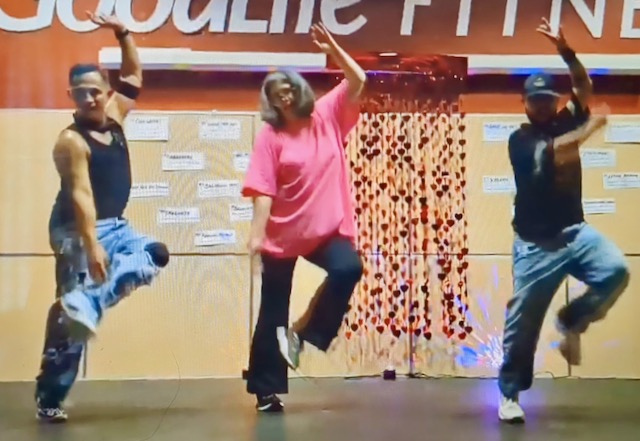
Photo frame from video by Ksenia Bryzgalova. Pictured from left to right are Kim Melecio, Catherine Raine, and Michael Tan.
Not long after my first Zumba class last winter, an instructor advised, “Remember that my movements are a mirror image. My left hand is your right hand.” My intellect understood her meaning, but my body didn’t get it. During a song, I would hesitate while thinking, “Wait, does this move start on my left or the teacher’s left?” Glancing from the stage to the bold dancers at the front, I became more uncertain about which foot went first. Becoming familiar with the routines eased confusion, but I rarely trusted myself to relax into the movement.
At the start of a recent class one year later, I listened as if for the first time to Mike’s suggestion for newcomers: “Follow our movements like you’re looking in the mirror.” It sounds simple, but the repetition of this tip deepened my understanding in a revelatory way: “Stop overthinking and experience your dance in connection to the human mirrors on stage.” A wall of anxiety dissolved when I allowed my head, arms, hips, and legs to reflect the moving patterns I saw in front of me. Separation between mind and body thawed. And learning Zumba more holistically hushed self-critical thoughts like “You’re too old and fat to belong in a class with all these graceful beings. You call yourself a dancer?”
When negativity strikes, I love how Mike, Kim, and the dance squad strike back with embodied positivity, serving as mirrors of movement and models of joy. When I feel slow and withdrawn, I am grateful for a collective reflection that shimmies with energy and panache. Zumba’s mirror offers more grace than the two-dimensional version, for everyone in the room is a dancer in its eyes.
Our three-dimensional mirror neither judges nor produces copies. Within its generous frame, we dance together as souls with multiple demographic labels. No two dancers are alike, yet we learn who we are from each other, nourished by a wider field of expression. When one of us shines, we all sparkle.
For visions of dance-sparkle in Zumba class, please check out Mike and Kim’s Instagram page, including the reel “Lessons in Positive Mirroring from Zumba Instructors Mike and Kim.” Also, Mischell Alo’s video captures the joy of dancing to Prince Royce’s “Me EnRD” (my first time venturing on stage with amazing dance squad members and our inspiring instructors).
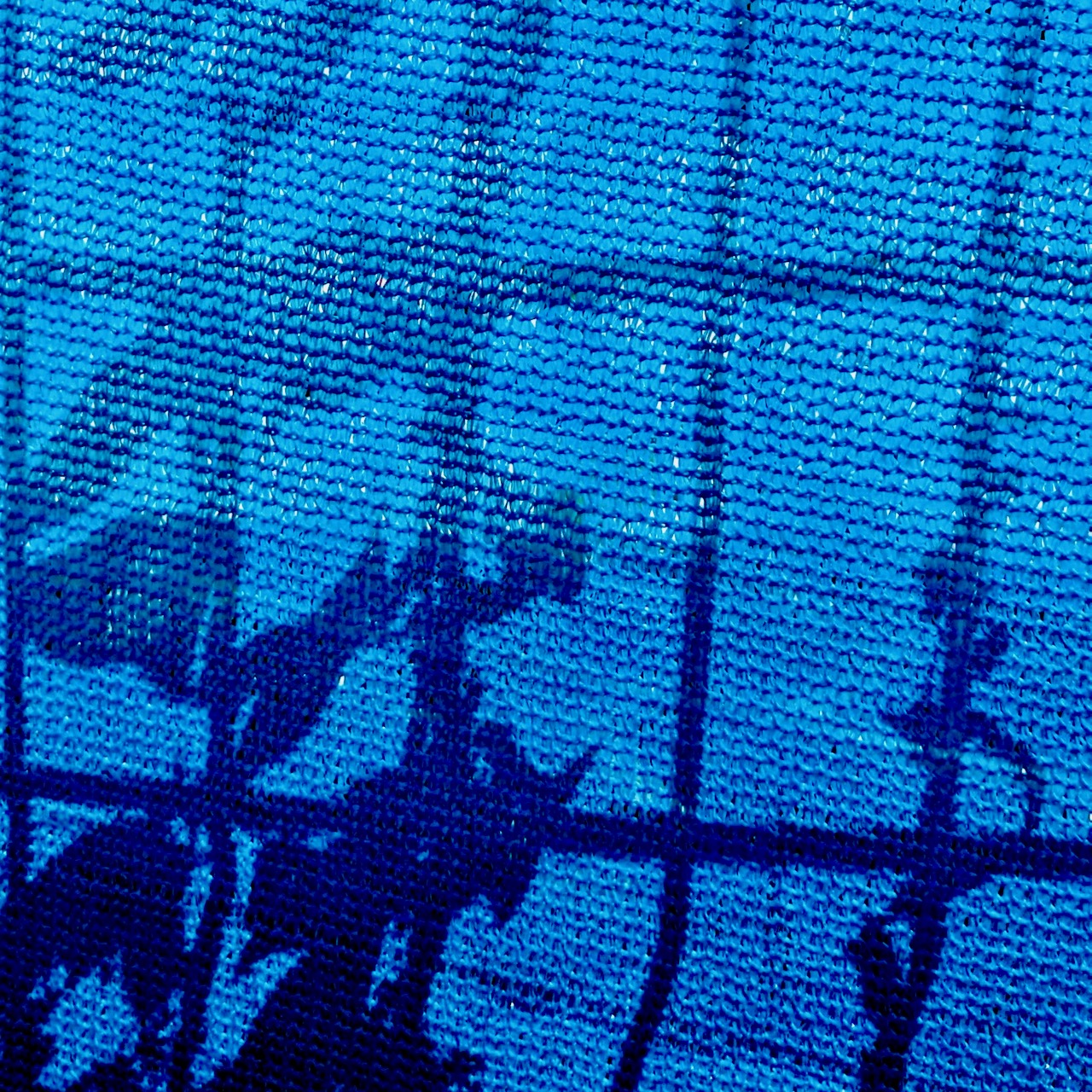
Photo of the author at the Light: Visionary Perspectives exhibit at the Aga Khan Museum. Image shows her upper body and arms reflected on a blue background. The arms reach out and are outlined in yellow, orange, red, green, and blue stripes.Photo that shows the author’s dance-happy mood. The image depicts a smiling woman with pale skin and grey and brown shoulder-length hair. She is wearing purple glasses, a tan sweater, and a puffy brown winter jacket.
Photo shows a flower painted on the pavement of an alley. Following the line of a crack, a green stem has been added with spray paint, and magenta petals have also been painted around the maintenance cover hole to complete the flower image.
Imagination
transforms cracks to stems,
makes steel circles bloom.
Image portrays a discarded white wooden door that lies on the lawn outside a house.
Rain-softened by time,
lock opens to soulful green
guests it once refused.
The photo is a close-up of the previous image of the discarded door. It shows splintered wood and gaps where the lock used to be. Green clover fills some of the gaps, sprouting through the hole as well as growing in a patch to the left of the door.
Recorded by Sean McDermott at Offaly Road Studio, 2022. Read by the author.
I am a ruined barn, empty but smelling of ancient hay. I sit in a lost valley, no longer a shelter nor part of a living farm. I used to be warmer, to glow orange from lanterns on February mornings, to retain animal heat. Now my shadows fill in their outlines, brief flashes from the highway my only relief.
I am tired of being a relic, a rural ghost who attracts photographers from the city. Their insulting attention reminds me that I am just a skeleton of economies past, a symbol of romantic decay.
All my sounds are whispers and echoes now, where once I heard grunts, shouts, whinnies, cries of pain and hunger. It’s so quiet now. Ruin is quiet. My unsteady walls feel dry, brittle, so straw-like that one warm hand on my door would set me ablaze. I welcome this fire, this sweet extinction into ashes.
When it rains, I feel the blessed water soaking my beams, splashing through broken panes, swelling the hayloft floor so that I forget my ladder is broken and my stalls now shells that once held a family’s wealth and sustenance. I miss being whole. I miss being real. I miss the animals I used to protect.
Your anguish is a force, a separate soul that cries out for solace and remedy. A thousand words of comfort rise from the ache in my throat, but they cannot restore the beloved person who abandoned you. Into this void, my voice may drop like a stone.
It hurts to see you cry, face in your hands, unable to sleep, eat, or even feel real. Dizzy from the shock of sudden desertion, each second refuses to pass, remains incomplete. Your injured heart has lost its rhythm and your movements seem leaden, as if masses of melted tar are dragging your arms down every time you lift a glass.
While your body slows to glacial time, the brain accelerates as it struggles to comprehend this alien reality that cannot be happening but is happening anyway. Like a never-ending game of tether ball, your thoughts spin faster and faster into smaller and tighter circles, shackled by panic to the iron fact of loss.
If I had the power to heal you, I would gather the softest banana leaves in creation and soak them thoroughly in shea butter. Then I’d wrap them round your head to cool and cradle your brain, drawing out the poison of self-punishing thoughts, soothing the pain, and smoothing the wrinkled loops of endless tormenting questions.
For your heart-wounds, I offer a poultice composed of clay, feathers, and ferns to press against your chest as if in prayer. The heart-poultice cannot mend the cracks, but it honors them with love. When the minerals and soft coverings touch your skin, they ease the hurt, giving you precious minutes of relief.
And for your whole body, a pool has been sunk into the cursèd room that most haunts you with memories. The pool is not very wide — the width of three ordinary bathtubs — but it is fathoms deep. The sides and bottom of the pool are made of peat-black marble, turning the water so dark that it gathers you into oblivion. When you sink into this personal well, the only things you experience are the present sensations of cool healing water, your steady breath, and the kind red beating of your heart.
(Thank you Sean McDermott for making the recording! For a physical or digital copy of Visualizations for Heartbreak, please contact Catherine Raine at cafrinie@yahoo.ca).
Recorded by Sean McDermott at Offaly Road Studios, 2022. Read by the author.
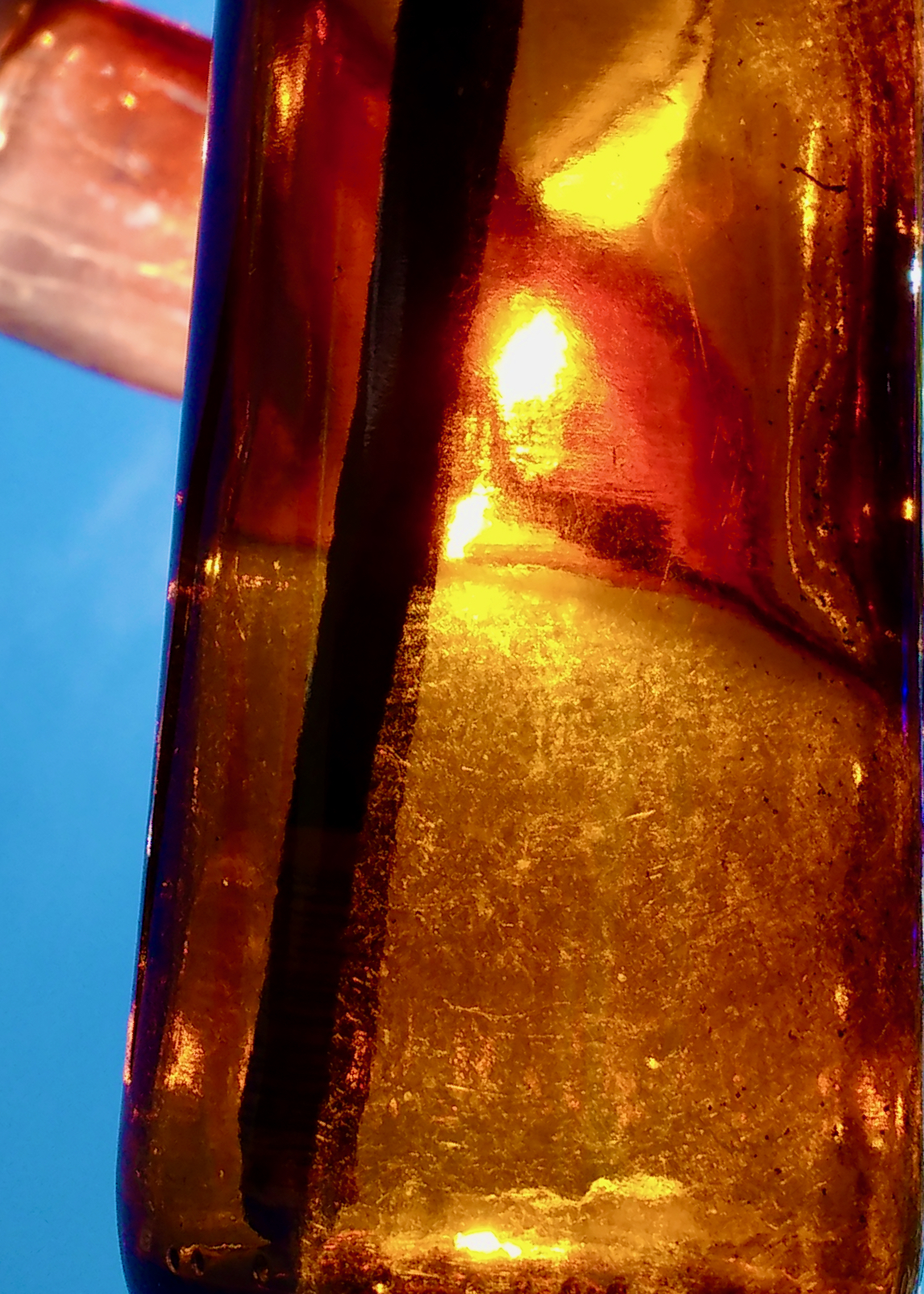
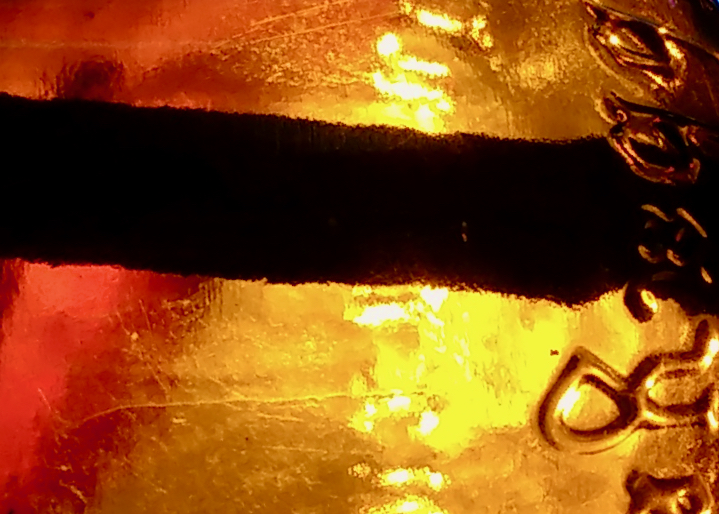
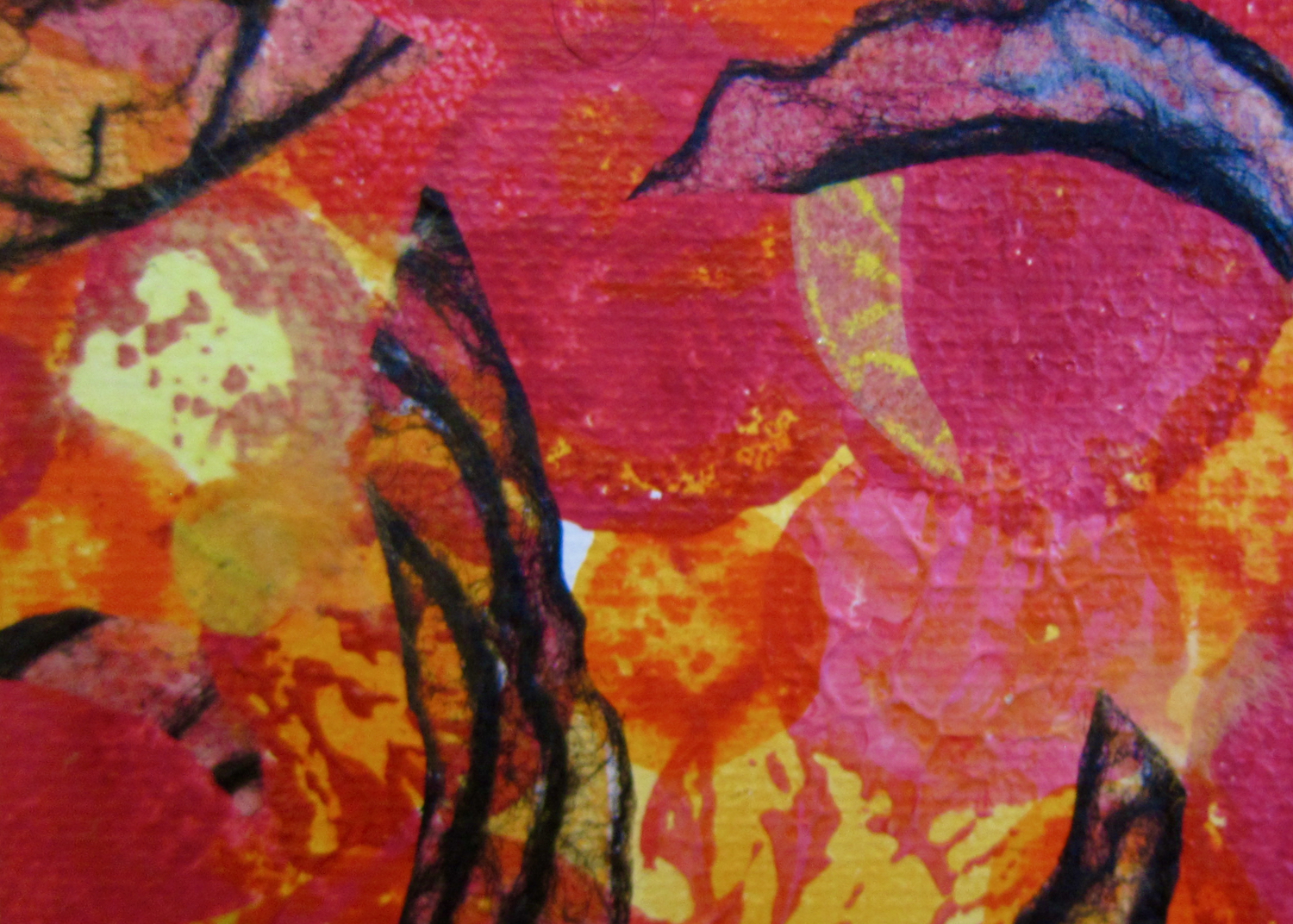
Once the reality of betrayal shatters the numbness, your rage awakens molten creativity and revives the blacksmiths and glassblowers of old. Your curses blast the forge and explode in the fire, where they transform into a glowing orb with fierce swirls of crimson, orange, and yellow.
The fiery globe is too hot for human hands to touch, and curious viewers must back away from its dangerous fragility. But when the orb cools, when it settles into itself, thousands will flock to this glass masterpiece, magnetized by its primal beauty.
The rage orb electrifies viewers and powerfully connects them to the anger of our hurting world, for this beautiful object has been forged and burned and spun from the rawest materials on earth: the fury of the wronged and the anguish of the betrayed.
When the orb is tilted at different angles, flashes of violence appear, open wounds that seethe beneath the fragments of a shattered heart. Critics may find your art disturbing or claim it contains glints and flints of revenge, but I say, “No, not traditional revenge or actual violence. Only the satisfaction that comes from refusing to bury pain inside. It takes courage to harness anger’s explosive energy and hurl it into a new form, sowing seeds of fire into grief’s deep furrows.”
Although the orb’s creation has not exorcised anger for good, it has given you some peace. Its presence is a testament to the value of authentic feelings, no matter how uncomfortable, sharp, or bitter. As you navigate this strange land of loss, you bring rage with you, for it is a righteous guide that divines underground springs of truth.
(Thank you Sean McDermott for making the recording! For a physical or digital copy of Visualizations for Heartbreak, please contact Catherine Raine at cafrinie@yahoo.ca).
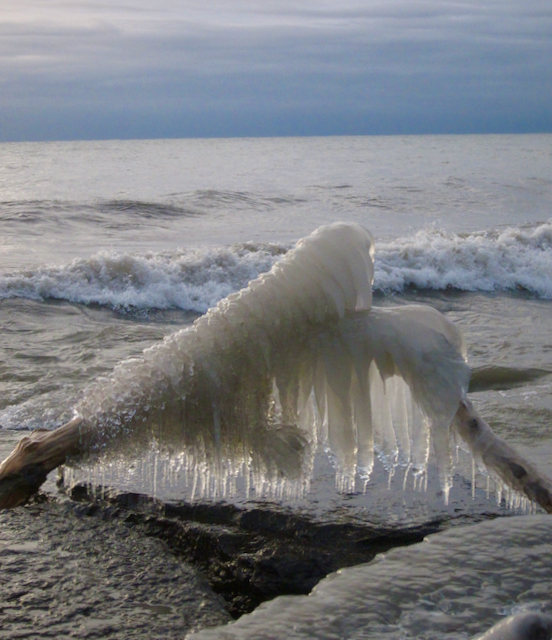
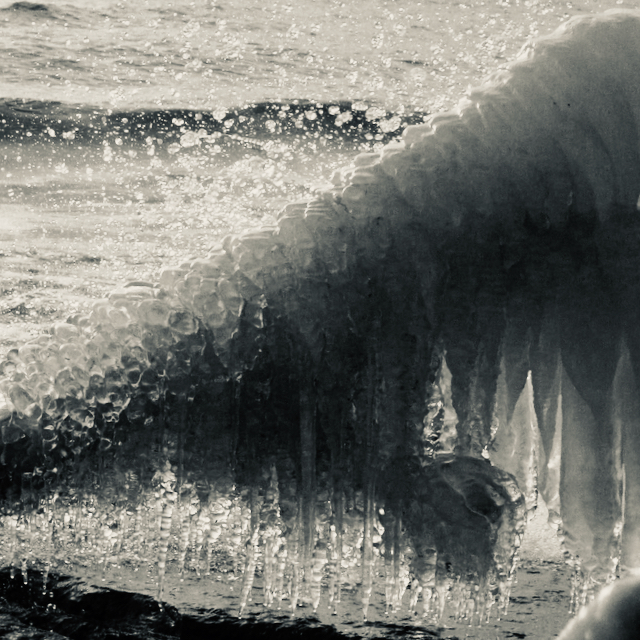
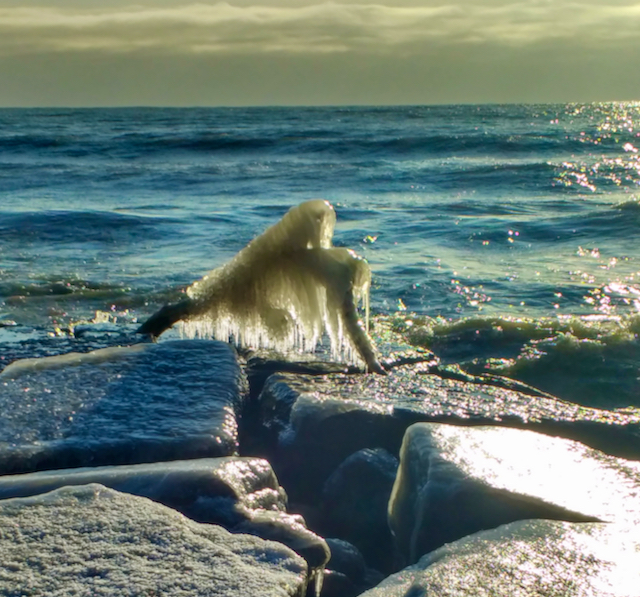
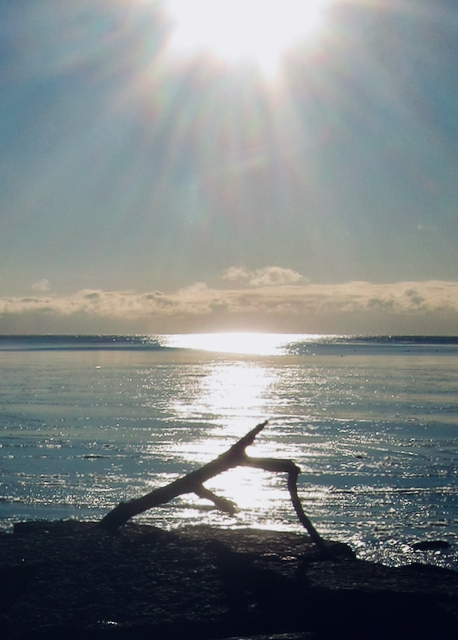
After the storm, spindles of ice turn a length of driftwood into a sparkly comb, and a forsaken branch nearby bears ice down to the stone.
Anchored in a resolute stance between jutting shards of rubble, repeated lashings of water and freezing spells have burdened the wooden frame. However, a thousand gale-driven waves have not been able to shake it from its moorings.
A sculpture carved in adversity at the edge of the lake, it resembles a silent harp resting on its side. With strings ever more shellacked as winter deepens, the harp seems both haunted and haunting, a formerly melodic rib cage benumbed by cycles of fear and grief. And as the storms intensify, layers of icy bulk cling more fiercely to the body: a freeze frame of memory rendered visible.
Come the melts of spring, the icy coat dissolves and bare driftwood testifies to the hardship it has endured — rough exterior sanded, an extremity sheared from its host.
Cracked and forgotten, the harp-shaped branch may be flotsam, but it is not an useless instrument. With her strings missing, she is all the more open to the beyond. She still stands and bathes in sparkles. She still sings.
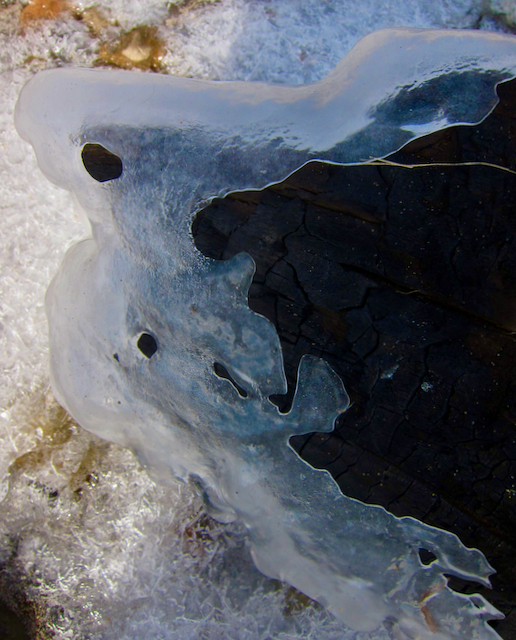
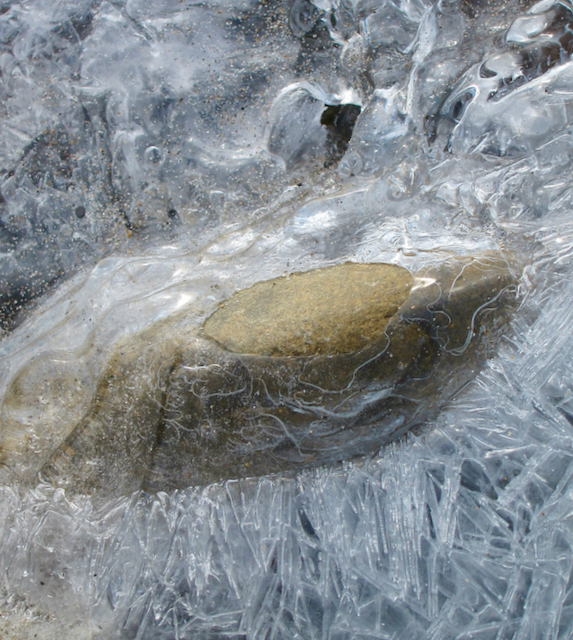
As I nestle between lakeside boulders, drifted ice drapes me in a veil. Successive layers of frozen water etch a daguerreotype portrait of arrested lava, once-fluid anger trapped by a season so heavy and cold.
Behind my nape, the thickness of the ice is greater, and swirls of gray-blue shadows entwine in smoky tendrils with hints of ash. From my chin, crystal shards have grown into a beard that flows from the seam where my edges meet the lake’s beach below.
The ghostly poncho that almost completely glazes me has left only an egg-shaped tonsure melted by the sun. In a few weeks, spring’s solar ascent will fully dissolve my obscuring cloak, but for now I am content with the small oval that lies exposed to the elements.
One day soon, an exhausted bird will warm its feet on my crown. Resting after miles of migration, my guest will sit for a spell all hunkered down into its feathers. As it turns its beak towards the water, it will flex its wings to the humming thwack of high winds that scour my quiet skin into forgiving sand.
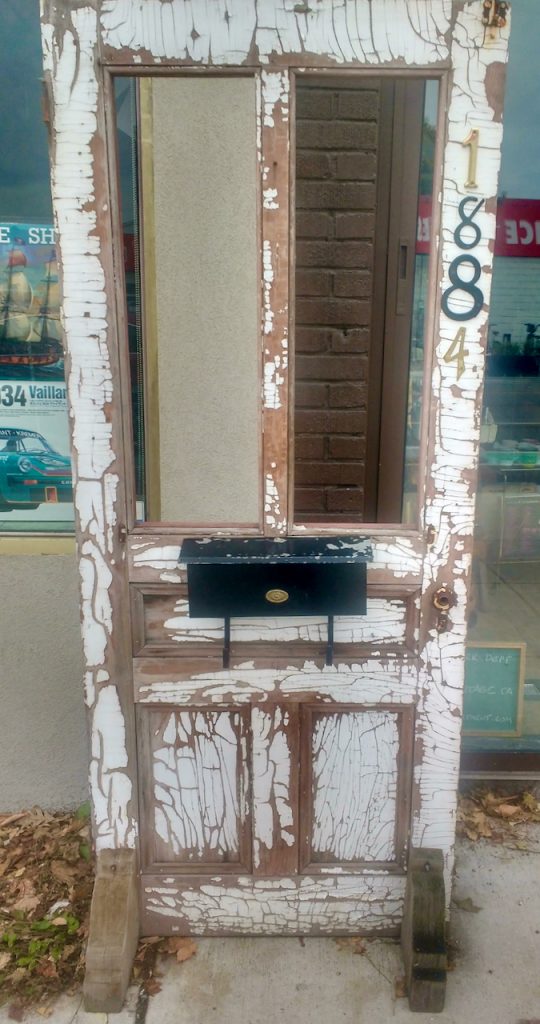
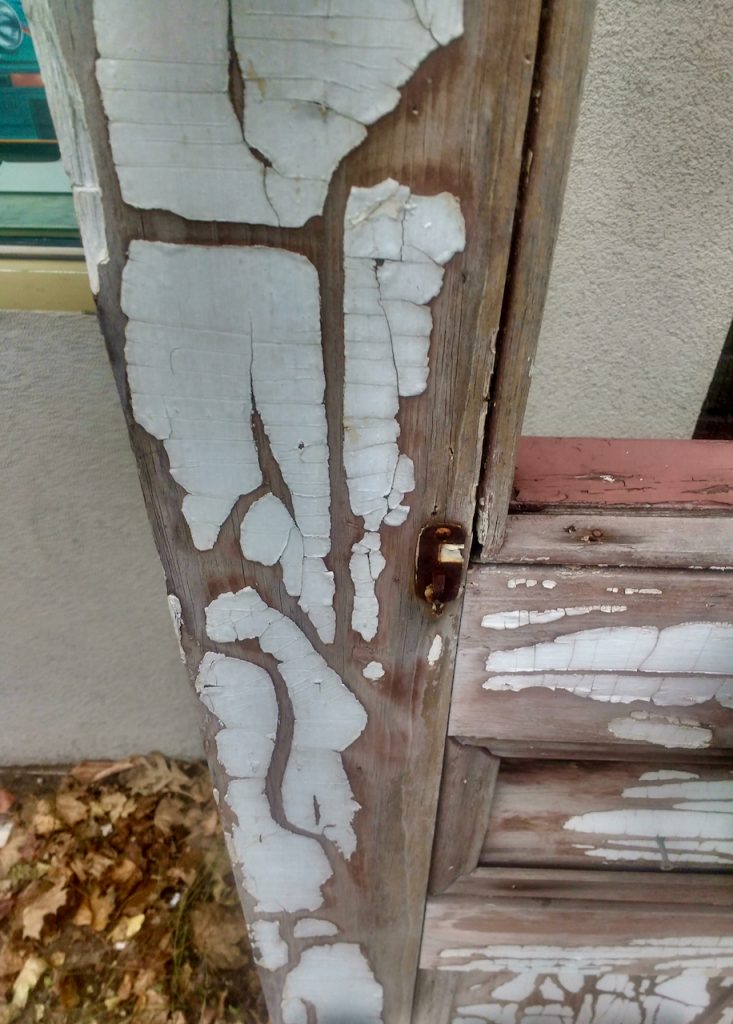
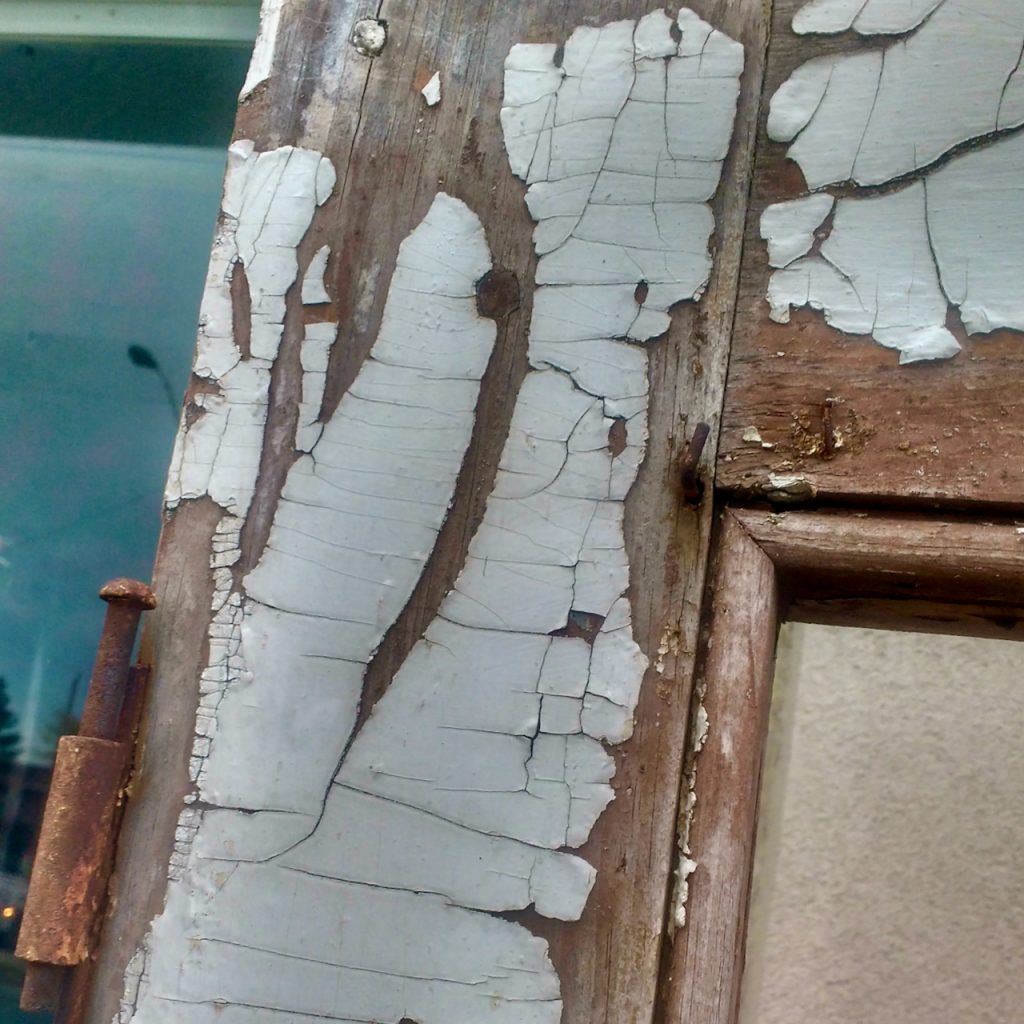
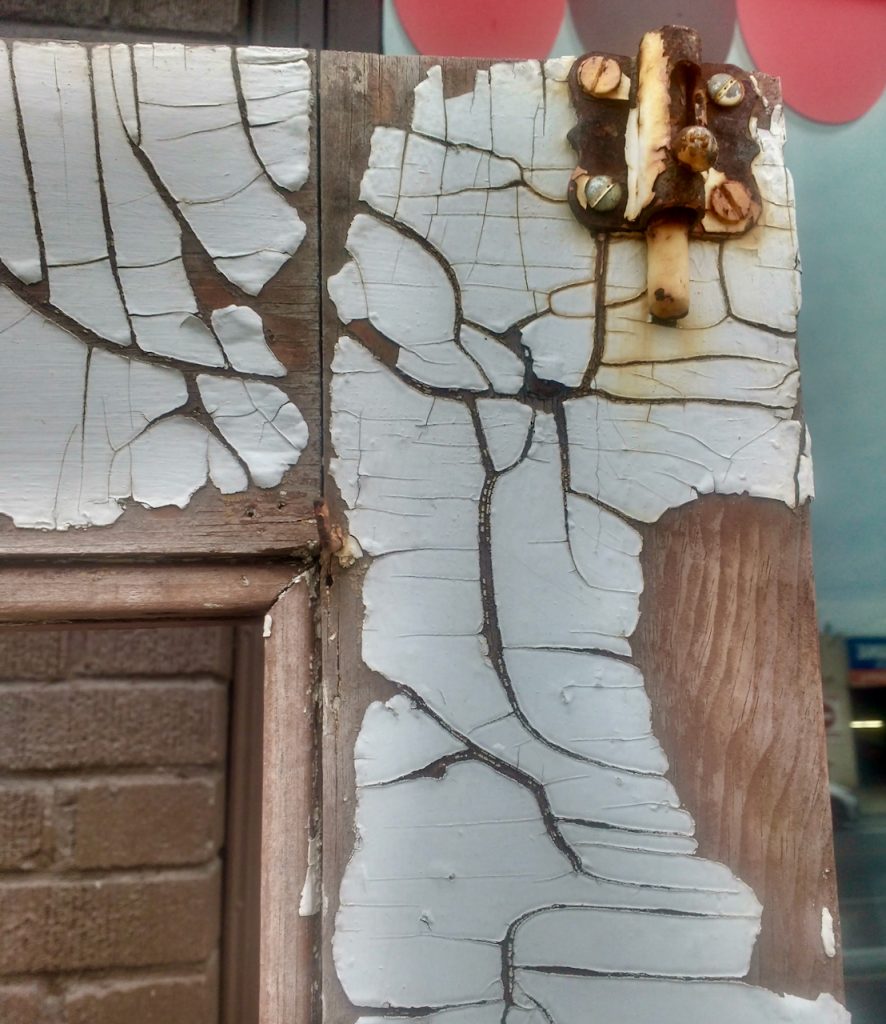
Unexplained on the wide sidewalk, the door stands upright with the aid of two wooden stands that grip its bottom rail a few scrapes above the absent threshold.
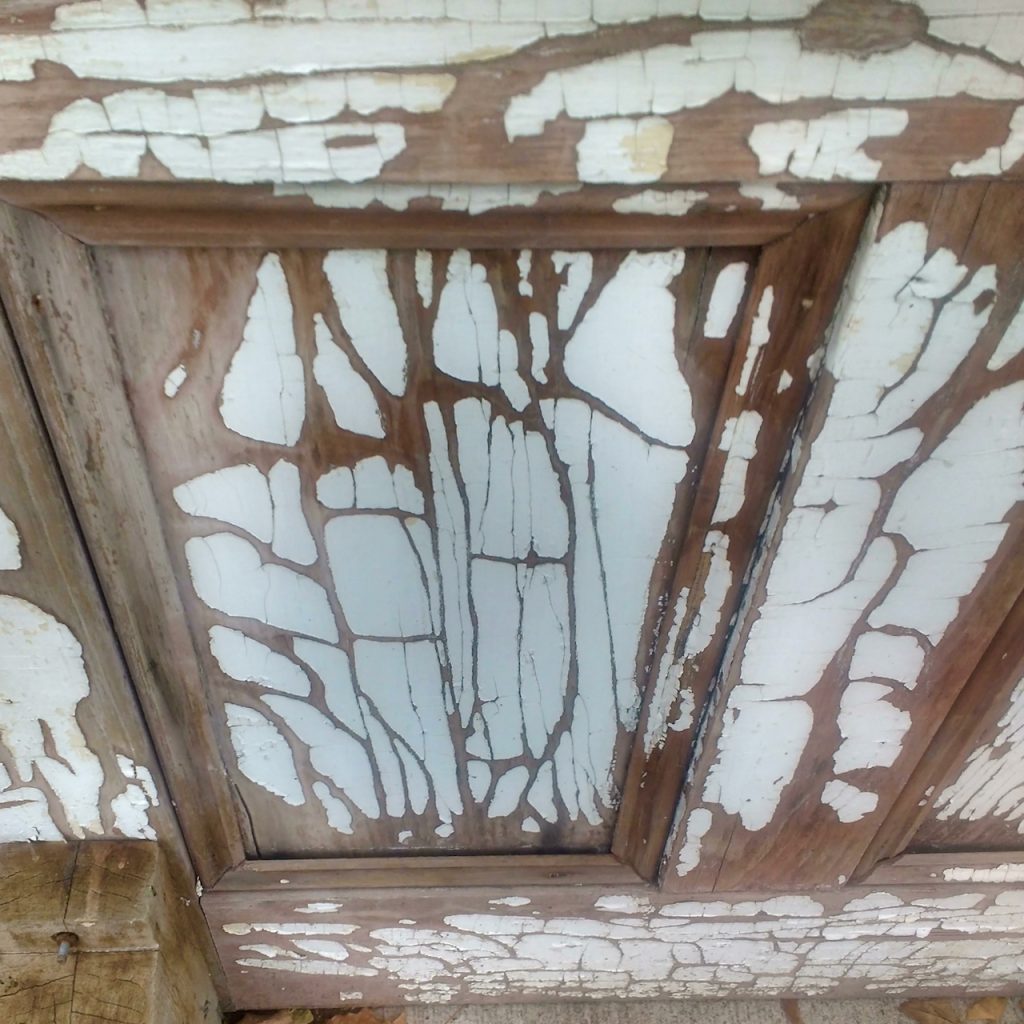
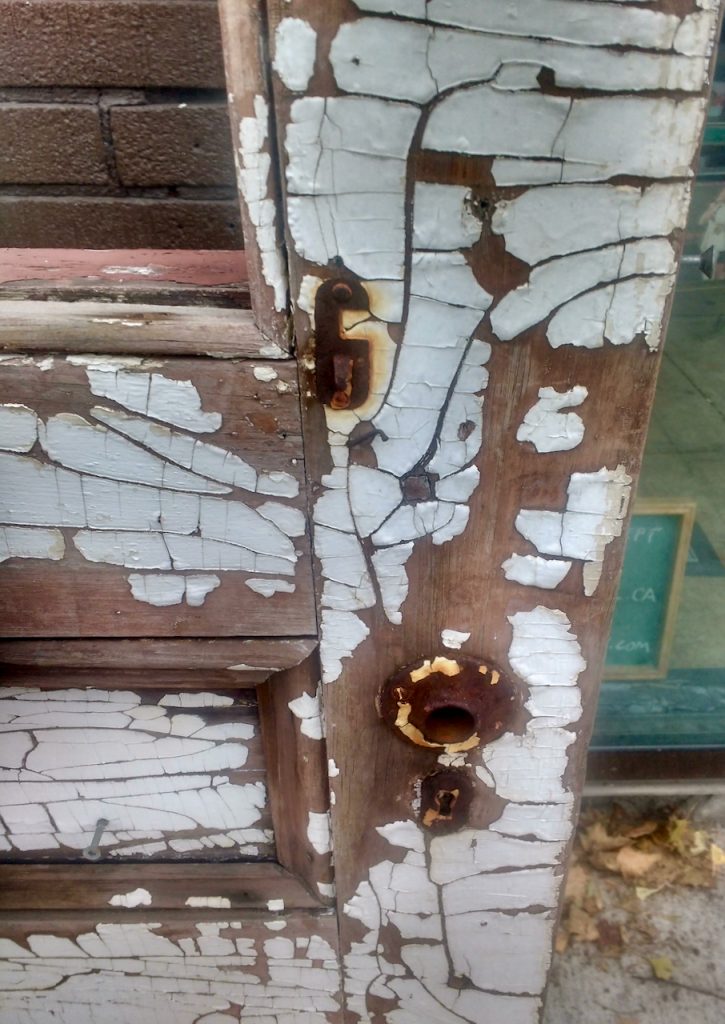
Though the door no longer opens or shuts, the stout pin of one hinge remains, partly encircled by a barrel of the same rusty vintage. Cracked layers of thick white paint on the panels accent the unhinged condition.
Without a hinge to hitch portal to solid frame, access to an interior is lost. For a hinge is the servant to movement. It facilitates welcomes and good-byes. It swings the dancers, defines transitions, provides an exit.
This displaced door reveals the crucial role of hinges, for entrance to beloved places relies on a connecting part so humble that its anatomy is rarely learned: leaf, knuckle, pin, sleeve. Visitors take the obedient swivel of doors for granted, assuming they can handle endless openings, hesitations, closings, and slams.
No longer a barrier between public street and private property, the door’s new context gives passersby the chance to pause and notice its value as an object divorced from human passage. Free from the press of admission and the drama of expulsion, it serves in a different way now.
With its superfluous locks and bolts on display, the unhinged door invites visions of access without traditional keys. For how might humanity evolve if restrictive concepts of ownership become unfastened from their jambs? How might we open ourselves without fear?
Recorded by Sean McDermott at Offaly Road Studio, 2022. Read by the author.
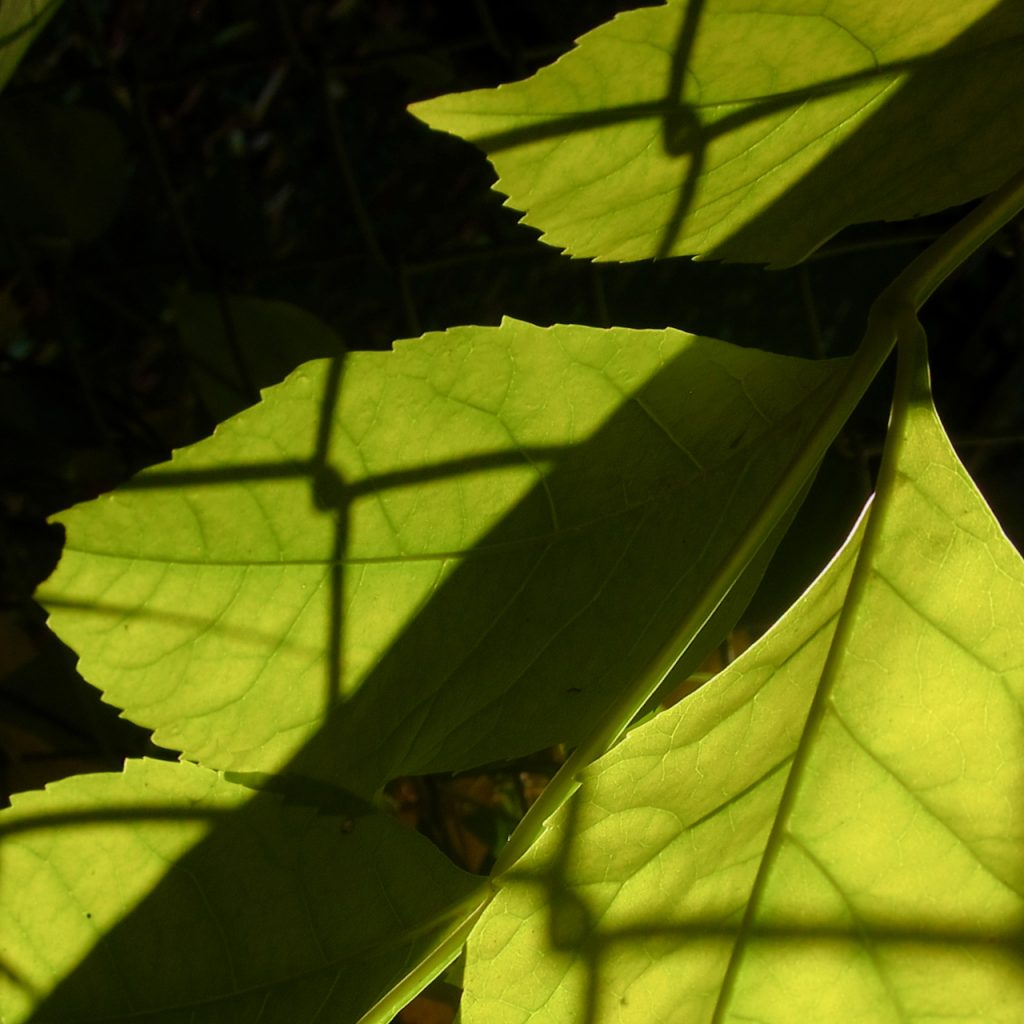
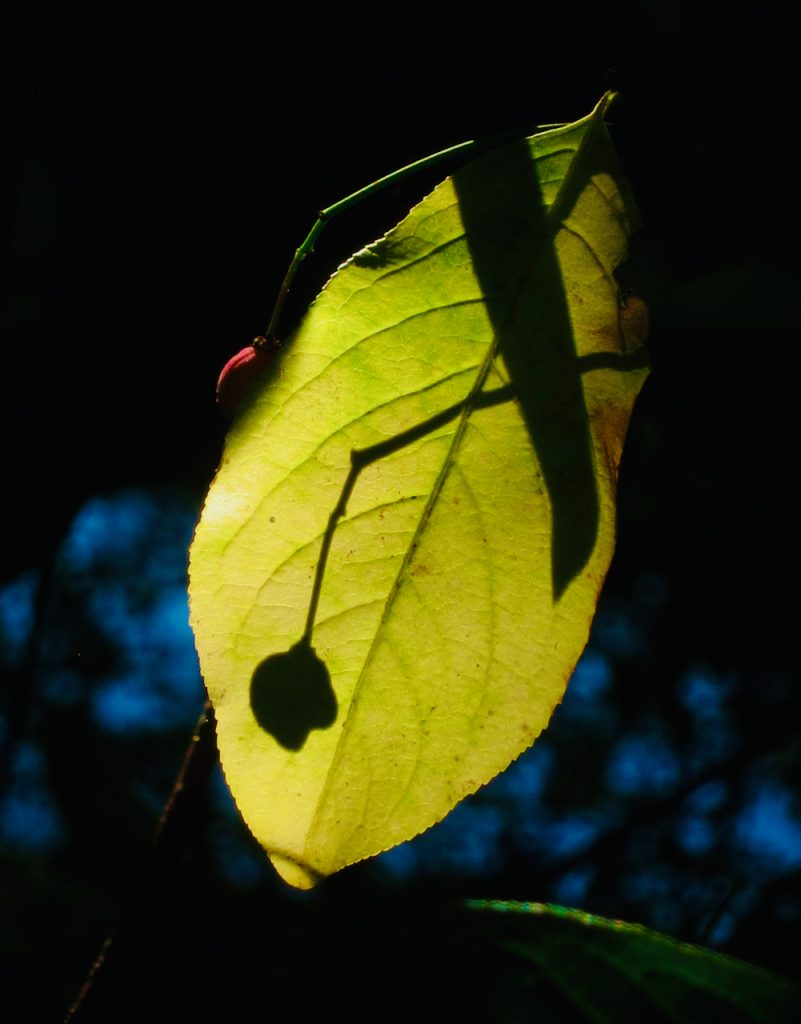
At nine o’clock in the morning, serrated leaves by the fence receive the signature of dark steel lines. Dominant chains have eclipsed the delicate veins, and the diamond shapes seem to define the screen of the leaf-surface, imposing rigid patterns on what needs to grow free.
But the fence’s shadow, looping and stamping itself at nine, will be gone by noon, leaving the victorious leaf unchained. After all, it never asked to be cast in a shadow play. Nor did the plant sign a lease with the barricade that straddles its roots. It only desires to rise from the soil in peace.
The tattoo of links is impermanent, for a seemingly solid fence in the morning becomes a shadow of itself as the day wanes. By psychological extension, shifting solar movements can suggest a hopeful metaphor: harmful habits that create barriers to happiness can dissolve like so many shadow-chains. For example, the bruising self-criticism that overshadows confidence and disturbs inner peace may not be the iron-grey shackle of truth we assume.
If distorted thoughts are building a cage one steel rod of fear at a time, consider the power of one question, “Are these thoughts true?” Then take a deep breath and call out chimeras from their hiding places — behind benches of judgment, beneath shaming silences, under tongues that tsk-tsk on the regular — and watch them melt into phantoms with the passage of the sun. Challenge the cruelty that crushes self-love and reject the quelling projections of others. Above all, hold fast to what illuminates, such as visions of leaves that turn fences to trellises, limitless shelters that dapple and shine.
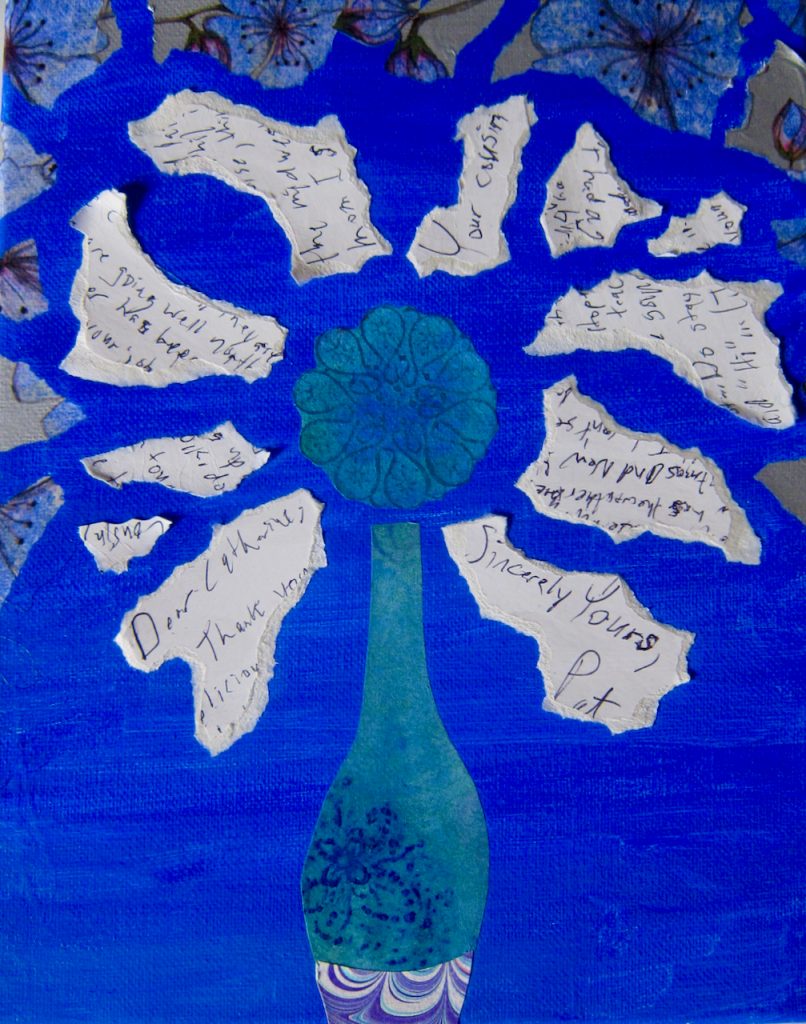
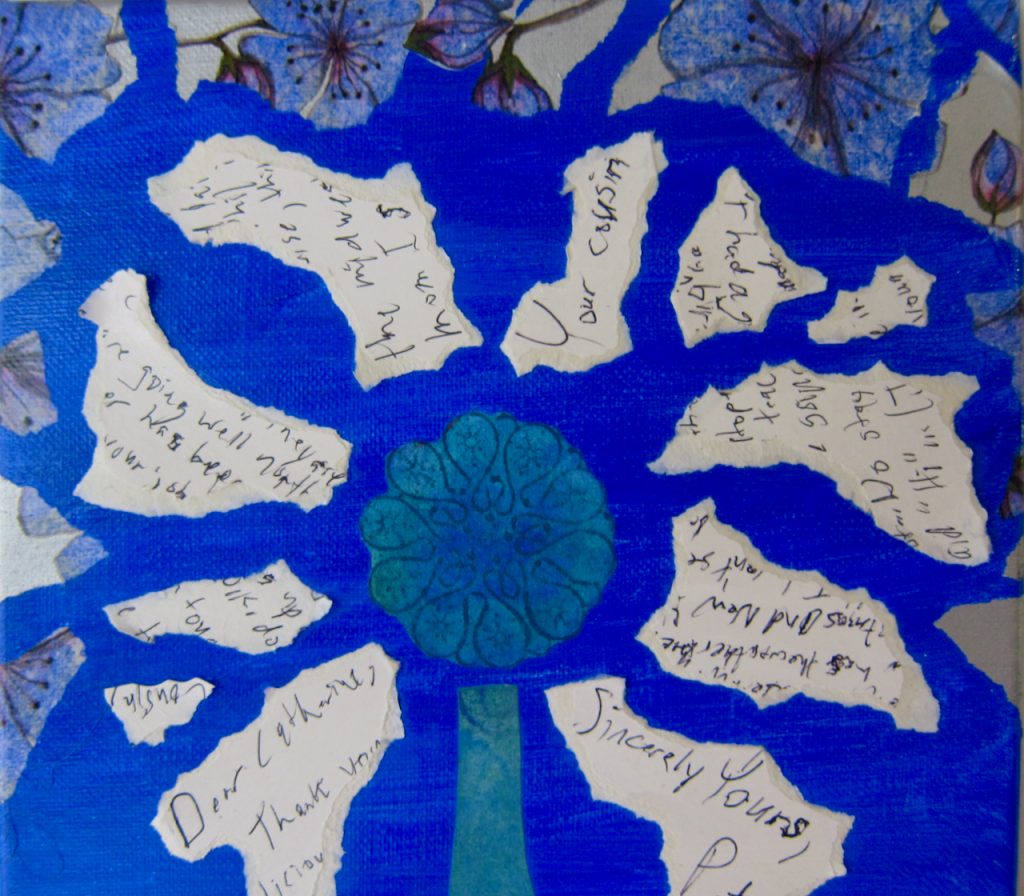
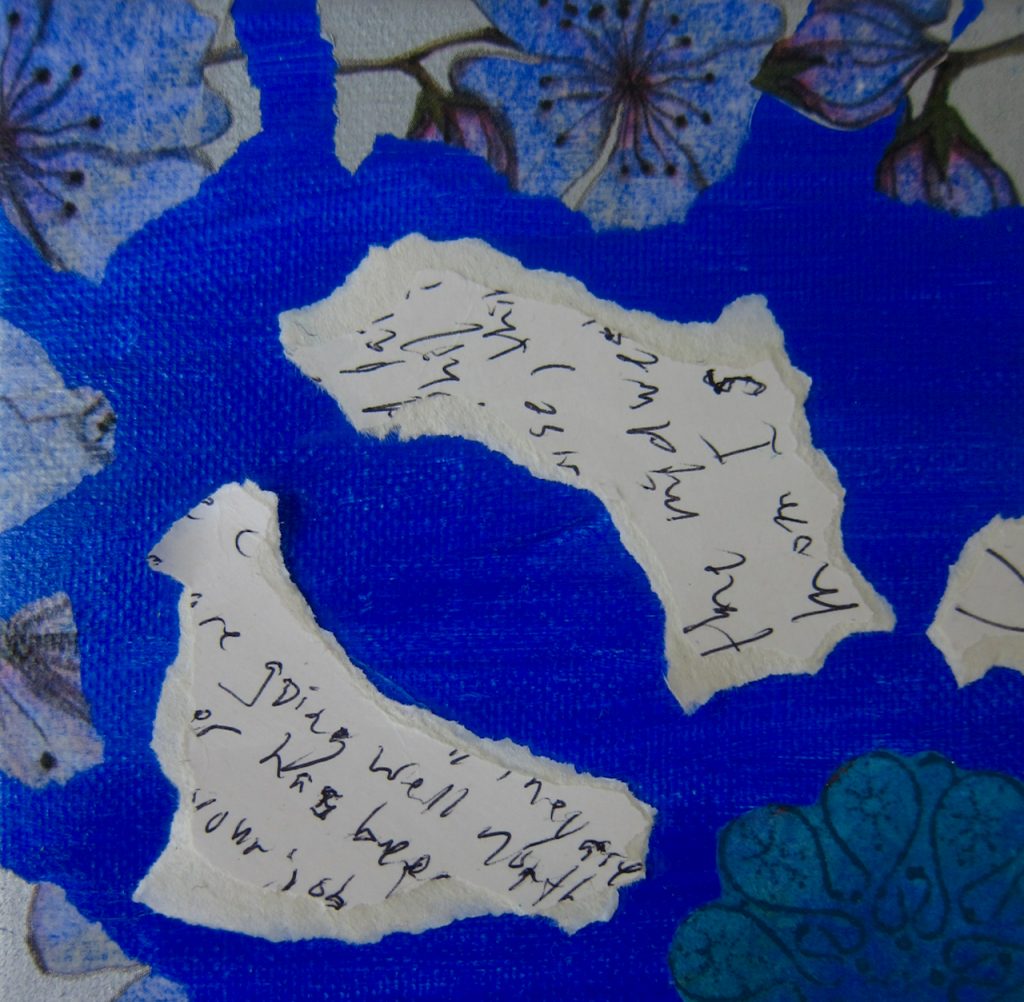
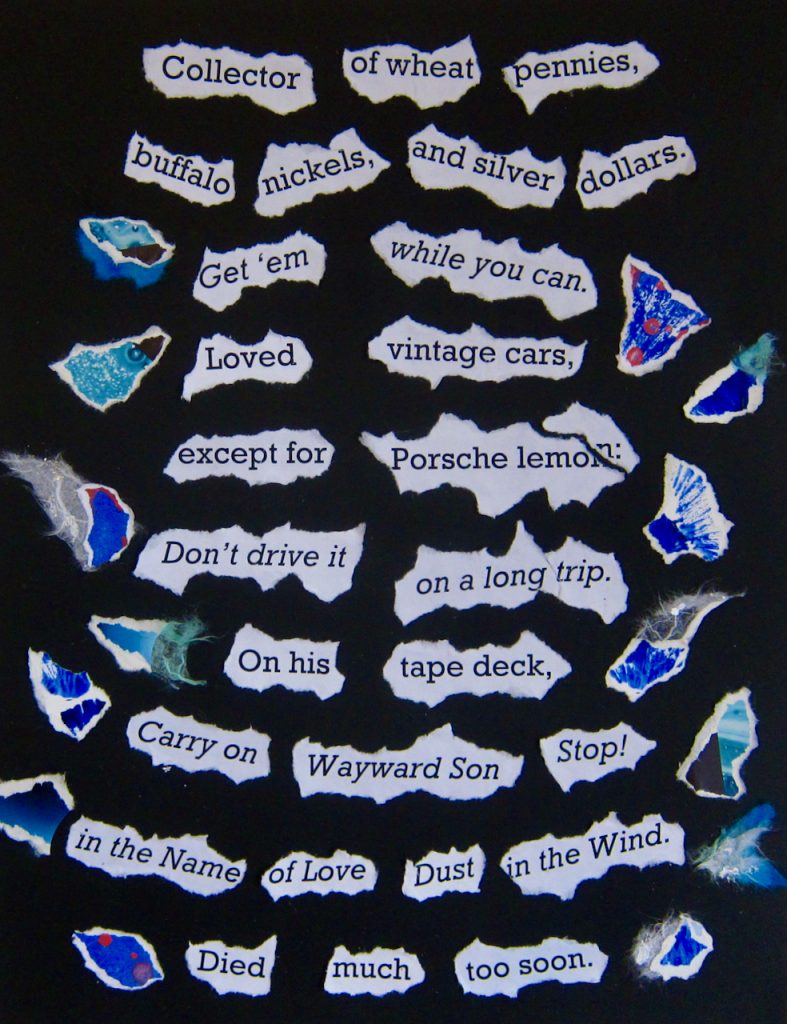
Not long before Pat died, he sent a card thanking me for a Christmas gift. The medication that he was taking caused his hands to shake, and it touched me that he had written by hand despite the difficulty. When composing Cousin Pat’s Letter, it seemed right for the piece to include an example of his handwriting, symbol of both his uniqueness and his suffering.
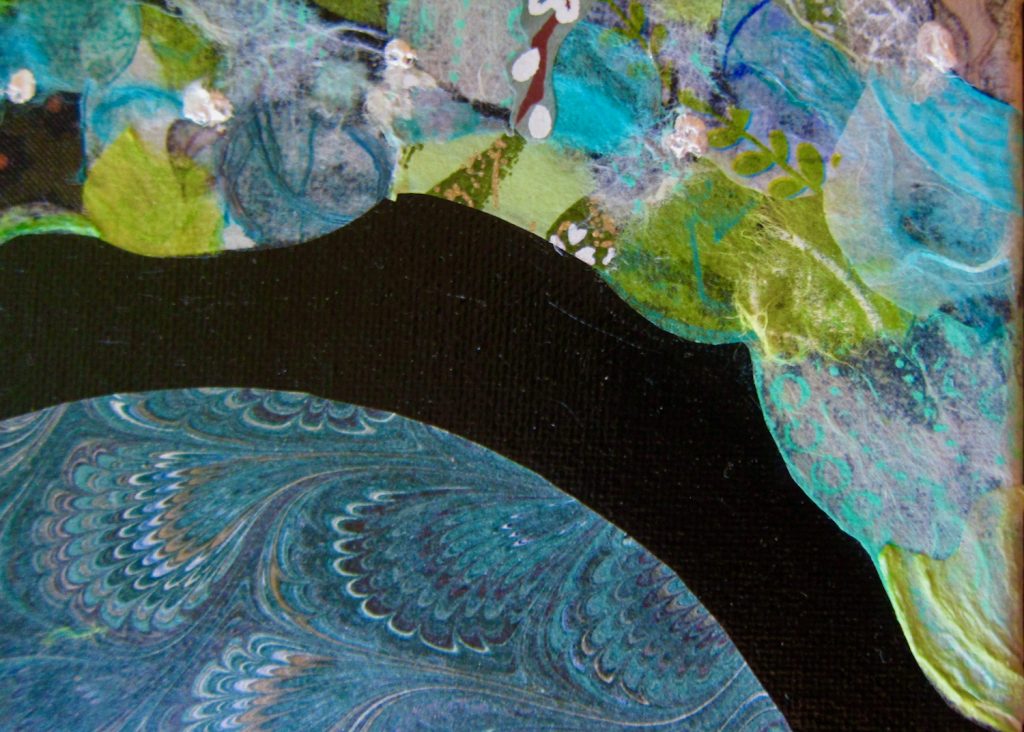
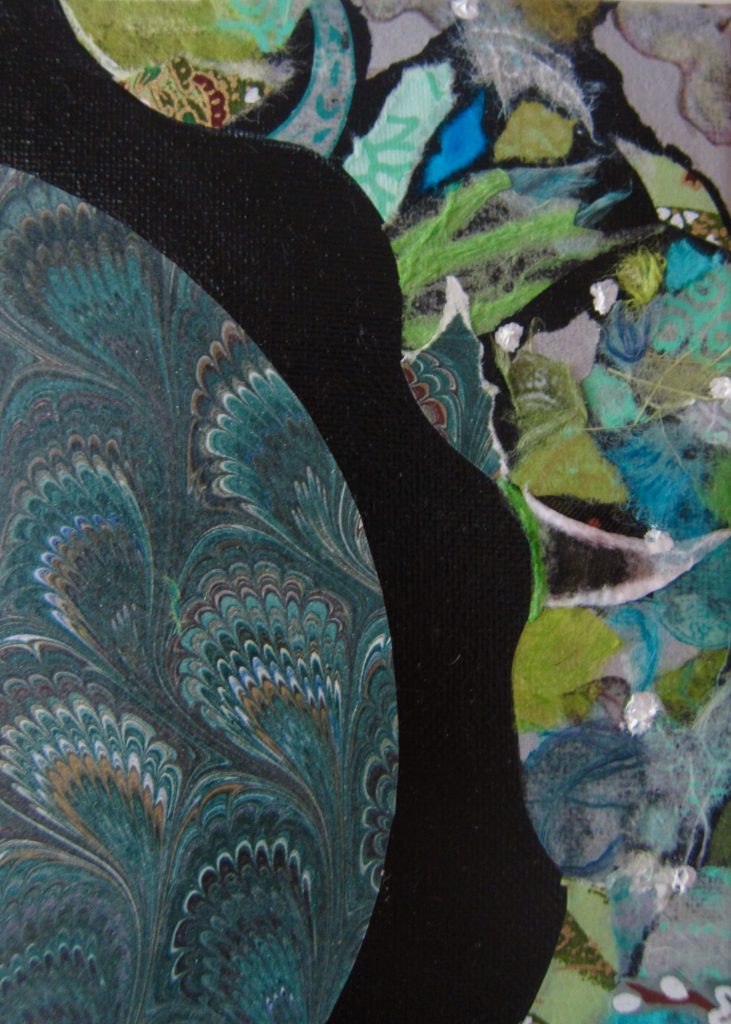
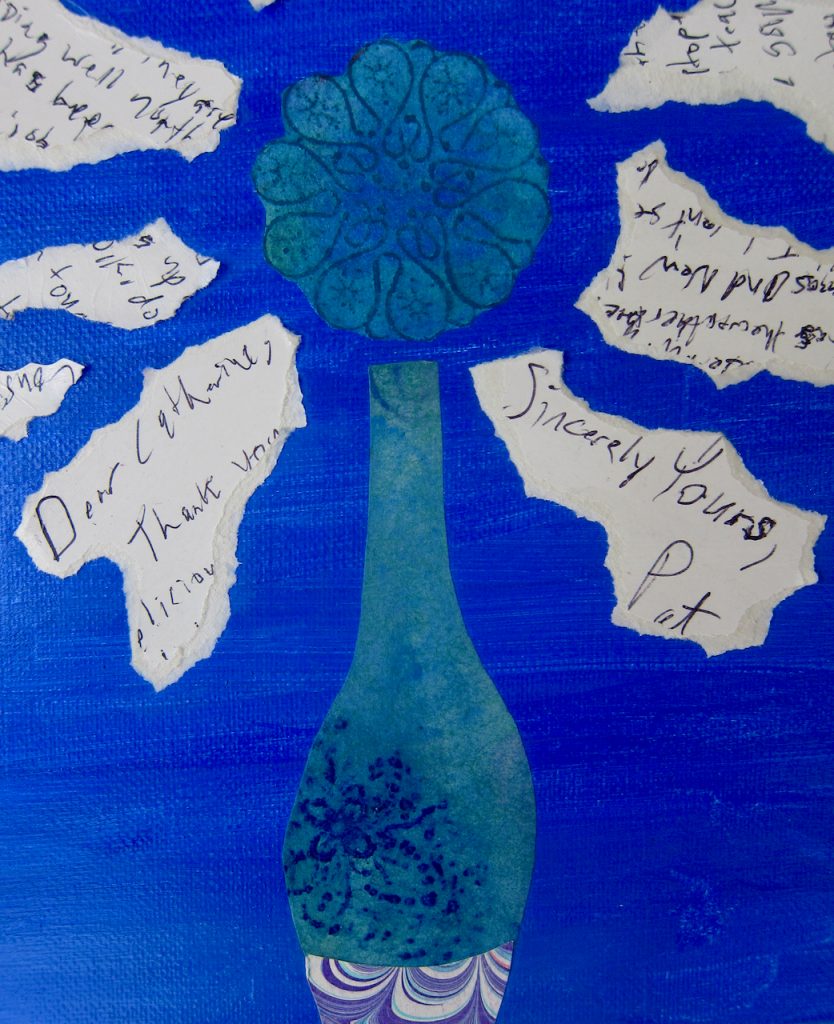
Detail from Cousin Pat’s Letter, Catherine Raine 2020Detail from Cousin Pat’s Letter, Catherine Raine 2020
Pat used to collect antique glass bottles, so for his collage I fashioned a bottle shape from some handmade paper to provide a stem for a flower. Fragments of the thank-you letter became the petals.
Detail from Cousin Pat’s Letter, Catherine Raine 2020
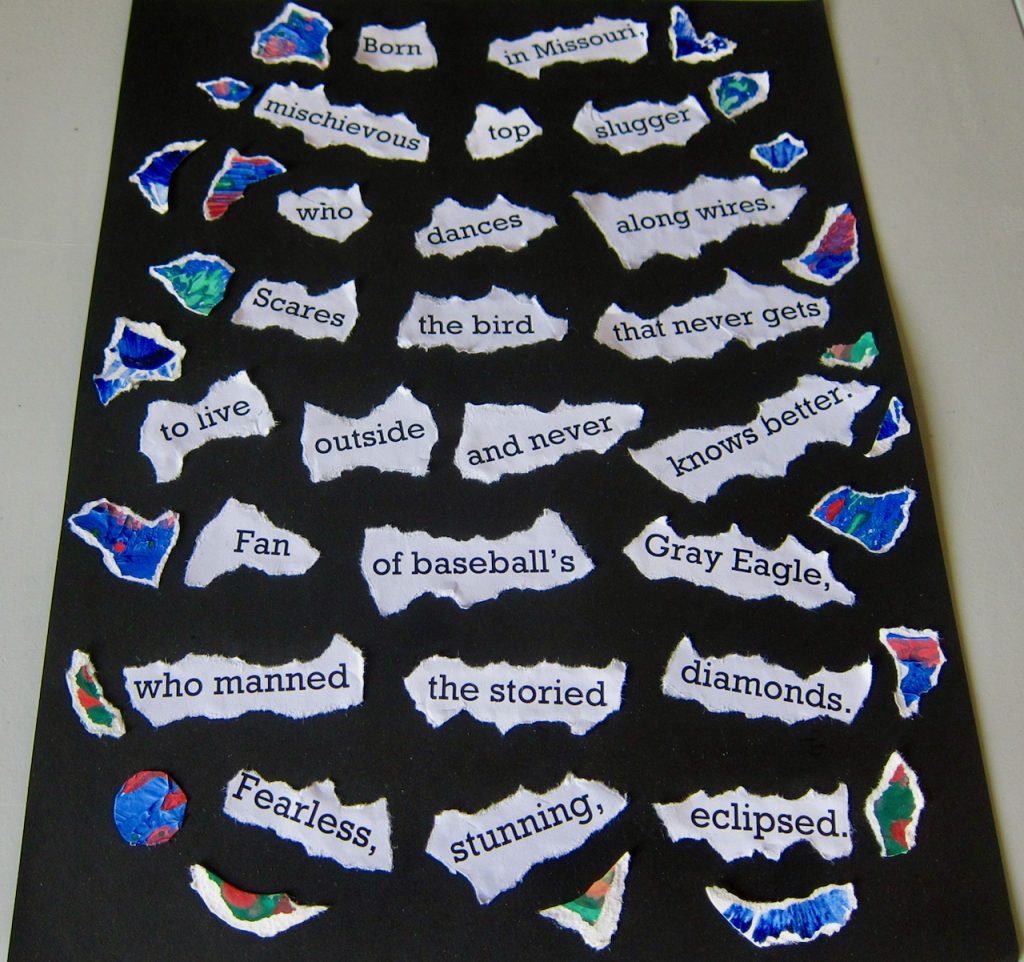
In addition to glass-collecting, Pat enjoyed writing haiku. From 2002 to 2003, he composed almost two hundred three-line poems about cars, artists, coins, baseball, rock bands, and the antics of animals he observed from his window.
Born in Missouri, Words and Phrases from Haikus by Patrick Jones and Arranged by Catherine Raine, 2020
In the months after his death, I read all of the poems, and a number of words and phrases struck me as characteristic of Pat. Eventually, the gleaned words suggested themselves as a new poem, and I hope Pat would approve of how I arranged his lines to make this collaborative text. Like the memorial collage pictured above, Born in Missouri is devoted to remembering my cousin’s interests, creativity, and sense of humor. He died much too soon.
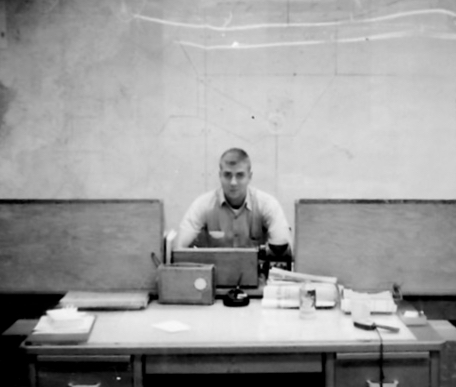
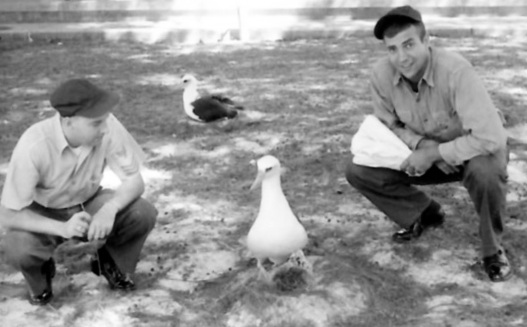
Ron Raine (1937-1995) on Midway Island in the late 1950’s
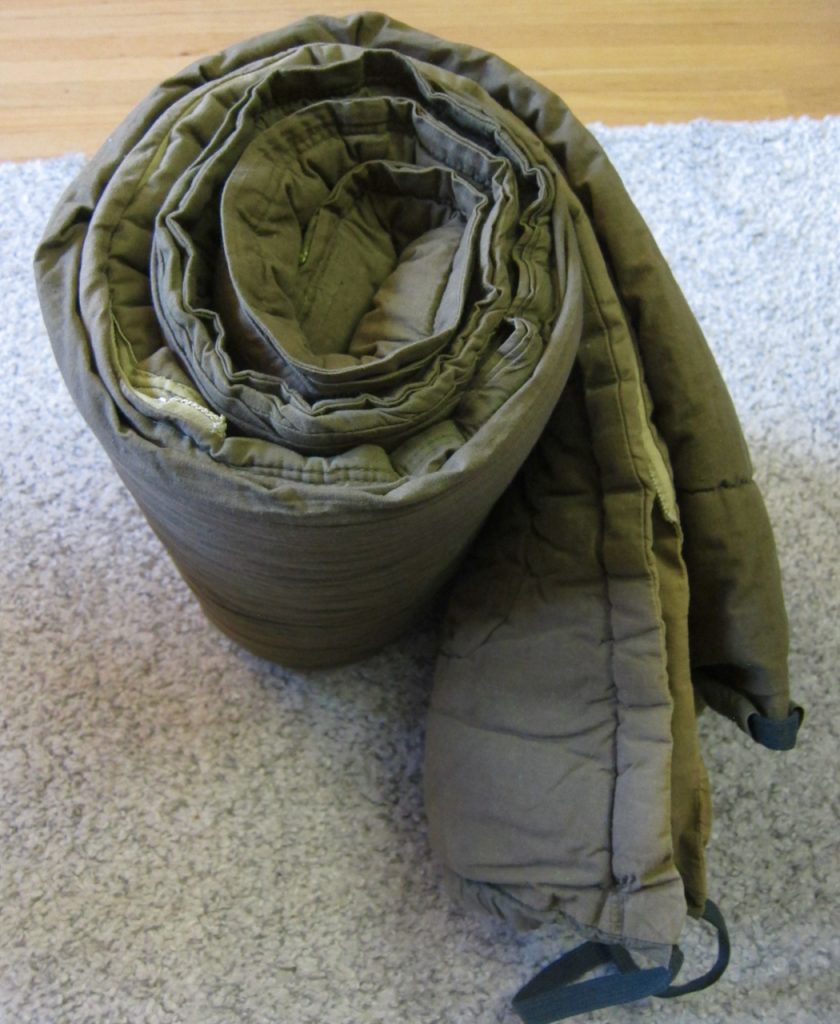
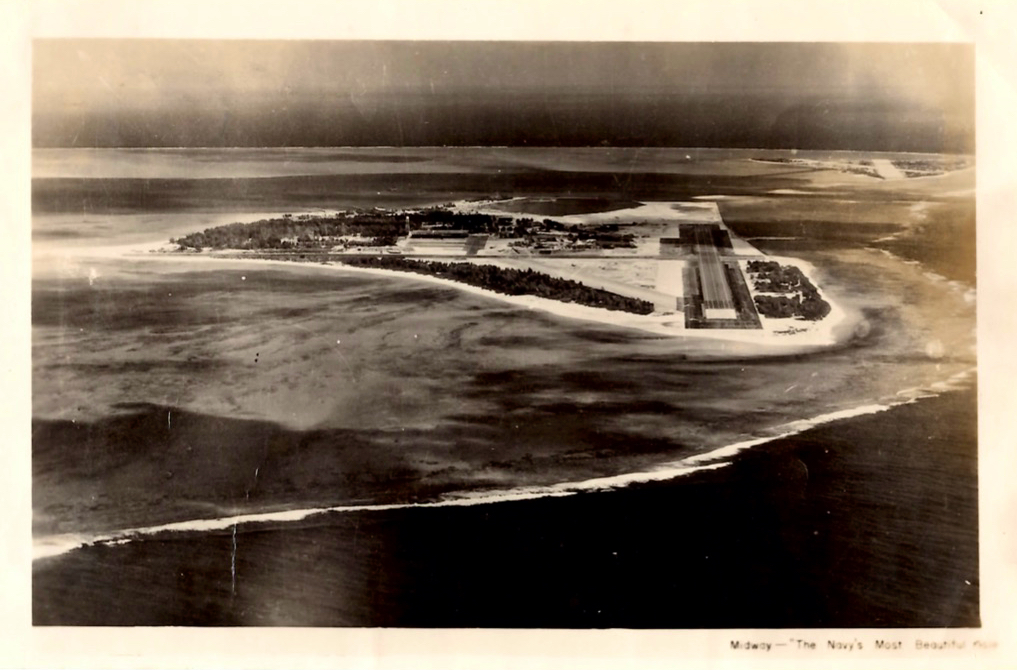
Dad, I’m giving your military sleeping bag to the Anglican Church of Canada. The last time you unrolled this large pocket for sleepy cadets and folded your tall frame into it, Eisenhower was president, and you were training to be a Naval Air Traffic Control Officer. From Midway Island, you witnessed atomic testing in the Pacific, received a gooseberry pie in a package, and wrote long letters to your sweetheart.
Midway Island, late 1950’s
When civilian life resumed, you kept this olive-green souvenir of your time at Midway’s Naval Air Facility, and after your death in 1995 the bedroll that once padded your barrack’s bunk remained unclaimed. It was stored in perpetual coil in my Missouri childhood home.
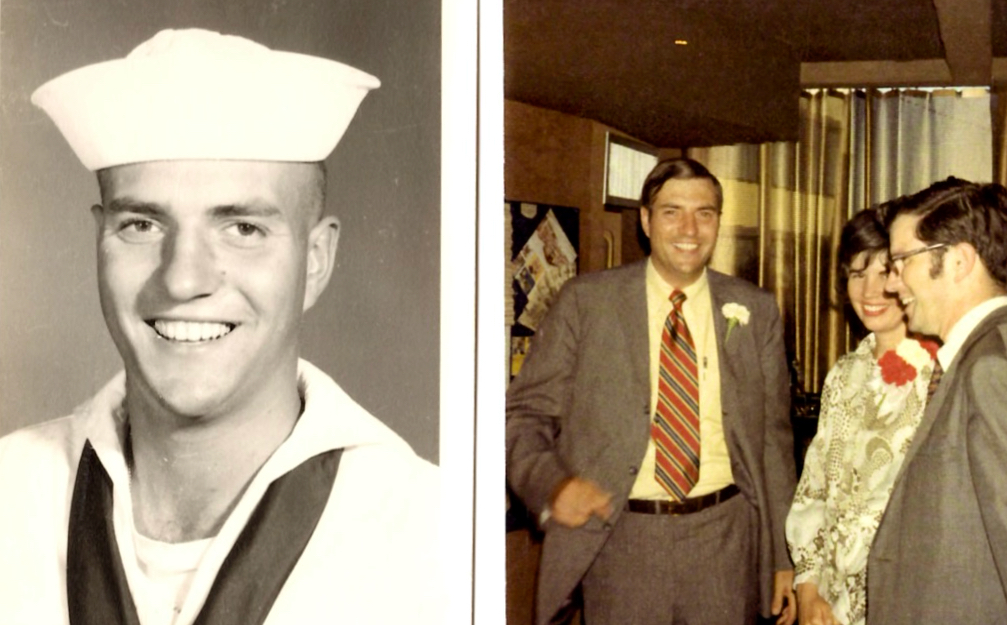
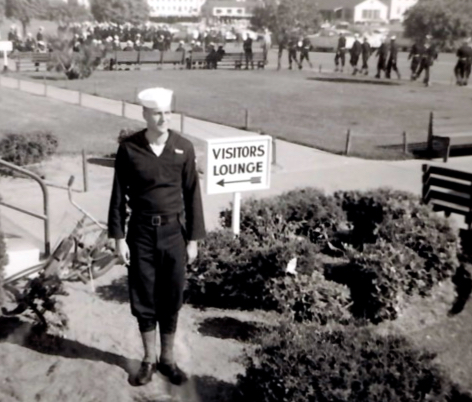
Dad at the U.S. Navy Training Center, San Diego in 1957 and as a TWA executive in the 1960’s
Not long after the 20th century spiraled into the 21st, the sleeping bag was unearthed from the mudroom and given to me. Following its passage from Missouri to Ontario, it returned to a dormant state on a shelf. Out of active service for 61 years, nobody expected it to unfurl for a second mission, and if the pandemic had not struck, it might have lain in limbo forever.
1957 or 1958
But today the Community Director of a Toronto church has called your Navy sleeping gear into service. He has requested emergency donations of sleeping bags, water, and shampoo for people who have pitched their tents against the sheltering bricks of the Church of the Holy Trinity.
So, I plucked your bedroll from its dusty cupboard and ran it through the washer and dryer. Then I ritually wound it round itself and bundled it into a shopping bag for transport.
On donation day, I arrived fifteen minutes before the doors of Trinity opened. To pass the time, I paced the nearby labyrinth with a loaded dolly that trailed behind like an unsteady pilgrim who carted your sleeping sack, a case of bottled water, hand sanitizer, and a blanket.
Guided by the twists and turns of an ancient pattern, I meditated on the evolving, looping journey of the sleeping bag — from Midway Island to landlocked Midwest, United States to Canada, Cold War to global pandemic, Navy to non-military encampment, father to daughter, car trunk to dolly, labyrinth to arched door.
Midway Island, late 1950’s
In the gentle maze of my mind’s center, images related to the transfer of Dad’s military property appear: my father is in the sleeping bag, 21 years old and having just seen the ocean for the first time, and now it is 2020 and a new person is snuggling into the bedding, someone who needs it.
Dad, I see your spirit in the sleeping-bag gift. I remember how you volunteered as a job counselor for a local shelter and as a cancer-hotline listener. I still see you in acts of service like the unrolling of a temporary bed and Its careful placement in a tent, a shelter during a time of pain. If you could send a message to your brother or sister in sleep, I believe it might go like this:
Mid 1980’s
Take this donation with my blessingand heartfelt prayers for your well-being.May it provide a protective layer between you and the hard ground below as well as the cold air above.
Like you, I have known struggle.I fought a cold war, lived with epilepsy, and battled for my very life, surviving two bouts of cancer before the third one got me. I was vulnerable. I was scared. I often felt alone. But suffering passes. You keep smiling. You keep making jokes.
May this old but sturdy bedroll of mine help you sleep through the night, giving you strength to face the morning. May it contain some of my optimism, fight, and love to match yours.May it not let you down.
Sleep well, dear comrade, and may sanctuary enfold you always.
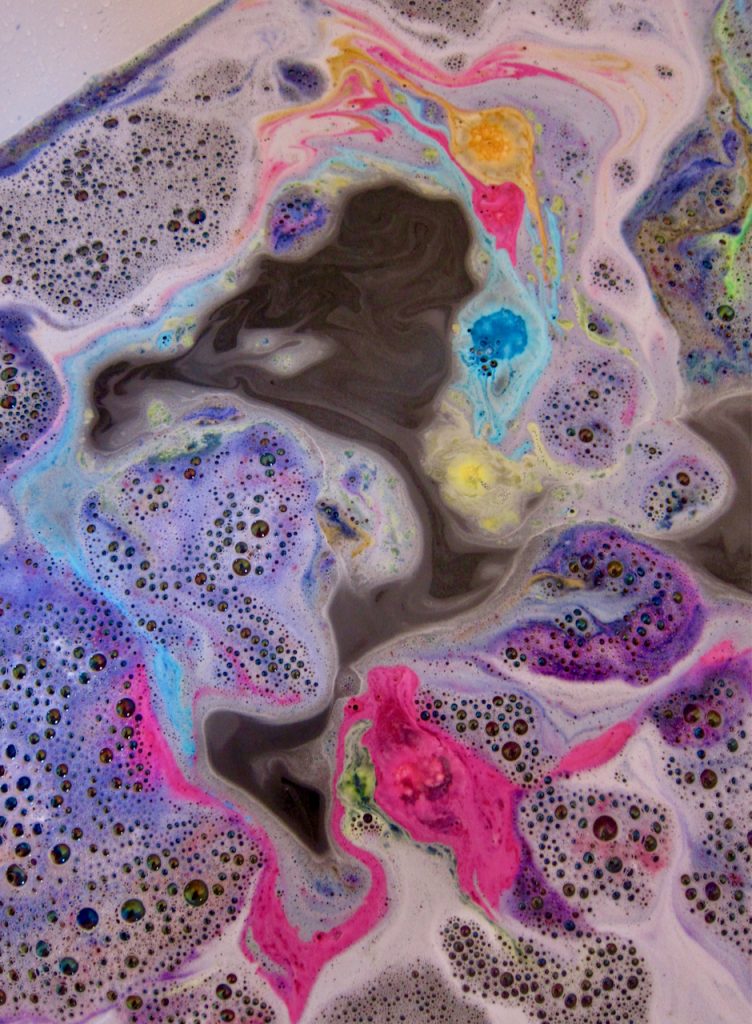
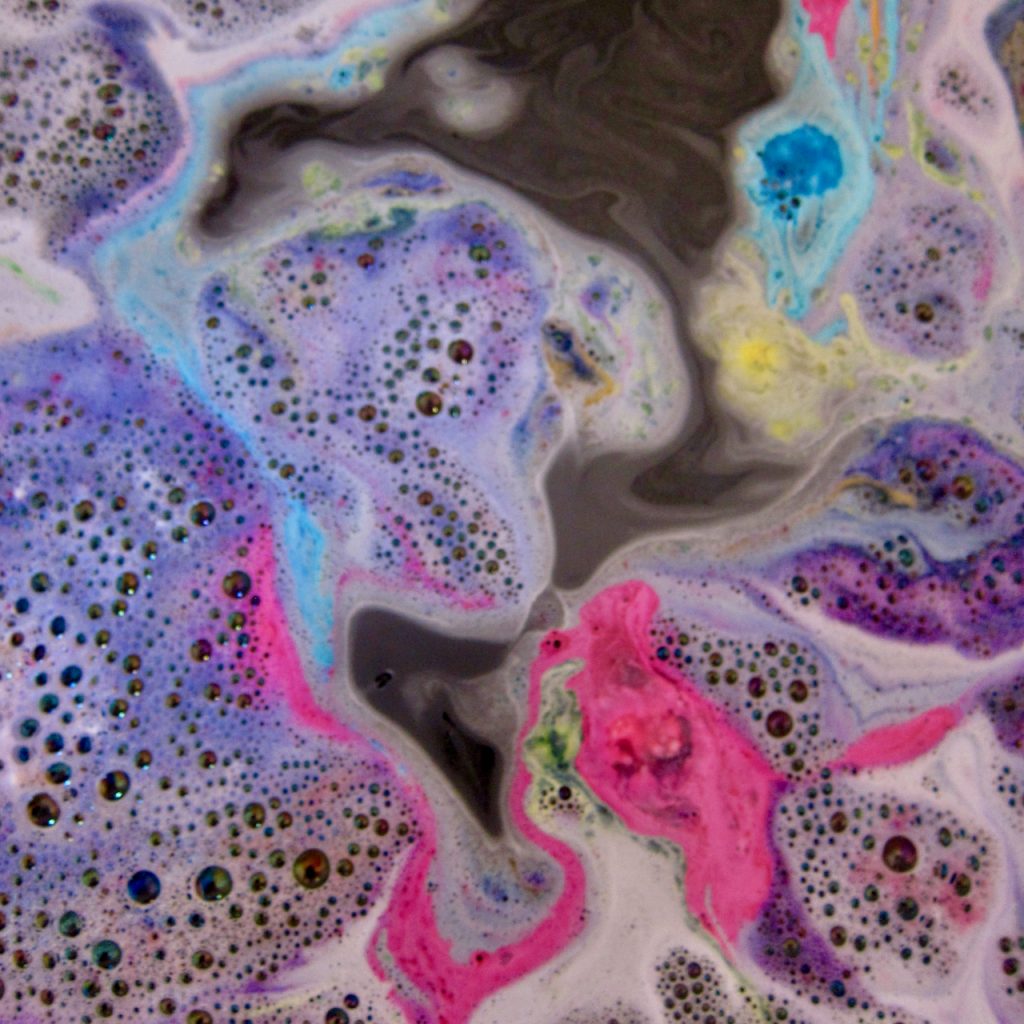
Putting bath-bomb enjoyment on hold for six months does not rate highly as an example of noteworthy sacrifice during a pandemic. However, from March to August of this year, it made me sad every time I saw the lovely non-violent bombs (a Christmas present from my sister-in-law) languishing in the bathroom cabinet.
Without access to a spacious lounging bath at home, I usually count on hotel rooms with tubs to provide ideal conditions for foamy immersion in swirls of moisturizing colour. During this unreliable year of ordinary expectations dashed, travel restrictions grounded my bath bombs on the shelf, turning them into symbols of the luxurious freedoms that I had previously indulged in without a thought.
On July 31st, Ontario entered Stage 3 of re-opening from lockdown, and I celebrated by planning a trip within the province, vowing, “I must not take this privilege for granted ever again!” The chosen destination was Bancroft, and I booked a motel for five days near the end of August.
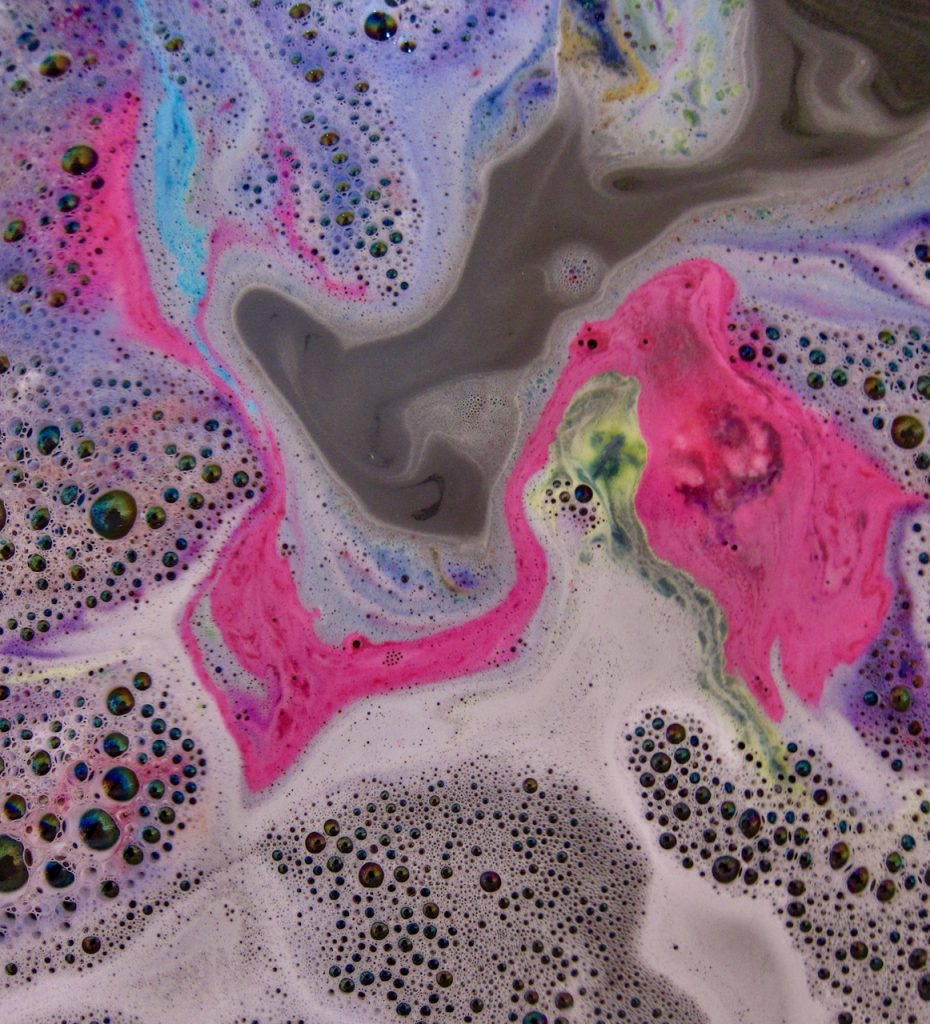
When the day of the road trip arrived, I carefully packed the four bath bombs that had remained inactive for so long. Upon settling into the motel, excursions to Silent Lake Provincial Park, Papineau Lake, Egan Chutes, and downtown Bancroft took place in the days that followed, and evenings were devoted to long soaking sessions in playful combinations of fizzing blues, purples, yellows, and pinks.
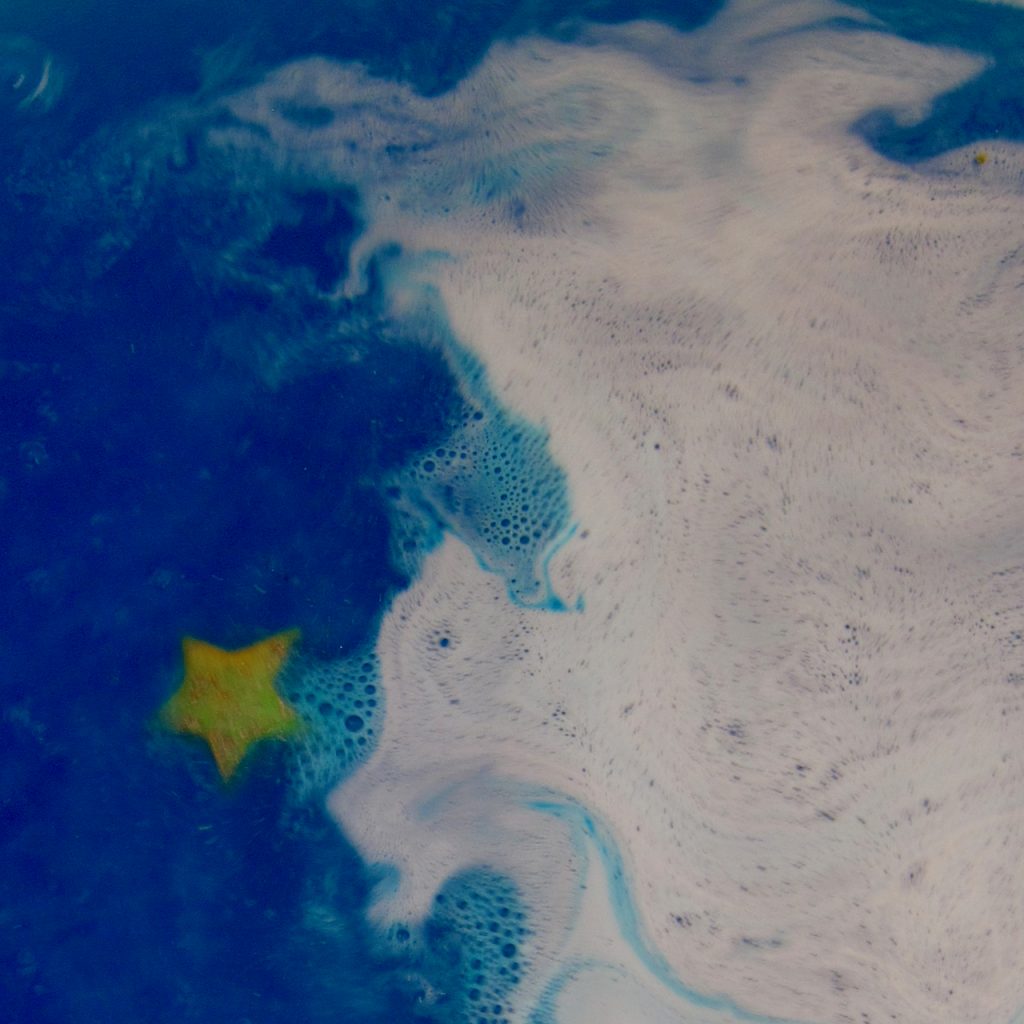
On the last day of the holiday, bittersweet satisfaction accompanied the ceremonial dropping of the fourth unexploded bathing-device in the tub (indigo with gold stars) before fully packing up for departure. Never had I appreciated with such fervour the deferred pleasure of travel, motel life, and a return to decadent bathing.