


Library Map Pass Keeps on Giving!

Last year I visited the Textile Museum of Canada courtesy of a library Map Pass. I enjoyed the experience so much that I returned last week just in time to see Dreamland: Textiles and the Canadian Landscape before the exhibit ended.

Signature Quilt, New Brunswick 1875-1900

Fascinating art and artifacts populated Dreamland in every direction I looked, almost overwhelming me with visual delight. I loved the hooked rugs holding memories of the lost farm of a New Brunswick couple (“The Gagetown Hookers”) and the remarkable examples of ordinary nineteenth-century clothing.

Lydia and Raymond Scott
New Brunswick
Mid to late 20th Century

Lydia and Raymond Scott, New Brunswick, mid to late 20th century

Man’s Shirt, Quebec, 1870-1890′s (wool, hand-spun, hand-woven)

Child’s Shirt, Ontario, Mid 19th Century

The quilts and samplers reminded me of my grandmother Raine, a beautiful textile artist who knitted a pink poncho with pearl buttons for my Barbie and sewed doll clothes for Her Barbiness, too. Grandma’s favorite quilt pattern was log-cabin, a very disciplined form, so I wonder what she would have made of the crazy quilt I saw in permanent exhibit one floor below.

Crazy Quilt, Ontario, c. 1890

Crazy Quilt, Ontario, c. 1890

Crazy Quilt, Ontario, c. 1890

Even before I knew it was the work of a loving Canadian grandmother, I was drawn to a display of a doll’s complete Red River winter outfit. I also learned from the explanatory text that Anna McLeod Gilmor “would make a doll’s dress as a Christmas present for Margaret (her granddaughter).” She did this “each Christmas from 1945-1950.” Decades later, Margaret Johnson donated these doll clothes to the Textile Museum of Canada.

Doll’s Red River Outfit, Anna McLeod Gilmor, Toronto 1945-1950

In addition to the poignant textile legacy of an awesome grandmother, the exhibit that affected the most strongly was Michael Snow’s “Solar Breath/Northern Caryatids.” Snow’s cinematic illusion of a window in a house off the coast of Newfoundland was so effective that I thought it was real.

Michael Snow, “Solar Breath/Northern Caryatids,” 2002 (62 minutes)

The sound of the wind pulled me into the darkened viewing room and I was hooked. Although chairs were available, I settled down on the carpet to better surrender to the meditative peace of a film in which the star actor was the wind flapping the curtains, offering brief revelatory glimpses of a woodpile, solar panel, trees, and the Atlantic Ocean

Michael Snow, “Solar Breath/Northern Caryatids,” 2002

TPL and Map Pass, thank you for giving me the opportunity to experience Solar Breath, marvel at quilts, sashes, long underwear, dresses, rawhide stuffed animals, and a camel cover from Turkemenistan!

Coverlet, John Campbell, Ontario, c. 1880

Coverlet, John Campbell, Ontario, c. 1880


Quilt, New Brunswick, late 19th century (cotton)

Quebec, 19th century (wool, finger woven)

Man’s Long Underwear, Quebec, 1870-1890′s

Girls’s Dress, Quebec, 1870-1890 (indigo blue top)

John Henry Fine Day, “Rez Dog in Flight,” 2006

John Henry Fine Day, “Rabbit,” 2006

Camel Cover, Turkmenistan, early 20th century (red wool probably recycled from Russian army uniforms)


College/Shaw Library (1984) Among the Roses of Little Italy

Four summers ago, I enjoyed a self-conducted walking tour of Urban Affairs, Sanderson, and College/Shaw libraries. Yesterday I returned to Biblioteca College Shaw to take some pictures.

I was pleased by the walls of this small branch because they were the colour of key lime pie muted by Cool Whip. I also liked the way the green carpet combined white and lighter green in a vine-leaf pattern. A potted tree and sunflowers constructed from hemp accentuated the nature theme, and a fake aquarium, an old sofa, and wicker chairs added to the cozy feel of the place. (Tree, aquarium, and wicker furniture were absent on the 2012 visit).

On my second visit, I was much more aware of the secret garden at the back of the library. Actually, it wasn’t very secret. I just wasn’t paying proper attention previously. Maybe I had been distracted by the twirling romance carrell with titles like “The Bride and the Bargain” and “Nerd in Shining Armor.”

As I took in the rest of the room, it was inspiring to see how busy it was on a late Monday afternoon. Every table had readers bent over their work, and each computer had an absorbed user in front of its screen. It was equally busy on the Wednesday morning of my second encounter with College/Shaw.

Next, I wandered over to the Chinese and Portuguese collections. They were housed in a contemplative corner near a curious circular window overlooking Shaw Street.

In the southwest corner was the children’s section, which included a low window bench with a red leather cover. The window above the seat was plastered with a paper-plate craft display.

On the 2012 visit, fanciful stickers had replaced the paper plates. The dragon sticker was especially interesting. Why was the dragon licking a bicycle hitching post?Unconcerned by the hungry dragon, two teddy bears surveyed the active reading scene from the top of a nearby shelf. They added to the warm community air of this welcoming branch.

After I finished taking pictures, I plunked myself down at the long computer table in front of the south windows. I enjoyed the animated street scene on College Street as I checked my e-mail and Facebook. I felt very fortunate indeed to type among the trees, roses, and bicycles of Little Italy at College/Shaw Library.

Window-box Bliss at Sanderson Library (1968)

I first visited Sanderson Library four years ago after spending a few hours at Urban Affairs (the hapless branch that closed last year). I then walked from Sanderson to College/Shaw, bringing the day’s total library visits to three.

Nestled in a busy community centre complex with a pool, outreach facilities, immigrant services, and a greenhouse, Sanderson felt much more alive than Urban Affairs. Maybe it was the puppet theatre or some paper seals on a yellow shelf. These features, in addition to the cold jug of water in the lobby, the sound of a fussy baby crying, and the sight of so many Torontonians absorbed in their reading, all contributed to a picture of vibrant togetherness.

I wandered about the adult section — extensive with split-level floor, stairs, and a ramp — admiring the large Vietnamese, Chinese, Portuguese, and Spanish collections. Canadian Literature had an impressive showing, as did the ESL and Literacy section.

My favourite Sanderson features had to be its eight window-box seats upholstered with grey carpet. The one I chose to inhabit had a view of the community garden; from my window I saw tall weeds, the greenhouse decorated with children’s drawings, and white butterflies. The seat captured a glorious patch of sunlight, and I must have luxuriated there in my stockinged feet for at least twenty minutes. Easily made happy, reading in window seats is one of my top ten blissful activities.

The scene outside Sanderson Library near the corner of Dundas West and Bathurst was less than blissful, however. Two tired homeless men were sleeping away the steamy afternoon under a tree in the courtyard beside a wide expanse of library windows. Just over their heads was a sign yelling “READ” in big red blobby letters. Separating the two sleepers was an abstract concrete shape, part bench, part sculpture. And on the sidewalk nearby were some murals of mythical creatures painted by an artist called Victor.

Saint Lawrence Branch (1982): Number 52 on my Library Pilgrimage

Located on Front Street near Sherbourne, Saint Lawrence’s entrance was on the west side of a public courtyard. On my first visit four years ago, I didn’t encounter a magical construction tunnel to reward me with books at the centre of a labyrinth.

Five gray pillars on beige marble bases held up the ceiling of the one long room. Four of the pillars were bare, but the one near the checkout desk was partly covered with flip-chart paper on which someone had drawn Egyptian hieroglyphics. I saw owls, snakes, herons, eyes, some Cleopatras, and ankh symbols on the paper. (The hieroglyphics were absent on the 2012 visit).

The usual library sections were represented, including a small collection of children’s books in French and a local history section. A framed 1867 map of Toronto showed the importance of the local neighborhood to the founding of our city.

Another special feature of Saint Lawrence branch was a puppet theatre set into the wall. In 2008, paper vines, flowers, and clouds decorated the space around the square opening, along with a smiling sun and a castle (both in felt). A felt vine dangled in the air of the performance space, reminding me of “Jack and the Beanstalk.” Four years later, the puppet decor made a more minimalist statement.

Opposite the puppet theatre was a large cardboard castle-structure that had three arches and was plastered with notices about summer reading. I didn’t see the castle on my second visit, but I appreciated the cheerful new rug and greater spaciousness.

Thank you, Saint Lawrence, for your puppets, pillars, puzzles, and persistent public service!

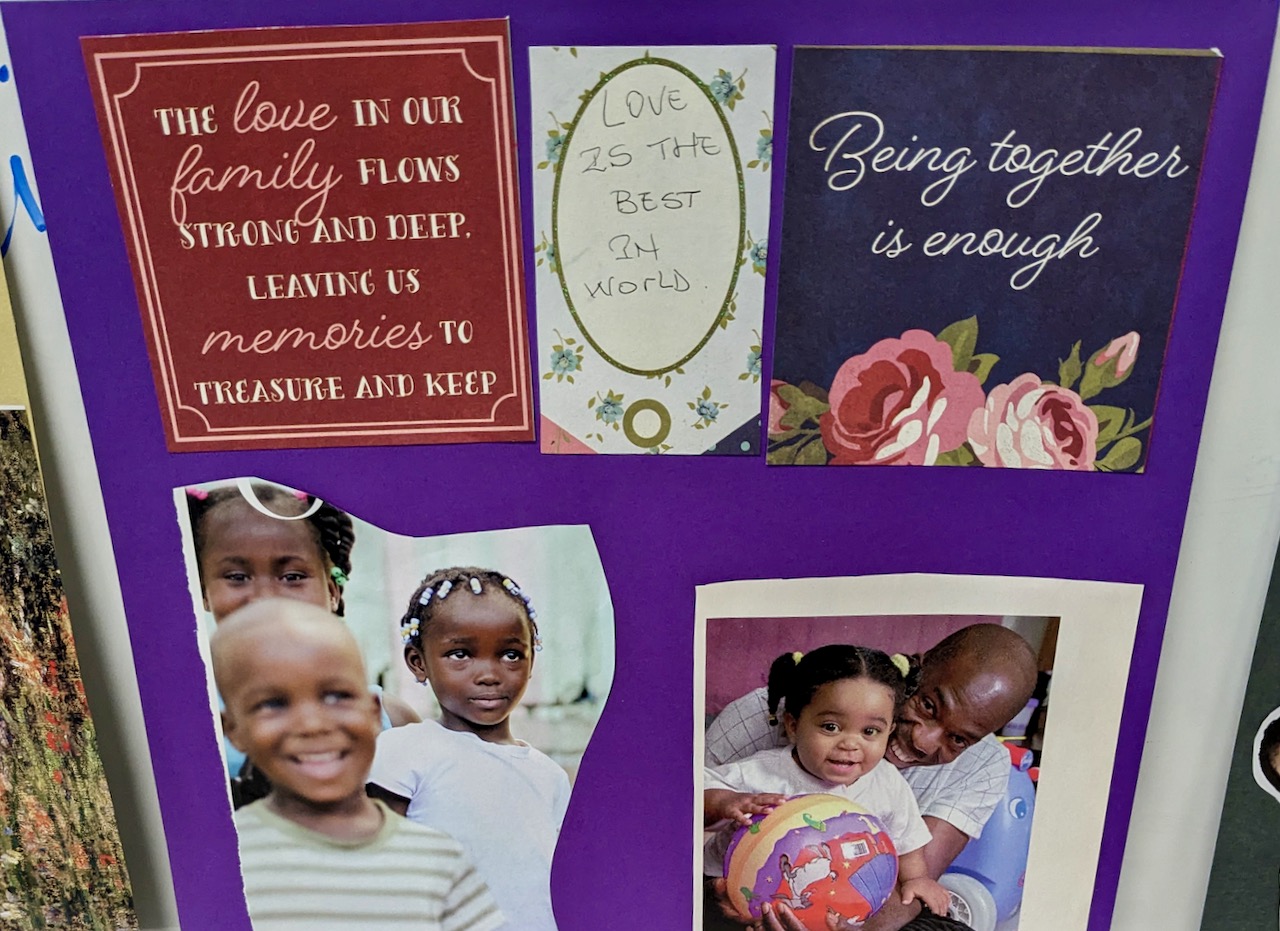
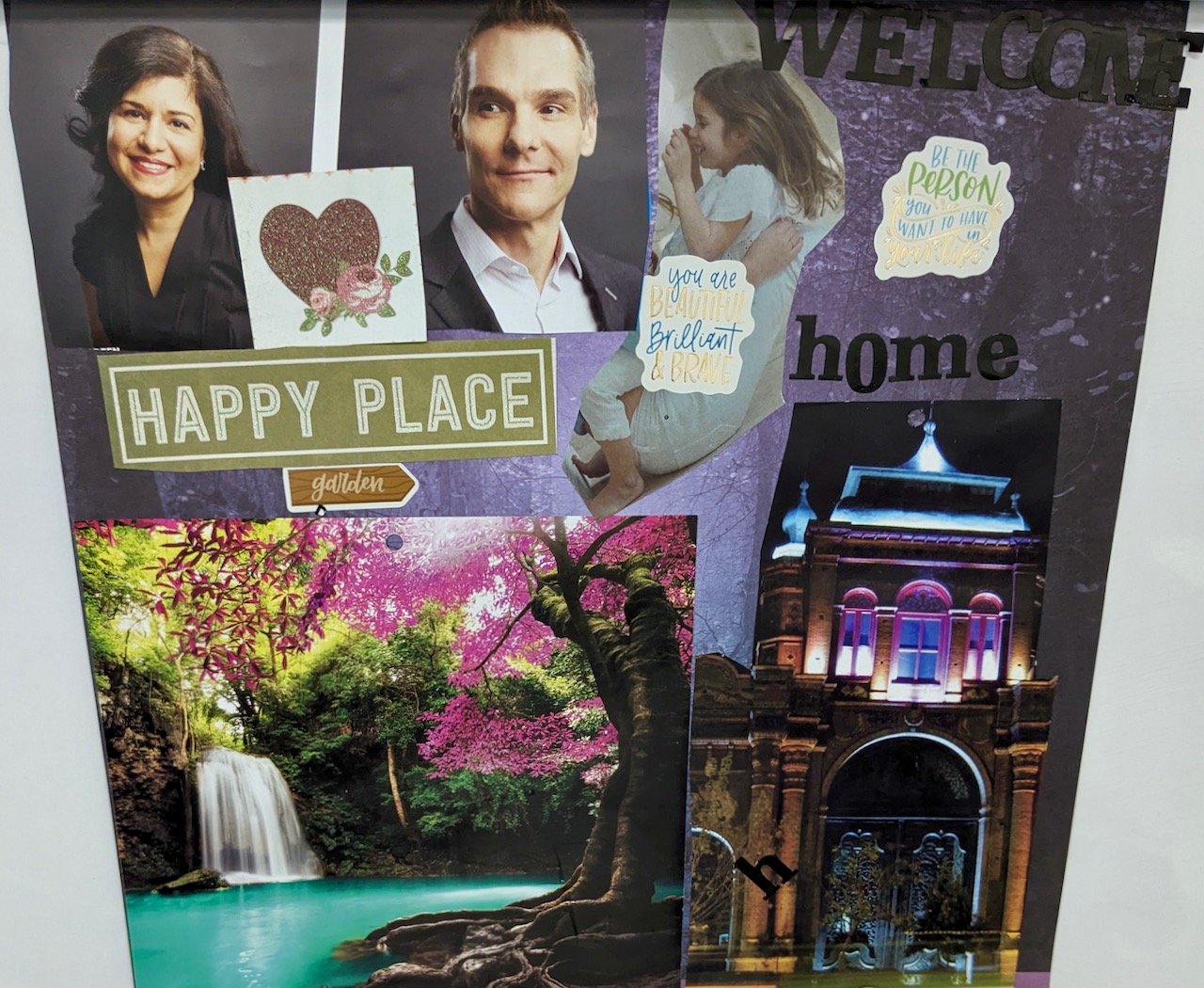
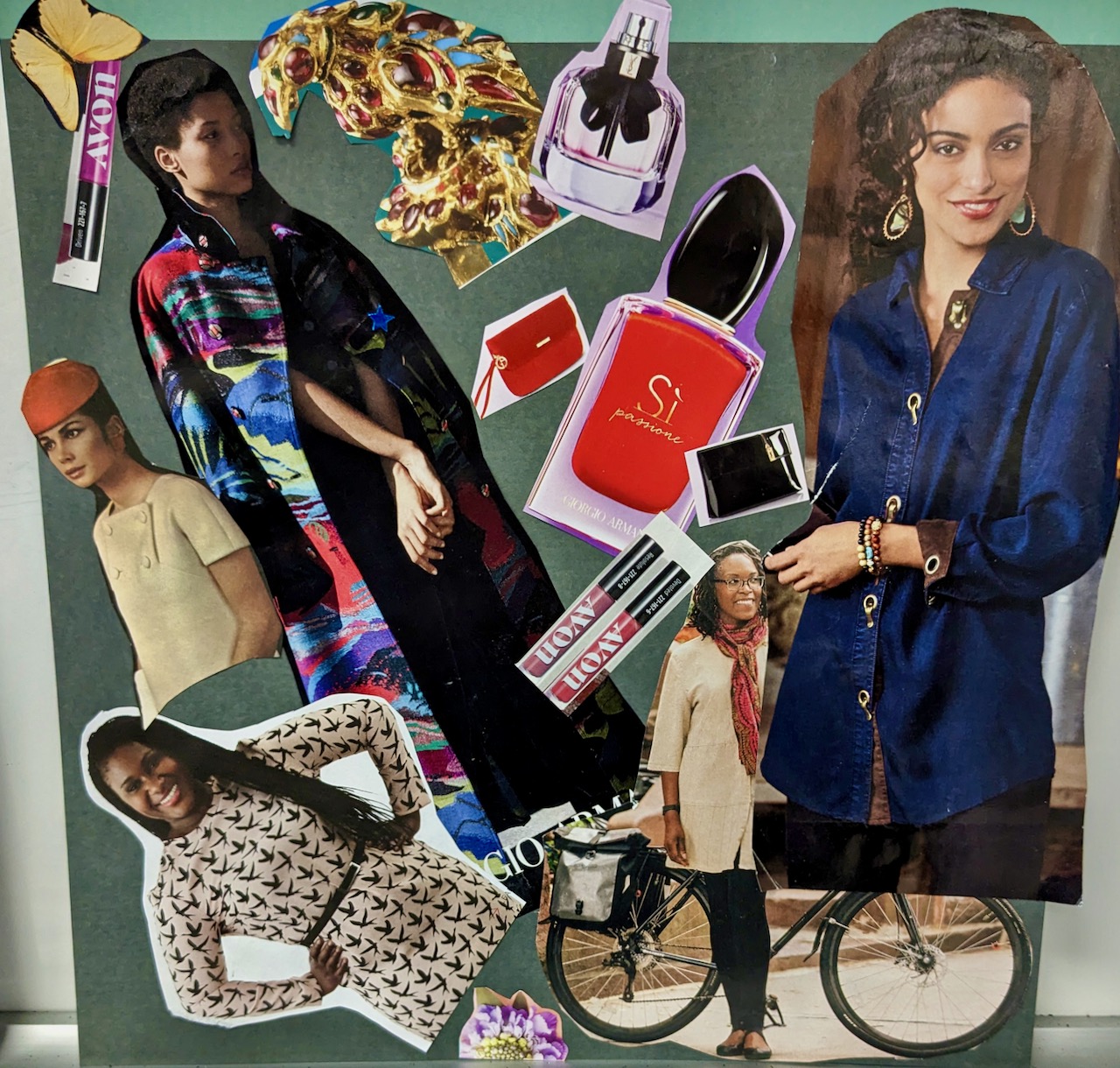
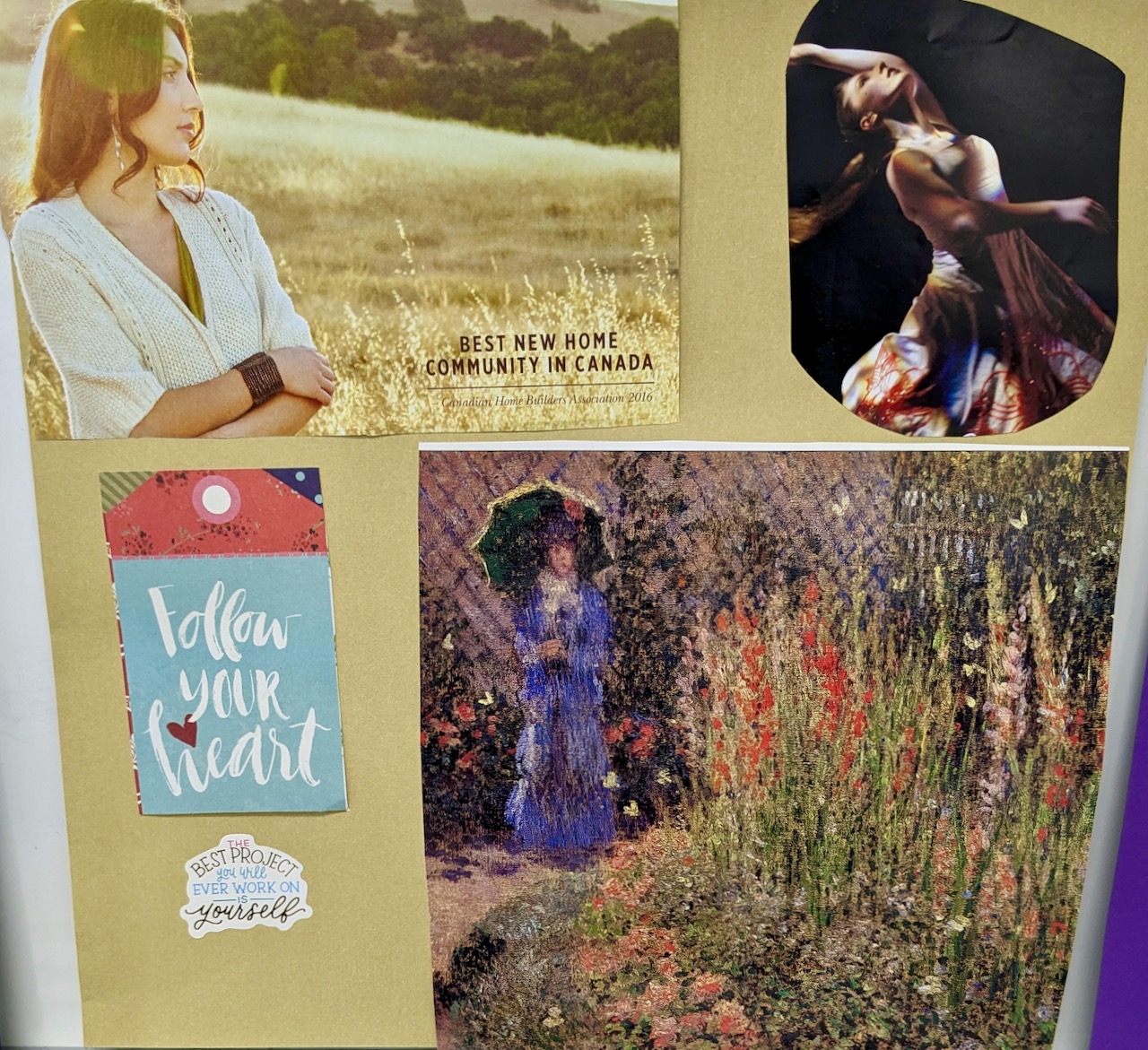
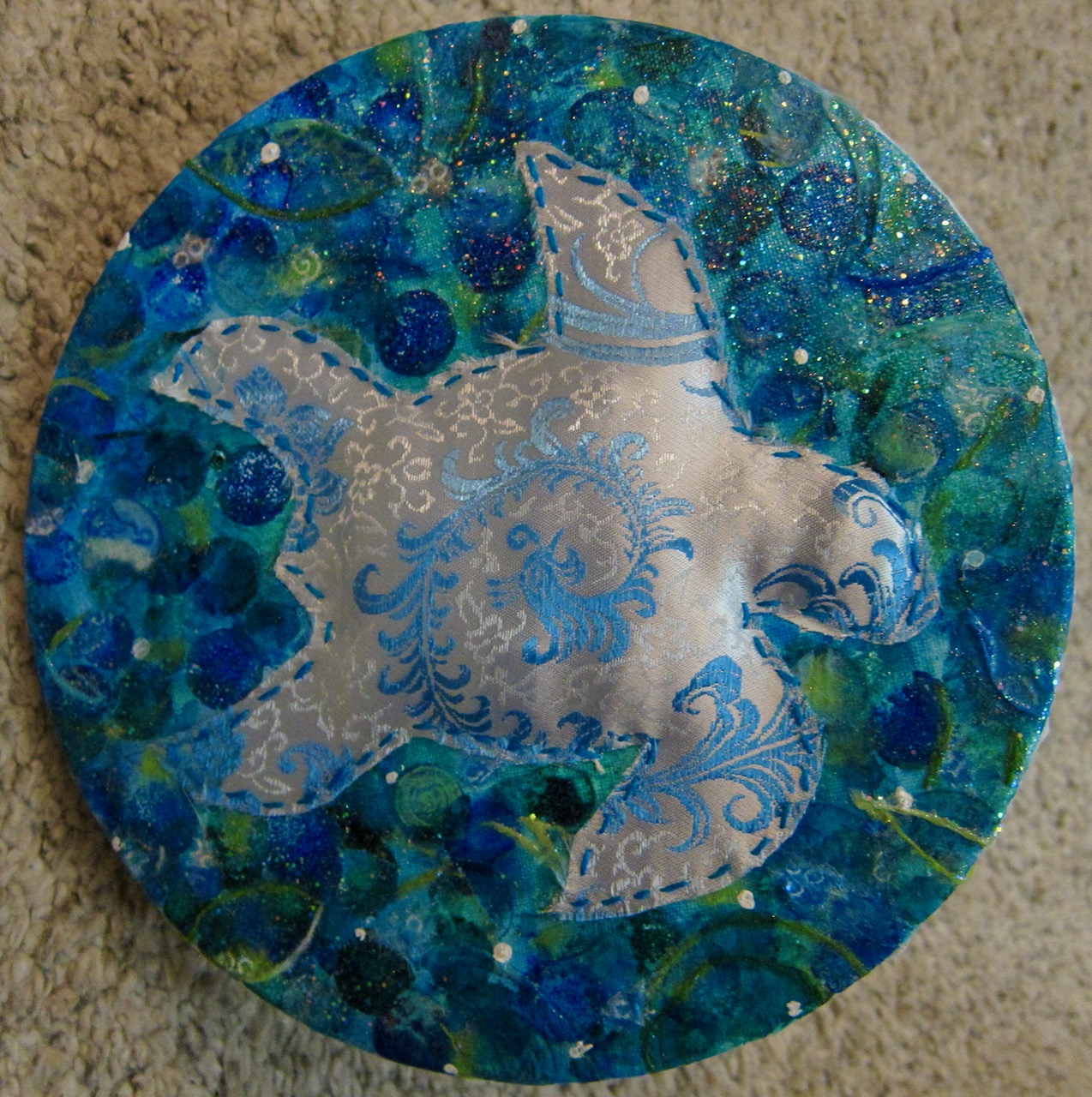
“Life Within” Collage by Catherine

Life Within, Collage by Catherine Raine, 2012

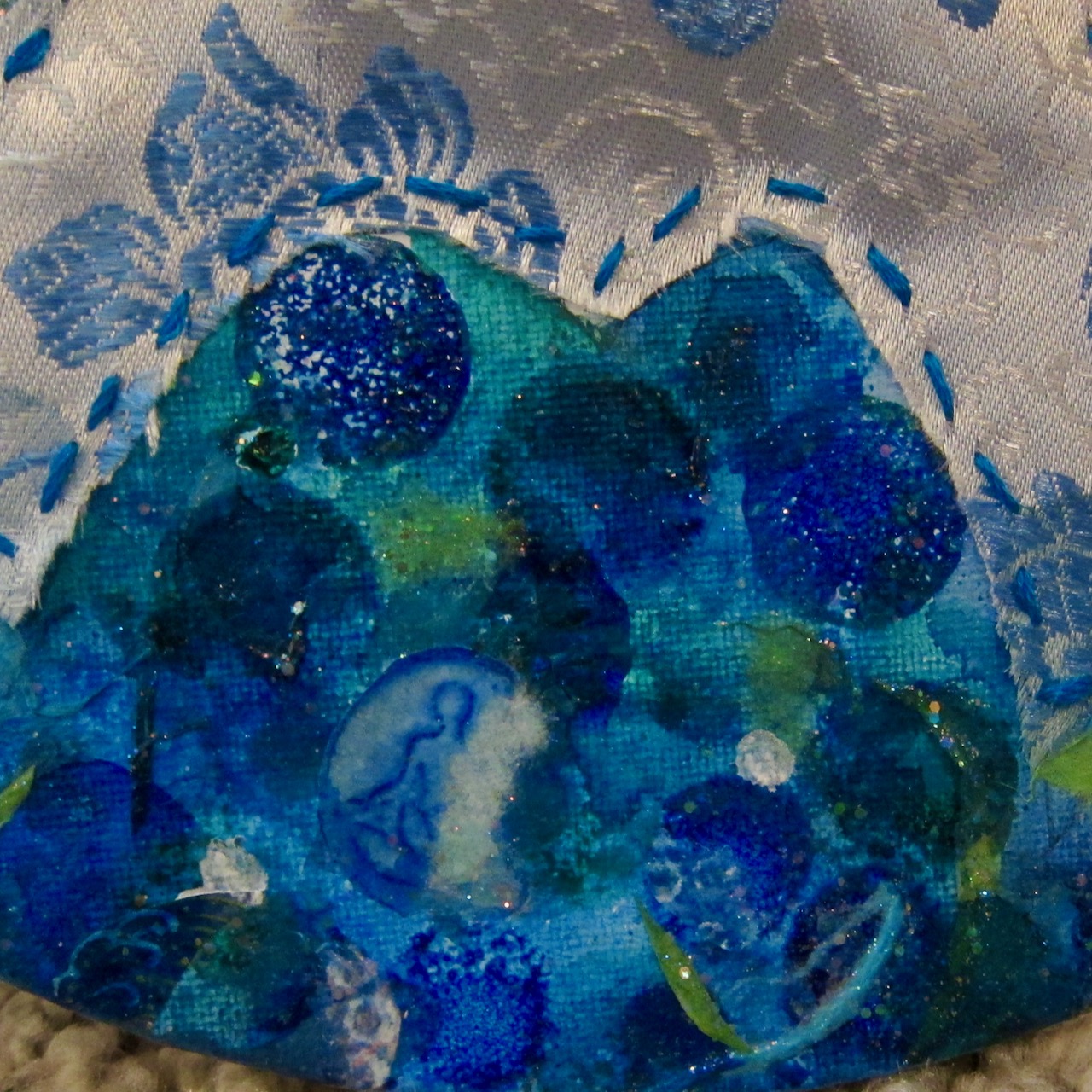
I made this collage for a brave and spirited friend who has been fighting a life-threatening illness. When I asked her what colors, images, and themes she might like, she wrote, “I have been enjoying vivid colors lately, and anything that evokes the ocean. We spent two weeks in Hawaii before my surgery, and images of the water and life within helped carry me through . . . . Themes of time, stretched and compressed feel relevant.”

Life Within, Collage by Catherine Raine, 2012
  Life Within, Collage by Catherine Raine, 2012

Life Within, Collage by Catherine Raine, 2012

Life Within, Collage by Catherine Raine, 2012

The Algo Mall Ruin at Elliot Lake: Reflections of a Concerned Visitor

Ever since a friend introduced us to the northern beauty of Elliot Lake and its surrounding forests two years ago, my husband and I have taken several trips there. After our first visit, I even wrote a blog post about Elliot Lake’s library situated in the Algo Centre Mall.

On June 23, 2012, part of the Algo Centre’s roof collapsed, crashing through two floors of the mall and killing two women. The news shocked and disturbed me, especially when I considered how often we had shopped in this building and how my friend used to spend countless hours in the food court working on her laptop. Before the mall collapsed, my faith in the safety of structures like the Algo Centre was intact, but now that conviction feels shaky.

Earlier this year, my husband and I had discussed another visit to Elliot Lake at the end of the summer. After the tragedy, we weren’t sure if we still wanted to go, but in the end we stuck to our original plan in hopes that our tourist dollars would help the community.

On a hot afternoon last Saturday, Stewart and I lunched at Jane’s Tea Garden, a cafe and gift shop that faces the fenced-off hill that marks the edge of the Algo Centre’s property. As I ate my soup and salad, I saw at least eight people, some with large cameras, climb up the stone steps that stopped abruptly at the tall fence bordering the mall and its parking lot.

After lunch, I bought a pair of sneakers from Tin Can Alley (a few doors down Ontario Aveneue from Jane’s Tea Garden) and then walked up the stone steps that the other tourists had recently ascended. I stopped in front of the “Danger! No Trespassing” sign and looked beyond it to the ruin of the mall. It didn’t seem right to snap photos of such devastation, so I left my camera in my bag.

I felt a little queasy from the heat and the way the twisted metal and concrete debris reminded me of the fallen Twin Towers and pictures of Joplin, Missouri after last year’s tornado. Nevertheless, I wanted to get a clearer view of the collapsed mall entrance, so I walked a few paces west.

I tried to take in the scene in its entirety, but it was difficult. My eyes kept locking on stray details like the five shopping carts I could see in the foreground and closer to the entrance. It was like a grim game of I Spy:

I spy one of the carts fallen on its side and another one full of thick silver wires pulled from the rubble. Two more carts have been tossed into piles of debris in the parking lot, and the last one I see is upright and empty, a ghostly reminder that this place used to be a busy, normal site of commercial activity.

When I look at the carts, I remember buying a purple paisley blouse and two towels from the now silent Zellers two summers ago. I used one of the towels to pad an epic sprawling-on-a-dock session by a lovely lake, one of my favorite memories of northern Ontario. And the Foodland where we bought picnic supplies — apples, petite boursin, juice boxes — is now a reeking horror of rotten food that has had two months to putrefy.

From my position upwind of the grocery store, I was spared the revolting smell, but I still felt slightly nauseated and shaky. The disaster site put me off-kilter, and a vague sweaty headache pulled at my consciousness. In my gut, I sensed a pocket of emptiness in the shape of a fist. The fist was the color of hot rust, its knuckles outlined in red.

Although I didn’t personally know the two women who died in the collapse, the tragedy of their passing exposed my own grief over recent and past losses, for the presence of Death collapses identifying boundaries such as the cause of death, the location, the time elapsed, and social proximity to the victims. The people who lost Doloris Perizzolo and Lucie Aylwin two months ago at Elliot Lake are hurting like me when I lost Dad, Grandma, Jenny, and Eric.

Looking past the rubble to the mall itself, I was struck by the naked chaos of the twisted, ragged hole where the mall’s entrance used to be. I looked at it in disbelief and wondered if I should be witnessing a building in such an exposed condition. Maybe that was why I didn’t feel right taking pictures of the ruin. The mall was so naked and vulnerable, literally stripped to its bare skeleton, showing square frames of nothing save a few exposed wires where solid walls once stood.

The entrance was a peeled and ragged maw of emptiness, a grimacing face on which silence rests because nobody knows what the hell to say. And behind that useless portal lay a crime scene, its rotting contents a nauseating metaphor for the neglect that led to the collapse. A traumatized and traumatizing building with memories of shock, fear, flight, injury, and death.

I think about the library on the second floor of the mall. It wasn’t far from the lottery booth where the two victims died. I remember the quilt on the wall, fishing rods for rent, a mural, and a large French collection. All part of the rubble now. (Elliot Lake plans to open a new library not far from the mall at White Mountain Academy).

For comfort, I turn away from the ruin and walk back down the hill to study the shrine. Although it sits in the shadow of destruction, decay, and collapse, the memorial display is an attempt to lovingly respond to senseless loss. The shrine’s candles, Inukshuks, teddy bears, flowers, and angels testify to a heartbroken town’s courage, community strength, and its refusal to forget. Elliot Lake, I’m holding you in my thoughts and prayers as you wrestle with grief and seek the light of justice.

Malvern Library (2005): Scarborough at Its Best!

The first time I visited this beautiful branch, it was in wintertime. Maybe that’s why the side flanks of Malvern Library reminded me of a giant silver ice-cube tray turned on its side to drain.

With the triangle above the entrance and the straight lines of the side portico, the geometrical impression of the exterior didn’t prepare me for the warmth and organic spaciousness of the interior. I felt like I’d just taken off my parka and stepped into a scholarly, wood-blessed chalet.

To support the extremely high central ceiling, strong planks sprouted from stone pillars, creating a fan-like structure that held up the straight wooden beams above. As I stood and admired the ceiling, creating an obstacle to browsers, I imagined it as the skeleton of an upsidedown ark-in-progress.

Lots of glass both overhead and on the sides of the library meant lots of light to nourish the patrons and tall potted palms alike. (I think the palms were in lively condition because the leaves of one of them tickled the tassel of my stocking cap when I came in).

As I wove between the aisles, I noticed shelves of books in Urdu, Tamil, Hindi, Tagalog, Punjabi, Gujurati, and Chinese. I also admired a three-dimensional castle puzzle (fully completed) on top of a bookshelf in the children’s section.

Nearby was a much larger castle — a fort for young readers to defend themselves against potential enemies of the imagination — that had seats in turrets and large fort holes for bookish knights and ladies to crawl through. A long carpeted reading bench was the perfect place to recharge for the next joust.

The final details of Malvern which gladdened my heart were an extensive set of windowseats and an equally inviting armchair upholstered in black fabric with a cat’s green eyes stitched on it. No wonder children were literally running to get in the library!

All in all, Malvern branch impressed me as a wonderful example of public resources well-spent. It is a living example of what it means to challenge stereotypes of crime-ridden, stigmatized Scarborough.

The next person who teases me about living in Scartown or declares that Pape Station is their easternmost limit is going to get a firm invitation to see places like Malvern in a new light. If they could see what I see when I visit Malvern, Cedarbrae, and Kennedy/Eglinton Libraries (and many others), they would experience the beautiful way these branches serve communities under pressure. And they would better understand why I’m proud to live in Scarborough.

Five Dusk Dances at Withrow Park, August 4th 2012

Kathak dancer Bageshree Vaze ushered in “Twilight” and commanded our attention by simply standing beside a tree. When Vineet Vyas began playing the tabla drums, the dancer’s head, torso, and straight legs seemed to act as an axis, a communicative mediator between the sky, the music, and the land.

Suddenly Vaze’s right arm curved up and left arm curved down, and the full swoop of her arms made one continuous shape. A tilted seabird with its wings fully extended, left wing pointing to the earth.

Soon Vaze joined the tabla musician on a square of plywood resting on the grass. I liked the way she listened to the drums with her entire body and responded with articulate arms, hands, and fingers.

Ms. Vaze’s expression was amused but dignified, joyful yet contained in the ancient cool of Kathak. When she held her arms wide, they defined a momentary world that contained her dance, the drums, the plywood, the trees, the audience, and the darkening sky. Although it was her hands that held two votive candles at the beginning of “Twilight,” it was her entire self, her dance that made the offering.

The dance picked up speed, and the artist’s soaring arms seemed to direct the traffic of night spirits and fireflies. She picked delicate, easily-bruised fruits from a twilight orchard, her elegant mimes turning into a spin that made her full black skirt twirl like a dervish. Soon her movements became slower, and when Vaze’s performance ended, she raised her hands to us with her palms pressed together. Namaste.

In contrast to the solitary spiritual refinement of the first dance, “Audible” by Vancouver’s 605 Collective offered a fun and rowdy vibe. Four young dancers began the piece with the purposeful donning of arm pads, knee pads, and a red contraption that combined the elements of football helmet, trendy giant headphones, and earmuffs.

Thus armed, the group displayed impressive athletic stamina as they performed staggered earth-dives, leap-frog leaps, lifts, and planned body-crashes that morphed into animated huddles. “Audible” captured the joy of touch football in the park before you got called home to supper. It was a Simon-Says scrum, a friendly fight enacted by playful Marines with hip-hop synchronicity and verve. By the end of the dance, the performers’ clothes were nicely muddy, and I liked it that they didn’t care.

The third Dusk Dance was Lua Shayenne‘s “Crazing,” which the program guide described as a tribute to Shayenne’s “childhood memories of living in Africa.” Four female dancers and two male drummers transformed a circular clearing in an urban park into a fiery celebration of fluid spines, wild yet precise arms, and an ease of movement that shouted “Freedom!” much more effectively than Mel Gibson in blue face paint.

One of my favorite moments was when Walter McLean walked forward with his dun (drum), and the four women stood together in a row behind him. They began to sway forward and back in unison as if they were in trance. Emotional surrender was beautifully embodied in the way they tipped their heads back, almost breaching their balance point, and then slowly folded their torsos forward.

At the close of “Crazing,” the women formed a living table, an intentional heap of gently swaying figures, each one’s head resting on the lower back of her fellow dancers. Stirred up by so much gorgeous movement, the long grass-like threads of the women’s skirts continued to sway as the dancers rested.

“Onward Ho, My Love” was my favorite dance of the evening. Choreographed by Julia Aplin, it featured a highly imaginative set and two gifted dancers, Yvonne Ng and Robert Glumbek.

Spread on a very long flat stretch of open grass was a homemade slip-and-slide strip. Above it was a trellis dripping with fairy lights secured to some tree branches. Hanging from the trellis were a number of large plastic bags full of water. The remaining props included two buckets and a self-service curtain that the dancers simultaneously held up and walked through at the start of their funny and charming performance.

The pair danced, lilted, argued non-verbally, waltzed, flirted, and played with each other up and down the length of the plastic-covered red carpet. The comedy of “Onward Ho, My Love!” expressed itself in Glumbek’s red striped union suit, tuxedo jacket, and top hat as well as the perky French music, the cheeky lifts, and even the pair’s dramatic height difference (Glumbek looked like a graceful giant next to the petite Ng).

I loved the moment when Glumbek began poking the first bag of water with a stick and then stood under the resulting shower in a mock sulk. Meanwhile, Ng went to a bucket and took out a pair of goggles and some slippers. Soon, to our delight, the couple were sliding crazily on the wet strip of ultimate slipperiness. By this time, Glumbek had also put on his sliding gear, and the water battle escalated. Ng splashed the contents of the silver buckets on the slide and in response her partner poked more holes in the remaining overhead bags. Exhilarating mayhem ensued as the audience cheered.

I’m pretty sure every single one of us in the crowd wanted to hurl ourselves on the slide and join the fun, but perhaps it was enough to be in the presence of such uninhibited creativity and playful sexiness. If the dancers gave themselves permission to have so much fun, why couldn’t we do that too?

By the time the last performance began in the northeast corner of the park, I was feeling exhausted and reaching sensory overload. I don’t think I was able to give “Crepuscular” the attention it deserved. However, I liked the cage-like mesh box that served as a dance container for one of two male dancers as well as a screen for projected images of darkest night, fairy-tale transformation, and primal fear of wolves.

Once the movement began, there was a lot of crouching, turning, meeting, and separating. My attention was wandering, but when a dancer approached the side of the box, leaned far back and raised one thigh up, it made an impression on me. I don’t know if the thigh was saying defense or surrender, but it definitely woke me up.

Some audience commentary from a young child in her mother’s arms was entertaining as well. She kept asking, “Why is there a man in a box? Why doesn’t he come out of the box?” She also observed, “They’re just dancing around.”

I’m not sure if the critic-in-arms was suggesting it was time for the “Crepuscular” dancers to find a new activity, but for my part I was happy to head back home after having witnessed so much uplifting dancing around Withrow Park.

Free Gaga Dance Workshop at Parkdale Library (June 16, 2012)

Hearth and Circus Dancer, Collage by Catherine Raine 2008

Intrigued by the opportunity to learn a new dance language (Gaga), I braved the heat last Saturday and took the subway and a bus to Parkdale Library. Just before two o’clock, three volunteers in Luminato festival T-shirts guarded the staircase leading to the program room below and checked off names from a list of 60 registered participants.

This was a very special program, for members of the renowned Batsheva Dance Company were coming all the way from Israel to share the Gaga technique with Toronto. I felt privileged to be on the list, and I seriously heeded the warning in the “What’s On at the Library” brochure that latecomers would not be admitted.

After my name was ticked and my wrist stamped, I went down to the program room. Grooved wooden dividers had been pushed back to create the largest possible amount of space. From the maps and educational posters on the wall, I guessed that the space was usually devoted to homework clubs and other less zany pursuits than Gaga dance.

Due to some problems with traffic, the Gaga dancers were about ten minutes late. This gave me plenty of time to observe my fellow participants. Eagerly gathered for guided movement, most of us lined the edges of the room, but four movers put themselves out on the floor. One made a starfish shape, sprawling comfortably in lavender socks, her form not confined by the large white square tiles of the floor. Another person executed a series of energetic stretches while a nearby lady rolled from side to side on her back. A middle-aged man in shorts walked slowly across the room in a straight line, rising up on his toes at regular intervals.

Circle, Collage by Catherine Raine 2009

I appreciated the diversity of age, gender, ethnicity, dance ability, hipster status, and body size in the group. As a tall 43-year-old woman with some robust heft to her, I was initially worried that I’d be an elephant among dancing gazelles. I had even considered bailing out earlier in the day, but I am so glad I didn’t!

Column Dancer, Collage by Catherine Raine 2009

Among the gathering, I noticed a lot of Lululemon clothing and yoga-straight backs, feather earrings and scarf-blouses, gym bags and marathon souvenir T-shirts. Also present were jeans and ballet slippers, water bottles and bike helmets, rainbow socks and pedicured toes.

It seems that if you leave dancers in a room with nothing to do, they will automatically start stretching. They will twirl their ankles, perform unbidden leg-lifts, and engage in hip and shoulder stretches. Some made expansive limb movements, swinging their arms and legs like elegant pendulums. Unsure as to what might be required of them in the next hour, they decided to prepare all parts of their bodies for possible engagement. Accepting their wisdom, I sat on the floor and stretched forward, wishing I could touch my forehead to my knees like the guy next to me.

Some of the limber folks in attendance had come on their own like me, but others had arrived in pre-formed social clumps. They chattered easily about experimental theatre, Phillip Glass, and Rufus Wainwright. A young guy with long hair tied up in a bun told his friends that he had been a rock climber before he was a dancer. It was also cool to see the participants who seemed to have taken a risk to be there, the ones who looked a little awkward and possessed no dance-specific accessories.

When Rachael Osborne, our dance facilitator arrived at 2:10 p.m., she asked us if this was the class for dancers or non-dancers. Somebody assured her it was for the latter, and she laughed and said, “But I see a lot of dancers here!”

I liked how Rachael launched right into the program without preliminary talk. She invited us to spread throughout the room and begin to sense the way that gravity was affecting our bodies. She encouraged us to increase our awareness of how our bodies exist in space, the distance between our arms, the temperature of the air on our skin, how our clothes feel where they touch us, the way our bones stack upon each other, and the feeling of our flesh both outside and in.

“Think about the inside our your bodies. We often don’t know what’s going on in there. Imagine channels and highways flowing throughout you, sending important information. Picture the energy, heat, and juices flowing through these channels. Keep these highways open.” Later, she also exhorted, “Keep the box of your chest open so that it’s no longer a separate ribcage box disconnected from the surrounding flesh.”

Honey Way, Collage by Catherine Raine 2007

As a group, we experimented with the sensation of our flesh and bones floating in water and then in the thicker liquid atmosphere of honey. “Don’t be a victim of gravity. It ages us.” We followed Rachael’s example as she demonstrated port de bras. I loved it when she asked us to imagine our entire outstretched wingspan as being one long rope, not two separate right/left binary limbs.

“Your spine, let it flow like seaweed. We also call it the ‘snake of the spine’ in Gaga.” Rachael reminded us that our neck is an extension of our spine and that our head is also composed of flesh and goo. (My inner Midwestern Puritan grew a little squeamish at the juicy way she kept repeating the word flesh).

Fiery Merman of the Falls, Collage by Catherine Raine 2011

As the hour flew by, we pulled the rope of our arms across the spine, articulated our shoulders and arms with palms up and palms down, challenged our hips with figure eights, walked with a groove, and cultivated a quake in our pelvises that translated into full body quakes. The quake that begin in the core quickly began to shake legs, torsos, shoulders, arms, hands, and heads.

Sixty people grooving and quaking around the room is a wonderful sight, and I’m so grateful I got to be part of it. Thank you Rachael, Parkdale Library, and Luminato for this revelatory experience!

Reflections on Teaching Practice: Trauma, Learning, and the Supportive Classroom

Introductory note: I wrote the following article during my tenure at the Canadian Centre for Victims of Torture from 2004 to 2010. For the last few years, I’ve been thinking about finding for a home for this reflection on trauma and learning, but in the meantime there are some insights that I feel might be useful to teachers and administrators who work with refugees. That’s where the accessibility of a blog comes in handy! At 2773 words, the essay is much longer than my usual posts, but I hope you enjoy it regardless.

Trauma, Learning, and the Supportive Classroom

by Catherine Raine

Inspired by more than six years of teaching LINC at The Canadian Centre for Victims of Torture, I’d like to reflect on trauma’s effects on learning and the need for a supportive class atmosphere.

I.  Trauma and Learning

Trauma survivors bring grief and loss with them to class:

“Death is better than life, teacher.”

“Life is zero.”

“I’m waiting for death.”

“My whole life is pain. It’s better to die.”

“Learning English is so difficult at my age. As they say in my country, ‘Death is the golden lid’.”

However much I’d like to believe the worst is behind my students, for them trauma continues in the present tense. For instance, a new loss can set off an avalanche of grief when relatives die far away, triggering agonizing memories. During my time at CCVT, at least six of my students have lost mothers, a father, a sister, and a nephew. In the last case, my student’s 28-year-old nephew had been murdered for protesting against the regime of his native country.

Fresh losses, suicidal statements, and depression are realities in my classroom. In terms of low mood, I find that Mondays are the most challenging days. With no classes scheduled on Fridays, by the time Monday arrives, the learners have had three full days to sink into their private glooms and preoccupations. On Monday mornings, it’s very difficult for them to rise out of their individual “sloughs (of) Despond” (Pilgrim’s Progress part 1, page 12). Insomnia, poor concentration, and low self-esteem accompany and reinforce students’ low spirits. I often hear:

“I can’t remember the words I learned.”

“I’m too old to learn.”

“I learn fast but then I forget everything fast.”

“I can’t speak English.”

In fact, self-perception of poor language skills makes them feel even worse about themselves. Many are highly critical of their English ability and have low tolerance for making mistakes, refusing to give themselves permission to be “wrong.” Moreover, there is extreme sensitivity to correction. For example, one time a man got angry when a female classmate pointed out a spelling mistake that another male classmate had made when writing a sentence on the board. Interestingly, the actual writer wasn’t upset about the correction, but the angry student had been brooding for a month over a critical remark made by the same female student. In my experience, most students will accept a gentle correction of grammar, pronunciation or reminder to be quiet from the teacher, but they really resent a fellow student taking on this role.

Thankfully, harmony prevails in class the majority of the time, despite the odd personality clash. The only time I needed to intervene over potential physical conflict was when two young women playfully pushed each other as they both reached for the same picture of a lion during a collage exercise. Though they assured me they were “only joking”, I told them to stop. When the behavior repeated itself a few weeks later, I said, “I need you to stop that. I’m serious.” I don’t like play-slaps in class because they undermine the safe, stable atmosphere our students need. Mock tussles can lead to real fights. And worst of all, they send the message that violence is an acceptable way to express anger.

Prompt and assertive correction of inappropriate classroom behaviour is crucial because CCVT students are very sensitive to issues of fairness. It reassures them when authority figures don’t ignore aggressive words or actions, for many of them have suffered from the rule of bullies. With problems such as lateness, I try to remind every latecomer why it’s important to get to class on time. And if a student is extremely late, they don’t receive their full TTC token allotment for the day. Use of this measure has to be consistent because the students are so keenly aware of justice. They watch and remember. And they have the potential to become extremely upset if they feel singled out for “criticism” when others go unchastized.

Not only are CCVT learners extra-sensitive about personal justice, they are also hypersensitive to expressions of anger by the teacher. Victims of torture and abuse become very skilled at reading moods, a protective defense against the unpredictability of tyrants (Trauma and Recovery, page 139). For this reason, I try to greet my students enthusiastically, even when they are late, and then keep my tone gentle when I call attention to issues related to punctuality, being respectful to classmates, and loud talking in a first language. The rare times I have gotten visibly angry, I always regretted it afterwards. Gentle correction and reasoning work better, especially for sensitive students like the one who once said, “You’re gonna kill me!” when she kept yawning while trying to ask a question during a reading lesson. I laughed and said, “No, I’m not going to kill you, but I don’t know how to speak yawn!” On another occasion, I received a startling reaction when I slightly leaned over a student’s desk to point out something on his handout. He cringed and recoiled as if I had raised a hand to hit him. I’ll never forget his haunted expression, the face of someone who expects to be beaten for no reason.

II.    The Supportive Classroom

CCVT clients have unique learning difficulties, but that doesn’t mean they are impossible to overcome. I have found that building a class community, cultivating a welcoming atmosphere, and employing supportive teaching methods can provide hopeful and restorative measures to counterbalance the negative effects of trauma.
The foundation of any class is a strong, positive relationship between each student and their teacher. This foundation also includes a feeling of solidarity and bonding between classmates. We sometimes have birthday parties for the students, which helps bring us all closer. Yet even these celebrations can be bittersweet. I once asked the class, “Are there any birthdays in January?” so we could make plans for the next party. A young woman responded, “Not a birthday, but the anniversary of my husband’s death.” Such heavy grief can’t help but surface at the mention of yearly rituals, the painful annual reminders of lost loved ones, including birthdays no longer celebrated.

I strongly believe that one of the purposes of CCVT is to correct the balance of loss in some small way, to create new friendships that caulk the scars of lost loves, lives stolen too soon and with too much brutality. Nothing could replace entire personal worlds dissolved forever, but new stories, new relationships can partially refill the emptiness that follow survivors wherever they go. For instance, a lively Somali woman received her Canadian citizenship three summers ago, and we had a wonderful party in her honour. Two tables supported a pot of rice, pans of vegetables and meat, homemade bread, pastries, chocolate cake, and three big bowls of chocolate ice-cream. The entire study body was talking, laughing, and dancing, and it felt good to be connected to a community, laughing and leaping in celebration of our new Canadian. Her happiness was contagious and I felt so proud to be part of the new life she is building in Canada.

A few months after the citizenship party, we did a Thanksgiving exercise in which each student told the class what they were thankful for. A great number of them said, “I’m thankful for my class and for CCVT.” Their sincere gratitude impressed on me just how much our English class means to the clients. It is much more than a place to study verbs and vocabulary. Our students come to be with their friends and to create meaning in their lives after the experience of senseless violence.

A stimulating class can be a place to forget past and present troubles. Many of my students are primary caregivers for either young children or ailing elderly spouses. For them, class is where they go after dropping three kids off at day care or taking a husband to the hospital for dialysis treatment. I try to keep their situation in mind when I’m planning my lessons because I really want them to enjoy their hard-won time in class while they learn some new English vocabulary, a grammar point, or a useful fact about Canada. For these caregivers and indeed for all the students, a lively yet stress-free class motivates them to come regularly. Our frequent laughter cheers all of us up and creates more togetherness. With so many responsibilities and troubles, my students often need a really good laugh. As one of them once told me, “A lot of us come to class and can only half pay attention. Some have trouble at home, thinking too much, others worry about money, their families, many things.”

Games such as Bingo are a refreshing antidote to too much serious grammar, and to add further interest I like to provide small prizes. Even though a pencil, a travel size bottle of lotion, or a piece of candy has little monetary value, the social currency is high because the prizes increase motivation as well as create a stronger bond between students and their teacher (everybody gets a prize). The gifts could even be regarded as a positive “transitional object” (Trauma and Recovery pages 150, 152), reminding the learners that their instructor cares about them even when she’s not physically present. Lately, I’ve been offering selected books from Toronto Public Library book sales as prizes, and the students really appreciate receiving books on spelling, science, gardening, world religions, and grammar.

To further build educational and social support for the students, we occasionally leave the classroom altogether to venture into the city and beyond. Field trips are especially beneficial for our learners who rarely leave their homes except to go to CCVT, work, or No Frills. Some may lack a social network and others are inhibited by language barriers or financial constraints. It does us all good to break out of routine and visit the Royal Ontario Museum, the Art Gallery of Ontario, the National Film Board, the CN Tower, Casa Loma, and Allen Gardens. Sites of natural beauty that have soothed us include The Toronto Islands, Niagara Falls, The Beaches, High Park, and the Harbourfront. In addition, class discussions of politics and world events have been made more concrete by visits to Queen’s Park and joining the Refugee Day Celebration at Dundas Square every June.

Finally, outings to the Parliament Library and Toronto Reference Library have reinforced independent study skills and given me the chance to guide students towards learning materials geared to their individual needs. On a personal note, I get a studious thrill out of all the new library cards issued, books checked out. A new library card is so meaningful because it represents independence for newcomers, especially for some of the women who don’t necessarily think in terms of having their own card in their own name. Tucking a shiny blue card into your billfold is also one more positive step towards that accumulation of identity that adds up to settlement in a new country. Some of our students need this affirmation and that extra nudge just to fill out the library membership application form. In the words of a student: “When you’ve been a refugee and haven’t lived a normal life for five years, ten years, then little things become big.” Just mustering the energy to get a library card can seem overwhelming, so anything CCVT can do to make their lives more normal, stable, and coherent is so very welcome.
The need for stability after so much uncertainty guides the structure of our classes at CCVT. That’s why the teacher’s punctuality makes a big contribution to creating a reassuring routine. Our students have experienced a lot of limbo as well as worry about the welfare of others. There have been times when I was delayed by five minutes, only to enter a classroom where the learners were wondering aloud what happened to me. Punctuality not only comforts the students, but it also testifies to a seriousness of purpose that builds stability. Being on time shows that I want to be there with them and that I am committed to teaching. The learners also appreciate homework and efficient time management, as both signal a strong concern for their learning and progress. A student once gave me some helpful feedback along these lines: “I like how you start the lessons early and don’t waste time.”
Even though many of my students struggle with tardiness (due to insomnia, depression, family responsibilities), I strive to start class on time for the sake of those who have arrived early. As latecomers arrive one by one, I greet them, give them the papers, and continue with the lesson. This practice emphasizes that class doesn’t stop because of the unpredictability of outside factors. Individuals may be late, but that doesn’t mean that they are allowed to undermine or disrupt our central purpose, which is to learn English.

Asserting the primacy of class structure and clarity of focus is a vital part of building normalcy, routine, and predictability in our students’ difficult existence. I believe this is essential for rehabilitation. Both before and after they came to Canada, CCVT clients’ lives have been disrupted by chaos, uncertainty, instability, limbo, loss, and lack of control. Many have had to abandon their education, their dreams, their goals because of war. They need CCVT to be there for them, to not be bombed, shut down, destroyed. They need to believe that they can continue their education without disruption or abandonment. For all of these reasons, their LINC class should ideally be an oasis of calm and stability, a place where they know what to expect from the schedule, their teacher, their classmates and the curriculum.

Repetition and reinforcement are essential tools to integrate learning into a stable framework. I like to introduce new topics, grammar concepts, and vocabulary by linking them back to previous lessons. Homemade flashcards are especially useful for repetition and review of grammar points, Canadian history facts, Canadian geography, and general citizenship questions. What’s extremely rewarding for both myself and the learners is when they realize how much they have retained. After hearing “I can’t remember anything” so many times, it’s a joy to contradict false beliefs about their inability to learn. I have one student in her late fifties who frequently gets mad at herself for forgetting words, but when I ask the class questions about Canadian history or geography, she’s often the first one to answer correctly.

I believe my students appreciate repetition for its own sake and also for the patience it implies. I strive to be very patient with mistakes because there’s so much sensitivity to correction. That’s why I monitor my tone when I point out grammar and pronunciation errors. My tone needs to be gentle so they understand that mistakes are allowed and do not deserve anger or punishment. I also hope that this gentleness will influence them to be less hard on themselves and each other when they get a word or grammar structure “wrong.” A number of my learners have told me how much they appreciate this approach. Some of their feedback includes:

“You have a different way. You teach us side by side and go slowly. Your way is beautiful. You understand maybe how to work with people at CCVT.”

“You gave us confidence to speak.”

“I like your easy-going attitude, how you are patient but don’t treat us like kids.”

Another student wrote: “Teacher I appreciate your patience and your teaching method . . . I never forget your smile and your strength.”

Drawing these observations to a close, I want to say how privileged I feel to be part of CCVT’s learning community. Every time my students walk through the door, I want to applaud the human spirit. Even though they often say they’re too old, too tired, or too depressed to learn, they come anyway. Their presence is a testament to their courage, and their story celebrates a series of personal victories over trauma to which I hope this article has given testimony.

Two Visits to Roomy Downsview (1962)

Back in 2008, Downsview branch was my 50th library, a large and self-contained building with an enormous main floor and smaller basement level. As I entered the library, my head tilted back in appreciation of the wealth of light and space above the shelves. I felt like I was in an extraordinarily spacious white tent.

As I walked through the aisles, I noticed the big Spanish, Italian, and French collections, as well as smaller ones in Gujurati, Hindi, Punjabi, Tamil, Vietnamese, Bengali, and Chinese. A group of animated teenage boys were playing cards in the magazine section. A stuffed toy parrot supervised a display of books about the outdoors.

In the southwest corner of the main level was the children’s zone. It was separated by a low wall with a special entrance in the form of an eight-foot high red cylinder with a large circular opening for a gate. I don’t think the cylinder was supposed to be a rocket or a tomato — just some liminal space to pass through into magical world of reading. A librarian had posted lots of chicken jokes high on the walls of this section: “Why did the turkey cross the road? Answer: To show he wasn’t chicken.”

When I finally returned to Downsview with my camera four years later, the wall and portal had been removed in a mini-renovation. The chicken jokes had also vanished, but the windows shimmered with a springtime scene, painted by the youth group.

On my first visit, I wanted to finish looking at the library quickly because it was almost four o’clock, and there was another branch to visit before the Saturday closing time of five o’clock. Picking up the pace, I strode over to the staircase that led to the basement.

Just at the point where the landing curved to meet the first flight of steps, there was an open space between the landing and the set of windows spanning both floors. Two blue butterflies hung from the ceiling of the main floor in this open space, supporting strings that dangled all the way to the basement level. Paper cranes in red, pink, yellow, blue, and green clung to the two long strings, creating an origami cascade down to a book display of summer reading below. (Alas, the cranes were absent in 2012).

The basement level was more down-to-business, what with its careers section, shelves of adult non-fiction, and extensive ESL and literacy collection. I selected a pronunciation book for one of my classes and scooted past long rows of dark green bookcases for a quick check-out. Thus endeth my fiftieth library encounter!

Free Poetry Workshop Nourishes Creativity at Don Mills Library

I’m fresh home from an afternoon devoted to poetry! Facilitated by spoken word artist, Andrea Thompson, the workshop combined a writing exercise, performance, and discussion. Ms. Thompson had a warm, engaging presence that put me at ease, and I appreciated her genuine passion for poetry.

To give us the flavor of her work, Andrea performed three of her pieces, transforming our group of twelve into a fascinated audience. I especially loved the way she sang some of the words when she felt called to sing. She brought a melodic and dramatic quality to her poems that made a big impact on me.

After we introduced ourselves, Andrea invited us to write a four-line poem based on a simple exercise. Each line was to start with the line “I am from” and then fill in the lyrical blanks with the name of a food (line one), a family or cultural tradition (line two), a snapshot of a location (line three), and something about the climate (line four).

I enjoyed listening to the poems that my fellow participants created, and many of their words have stayed with me: sandalwood, honey, dinner at five a.m., stars, land of Buddha, sound of flowers, and the promised land. To our amazement, the writer of a beautiful poem about grief said, “This is the first poem I have ever written.”

When my turn came, I noticed some constriction in my breathing, but I was able to read the following lines to the group:

I am from pecan pie, treacle sweet, tasting of Midwestern corn syrup and warm Southern trees.

I am from total immersion baptism by the old pastor in his Brooks Brothers suit.

I am from Liberty, Missouri, the buckled up Bible belt, green and friendly, with undercurrents of despair.

I am from tornadoes, sirens that shoo us to the cellar, staring at the cold rust on the freezer.

I am from there.

Plucky Todmorden Room (1961), My 60th Branch!

Located inside East York Community Recreation Centre, Todmorden Room is the smallest branch of the 98. With a maximum capacity of 33 people, the modest size of this facility gave it extra charm, a welcome throw-back to a friendlier, slower era before automated check-out desks and big city anonymity.

The main desk of Todmorden Room was directly in front of the entrance, and my husband Stewart was struck by how the librarian greeted each incoming patron by name. Even though there were only eight people in the library (including two staff members), we kept tripping over each other as we moved up and down the two short aisles.

The only multilingual resource I noticed was a Spanish learning kit with a CD, and the ESL collection had fourteen books (hardly the fault of library with so little space to spare).

As at Woodside Square and Bridlewood, the romance genre was well-represented at Todmorden Room, and it included a couple of titles that caught my fancy: “Kidnapped by the Cowboy” and “Outback Boss, City Bride.” I hope the city bride and the cowboy’s love hostage brought their feminist theory texts with them to the countryside.

As I exited the room, I noticed a cream-coloured locker beside the check-out desk, possibly a hand-me-down from the gym down the hall. I liked how the library seemed to be a well-integrated part of the community centre, which also offered swimming and martial arts classes. The librarian told me that families often coordinate their trips to the library around activities at the centre. Way to go, plucky Todmorden Room!

(Note: the text of this post dates to my first visit in 2009, but the photos were taken in 2012)

Eleven Letters from Eric from 1986 to 2002

The collages pictured here are the first in a series that takes inspiration from eleven letters written by my hometown friend Eric Canuteson. He wrote the first one in 1986, and the last one I received arrived in 2002 before e-mail took over as our means of correspondence.

Last December, I was devastated to learn that Eric suffered an untimely death at age 43. I had trouble believing that the teenager I had passed notes to during Greek and Roman History could be gone. His friendship meant a great deal to me, and I wanted to honor his memory with an art project that incorporated actual text from the letters and images, people, and places he described.

Preserving examples of Eric’s handwriting feels really important. Messy, scratchy, sprawling – I love the way he always wrote his name in really huge letters at the end. He also was a great one for circling or putting boxes around important phrases and doodling in the margins. They are the letters of a busy, dedicated person who has taken the time to share his thoughts with a friend. I’ll always be grateful to Eric for that.

Before I started this project, I photocopied the letters because I couldn’t bear to tear up the originals. I also gathered up as many images as I could that seemed relevant to the letters’ context.

The first collage takes its theme from the first letter Eric ever sent me. He had just started his freshman year at Colorado College and I was in my last year in high school. Postmarked September 24, 1986, it describes his classes, first term paper, and grades. He also asked me to pass on some messages to his former teachers, including a tongue-in-cheek summary of his political views.

Eric’s Excellent Intellectual Adventure, Collage by Catherine Raine 2012

I used the actual postmark from the envelope for this collage. The postmark and the political figures Eric mentions place our friendship in historical context, providing an example of how letters are both cherished personal souvenirs and valuable documents that give us a snapshot of an era. It seems an obvious point, but it still astonishes me that Eric’s first letter existed in a world before South African apartheid ended, before the Berlin Wall fell, before Clinton (sandwiched between the elder and junior George Bush), before 9/11, and before Obama.

Eric’s Excellent Intellectual Adventure, Collage by Catherine Raine 2012

I am a Liberal and always have been one.

Reagan Sucks.

Rehnquist Sucks (Rightquest)

Death to Fascism.

Daniel Monion is a joke. (It took me awhile to figure out that Eric was referring to Daniel Moynihan. It didn’t help that I didn’t remember who he was).

Support the ANC!

I hate Republican business majors.

There aren’t any here, thank God.

Eric’s Excellent Intellectual Adventure, Collage by Catherine Raine 2012

I really like how he put the title “Mr.” in quotation marks next to his name. At age 18, maybe he didn’t comfortably inhabit the title Mr. Eric Canuteson, so he left the “Mr.” outside the box he drew around his new contact details.

Eric’s Excellent Intellectual Adventure, Collage by Catherine Raine 2012

The same letter of September 24, 1986 testifies to Eric’s academic success in his crucial first year of college. With Eric’s ambitious spirit and fierce intelligence, he laid a strong foundation to later complete his Ph.D.

I was impressed by Eric’s go-getter attitude in all the years I knew him, but that’s not to say he couldn’t be laid back, too. I loved the part in the letter where he admits he put off writing his paper to watch an Eagles versus Bears football game.

Eagles Versus Bears, Collage by Catherine Raine 2012

I got a B+ on my very first college paper (I wrote it in a very short time because I was watching football.)

An arrow starting from the letter “a” in football points to the words “Eagles v. Bears” floating in the space above the first line of the letter.

Eagles Versus Bears, Collage by Catherine Raine 2012

The letter goes on to describe how he received an A on his final test.

I got the highest grade in the class — there were only two A’s. By the way, My class is SATIRE AND CARICATURE.

I’m taking Russian (7 hours of it, no less) in the 5th and 6th blocks. (Colorado College’s block program allows its students to focus intensely on one class at a time in a series of eight blocks a year).

Eagles Versus Bears, Collage by Catherine Raine 2012

The next letter arrived in April 1987 and introduced me to Eric’s love of Pink Floyd.

The Final Cut, Collage by Catherine Raine 2012

I listen to Pink Floyd all the time. I’m doing so right now. The album The Final Cut.

The Final Cut, Collage by Catherine Raine 2012

I always enjoyed it when Eric told me where he was or what he was listening to while he was writing his letters. It helped me feel connected to his reality even though he lived far away.

The Final Cut, Collage by Catherine Raine 2012

The Song is awesome. “Not Now John.” The song is about making a movie.

The Final Cut, Collage by Catherine Raine 2012

“Who cares what it’s about as long as the kids (go).”

 The Final Cut, Collage by Catherine Raine 2012

The opening line is “Fuck all that, we’ve got to get on with these.”

The Final Cut, Collage by Catherine Raine 2012

Eric’s next paragraph in the April, 1987 letter turns its attention to another Pink Floyd album, the iconic Dark Side of the Moon. He describes the songs as “very political and philosophical.”

Dark Moon, Collage by Catherine Raine 2012

Dark Side of the Moon is a very good album. It’s about death and depression (The “dark side” of human nature.)

All That You Touch, Collage by Catherine Raine, 2012

One of the songs has the classic line, “All that you touch and all that you see is all that your life will ever be.”

All That You Touch, Collage by Catherine Raine, 2012

Pink Floyd tends to be very gloomy, but I like it.

Dark Moon, Collage by Catherine Raine 2012

A lot of people hear listen to The Grateful Dead. I’ve heard some Dead but I don’t like it too much. Looks like I’m not going to be a “Dead Head.”

Dark Moon, Collage by Catherine Raine 2012

By the way, Dark Side of the Moon ends with a faint voice in the background who states, “There is no dark side of the Moon really; as a matter of fact, it’s all dark.” Isn’t that awesome?

All That You Touch, Collage by Catherine Raine, 2012

I’ve got to go. Love, Eric.

Eric’s next letter arrived a few months later. It’s shorter than most because he was in the middle of his freshman year finals. The shape of his letters show what a hurry he was in, many of them blending together, such as the way the top of the “t” in Catherine stretches to touch the top of the “h.” The calligraphy of swiftness.

Have to Study for My Physics Final, Collage by Catherine Raine 2012

Catherine,

I don’t have much time to write because I really have to study for my Physics final. I haven’t done any homework for the class and I’m about 300 page(s) behind.

Have to Study for My Physics Final, Collage by Catherine Raine 2012

I feel bad about not writing you. I like you a lot and consider you a very good friend. I hope you realize that. I just noticed that every sentence in this letter begins with “I.”  Oh, well.

I Have to Study for My Physics Final, Collage by Catherine Raine 2012

Do you like The Who? I think they are awesome. The reason I’m writing is because I was listening to “Behind Blue Eyes.” Have you heard the song? It reminded (me) of the conversations we used to have about me . . . . “No one knows what it’s like to be the Bad Man/to be the Sad Man/Behind Blue Eyes.”

Have to Study for My Physics Final, Collage by Catherine Raine 2012

Do you know where you are going to school for sure yet? Write back if you want — otherwise I’ll talk to you this summer. Love, Eric

Turning to the next year and a new letter, Eric wrote about a 1988 college field trip to The Grand Canyon, and since I happened to be in Arizona recently, I raided the tourist leaflets at the Phoenix airport, gathering as many images as I could to illustrate a letter dated March 8th. (The text you see in this collage comes from a photocopy dyed with instant coffee).

Eric’s Grand Canyon, Collage by Catherine Raine 2012

Tomorrow I leave for a trip to the Grand Canyon.

Eric’s Grand Canyon, Collage by Catherine Raine 2012

I’d like to see you if possible . . . Catherine. Don’t be depressed or alienated. I really care about you.

Eric’s Grand Canyon, Collage by Catherine Raine 2012

The Grand (Canyon) is . . . amazing place. . . . Love exists.

Eric’s Grand Canyon, Collage by Catherine Raine 2012

Love, Eric     Give me a call.

Beauty Never Dies at the Desert Botanical Garden, Phoenix Arizona (Journal Entry for May 3, 2012)

As I write on a slightly rickety table beside the snack cart, I’m enjoying the shade and moving shadows of a tall tree. The same waving branches that are making patterns on these pages recently hosted a rock pigeon, but it has flown away.

I’m taking a rest after almost two hours of desert trail-walking. Funny how the landscape didn’t really reach me at first, but before long I lost my heart to its wildflowers, lizards, hummingbirds, and flowering cathedral cacti.

As I made my way along the Desert Wildflower trail, the Desert Discovery Loop, and the Steele Herb Garden, fragments of lectures and conversations shimmered briefly, the fluttering of unseen wings in the leaves.

Tap Root.

Burrow.

Nest.

Lizard!! Lizard!!

“Would you like a picture of this cactus for your power point presentation?” (Father to his young son)

In the Desert Garden, I saw a multitude of memorials on benches, chairs, fountains, trees, and walls. There were even memorial drinking fountains (a lovely idea). However, I was looking for a special one, a plaque in memory of a Toronto friend’s beloved parents. And when I finally found it, I felt connected to my friend’s family and their shared memories of the Garden. It didn’t seem to matter that I never met them. They had walked these paths before and enjoyed the beauty that I was seeing.

I studied the plaque for a long time, growing sad and thoughtful. But the more I reflected on the inevitability of loss, the more I felt strangely comforted at the thought of all the people who will visit this gorgeous sanctuary long after I have had my mortal turn. The Desert Garden is an embodiment of faith, for in this place, love, memories, and the creative earth continue to flower and flower, tapping deep roots of Beauty that do not die.

Live From My Blog Talk at Taylor Memorial Library

I’ve reached the point in my library blog talk where I have invited the audience to create a post with me. A few minutes ago, there was mention of refreshments, so I’m also thinking about the possibility of tea and Dad’s oatmeal and chocolate chip cookies. My audience is eligible for these refreshments because they love libraries and came out to hear the talk.

Here are some of their impressions and memories of the Toronto Public Library:

“I’ve been coming here with my young children for thirteen years. We love sitting by the fireplace and reading, especially in the winter. It’s very cozy. My daughter is sitting out there by the fireplace right now.” (Dawn)

“I’ve been coming since the original structure was still in use. I remember the Taylor House. On the far side, there was a round conservatory. That’s where they had the mystery books and the stained glass window at the top of the stairs. When the new building was built, they installed the original stained glass window. This branch is a memorial branch and will revert back to the Taylor family if the library doesn’t have enough funds to sustain it.”  (Heather)

“If it wasn’t for my great-grandfather, I’d never be a librarian. He lived across the street from Locke Library. He never had a chance to get an education, so the library was very important to him. When I was nine, he said to me, “You like books. You should be a librarian.” (Andrew, Librarian-at-Large)

“My grandson Cy and I visited 90 TPL libraries so far. His favourite is S. Walter Stewart. I like it because there are 10 A. Y. Jackson oil paintings there. I like libraries for different reasons. I love the panels at Dufferin/St. Clair that they uncovered. I’m also fond of Beaches. I worked there for 19 years. One of the squares on the community quilt there is mine.” (Darlene)

“It was my first job and my only job.” (Despina)

“The garden (at Taylor Memorial) was a joint effort between Maureen and me (Sally). We met at the afternoon book club. She designed the garden. The library bought some shrubs, but most of the plants were donated. It’s nice because we have a patio. Lots of people sit out on the patio with their laptops and books, enjoying the fresh air. We have tea and books there in the summer. Sometimes the authors join us as well.” (Sally)

“The Thursday evening book club is one of the longest running book clubs in Toronto. It’s been running since 1991. This club has read approximately 200 books. Heather was one of the original members.” (Heather and Despina)

It has been a true pleasure to gather these stories from my attentive and knowledgeable audience. I asked if I should add “good-looking” to the description, and Sally said, “Why not? This isn’t television!”

Library Blog Talk This Thursday at Taylor Memorial Library!

I’m tickled pink to be part of this April’s Keep Toronto Reading Festival. My contribution to the literary celebration will be an illustrated talk about the very blog you are reading now, Breakfast in Scarborough.

The presentation will describe my pilgrimage to all 98 Toronto Public Library branches and what I saw and experienced along the way. I’ll provide some background information about the origins of the blog, present selected pictures, and then create an interactive post with the audience on the spot.

My hope for this talk is that it will encourage TPL library patrons to venture beyond their home branches and discover the beautiful diversity that the entire system has to offer.

On a more personal level, I also aspire to be an example of what can happen when you ignore the inner critic who says things like, “Get a life, nerd! Nobody will read this obscure blog!” If I had listened to that voice, I would never have had the pleasure of proving it wrong.

Breakfast in Scarborough has now enjoyed over 17,000 views, and I have been interviewed by The Toronto Star and appeared on Matt Galloway’s CBC Metro Morning radio program. Hooray for nerdy projects! May they prosper all over the land!

At Home at Bamburgh Gardens Shopping Plaza: Steeles Library (1987)

My last visit to Steeles was quite awhile ago, but some of my observations still hold true: “Located on the left side of a concrete walkway leading to the mall, Steeles was very compact, and the homey impression created by its lime green walls was taken up a notch by the presence of several stuffed creatures on top of a high shelf: a gorilla, Tweety Bird, and Marvin the Martian.”

These stuffed entities lined the south wall of the library, not far from a reading corner for youngsters. A padded bench along the east wall was situated under a bank of windows overlooking the covered walkway.

I think small readers would really enjoy this bench. Sheltered beneath the windowsills below eye level, they would be undetected by mall shoppers who come and go outside.  (Heh heh! I’m reading here and you don’t know it!)

Desipite Steeles’ limited size, it was possible to find areas of expansiveness, including some restful views of trees and parkland from the north windows. I even saw a bird on a branch!

The program room floor was a carpet of stars and planets, a reminder of the limitless world of imagination contained in books. Where else could a cat share a swing with birds, an alligator watch a mouse’s cooking demonstration, and a frog dress up like a tourist?

As I prepared to leave the library, I took a moment to admire how busy the library was at 10:30 on a Friday morning. Just as I noted three years ago, there was “an enthusiastic crowd of library-users, with nearly every chair occupied by a reader. It made me happy to see so many folks consuming words instead of mall-products.”

Steps away from the exit, an extensive diagonal length of bike rack pointed the way to some open recreational land behind the mall. I love how the same sense of openness and possibility fills the deceptively small confines of Steeles Library!